A Hotel Designed for Book Lovers | Red Concrete Facade | Interior Design & Architecture Ideas

3 min read
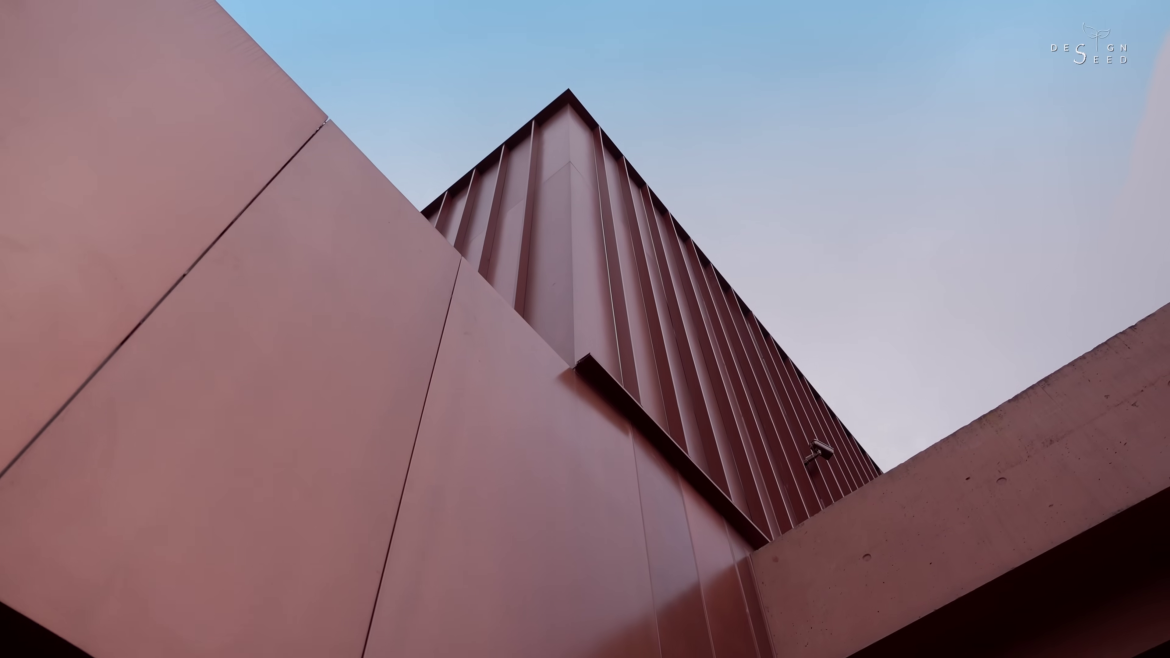
“Most architects and interior designers would avoid using the colour red,” Alex Lee says at the beginning of the episode. “It’s unpredictable. It overwhelms.”
Today’s article unveils the smallest home ever featured on the site.
“But then you come across a building like this… and suddenly you can’t look away.”
A Colour Most Designers Would Avoid
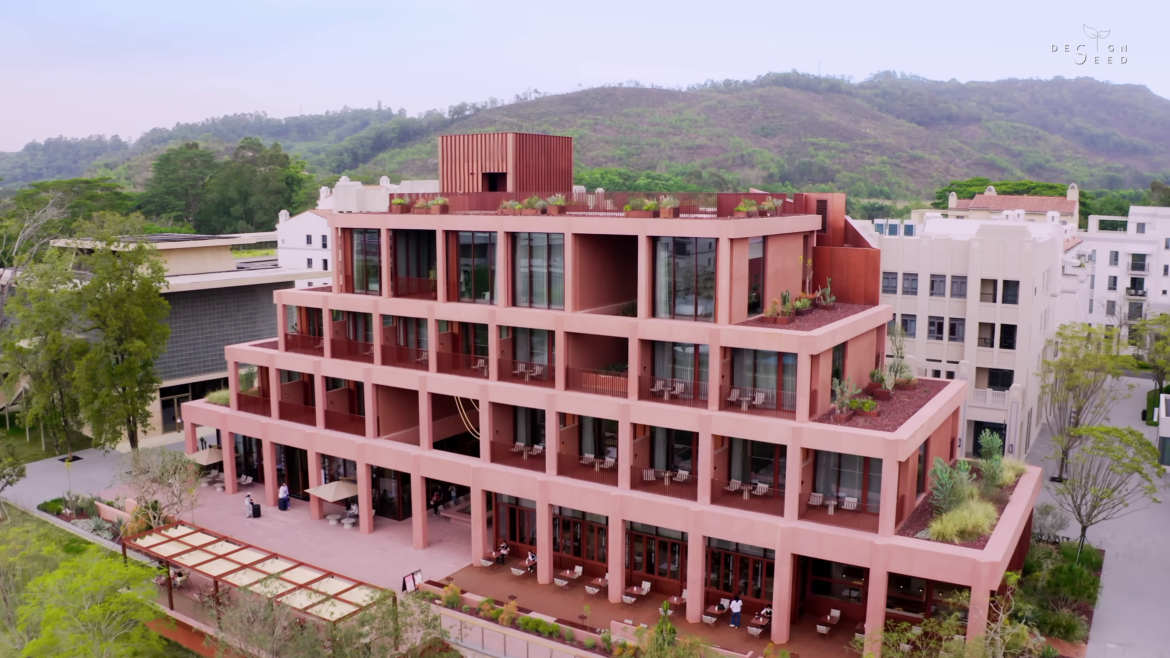
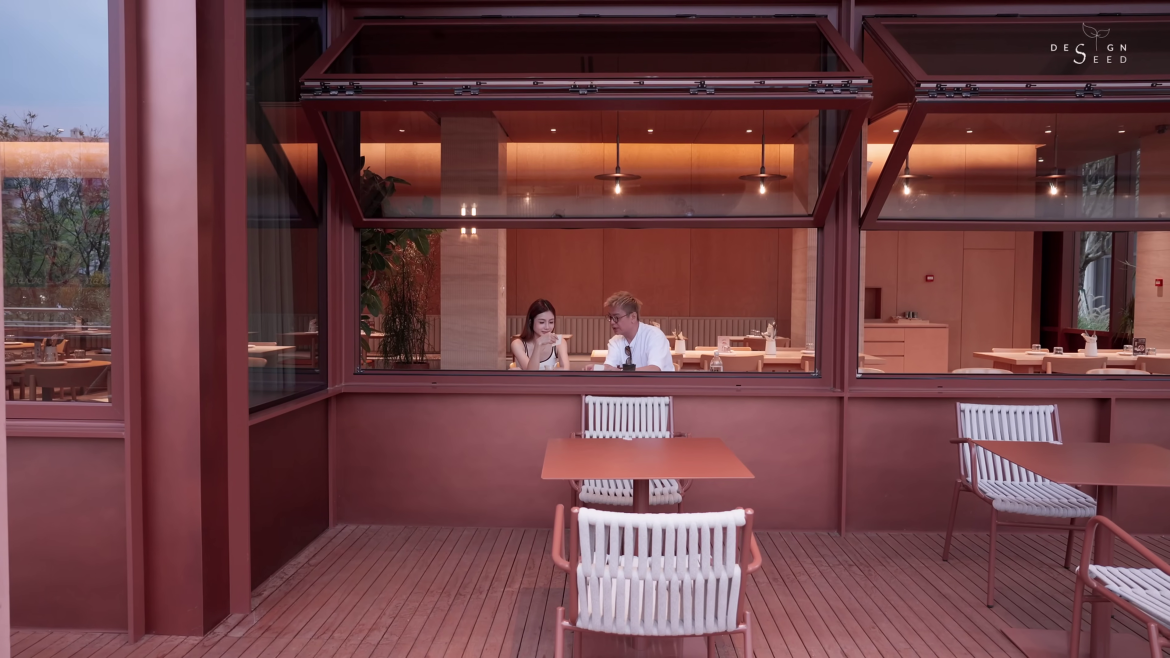
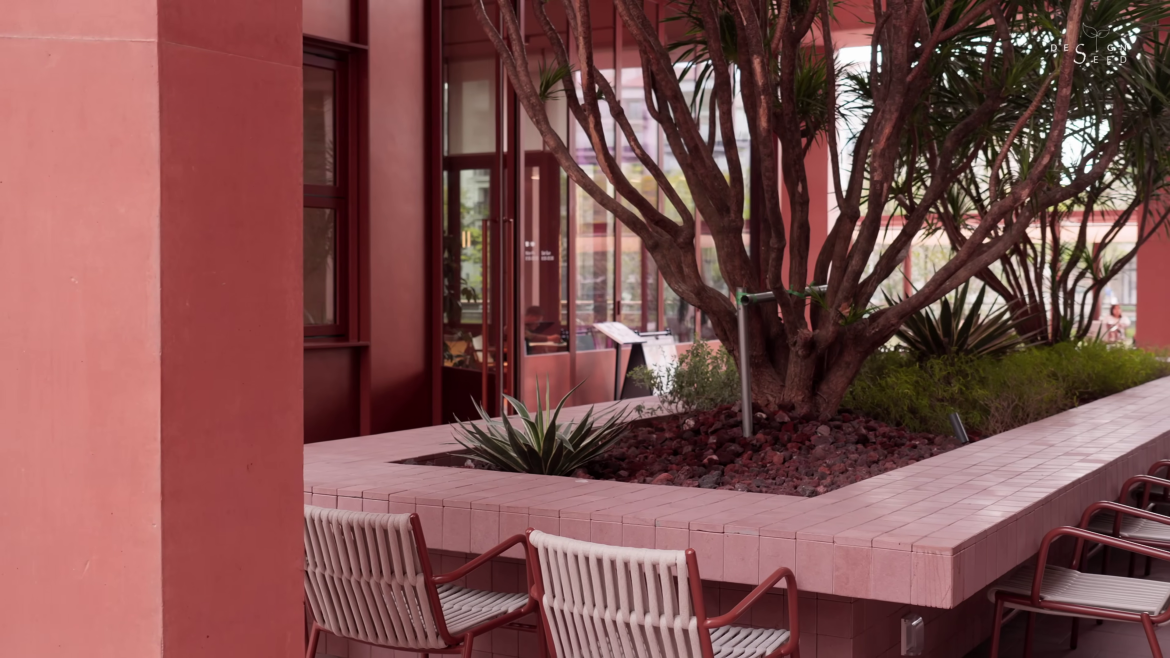
At first glance, it is the colour that immediately draws attention — a deep earthy red that feels almost too bold for its natural surroundings of mountains and lakes. Yet, according to Alex, that tension between order and nature, warmth and rawness, is exactly what the building is about.
Because this is not just a hotel.
“It’s a bookstore, a café, a destination,” Alex explains, “all woven into one single architectural statement.”
A Hotel That Opens Itself to the Public
“This building does something most hotels don’t,” Alex shares. “It opens itself to people.”
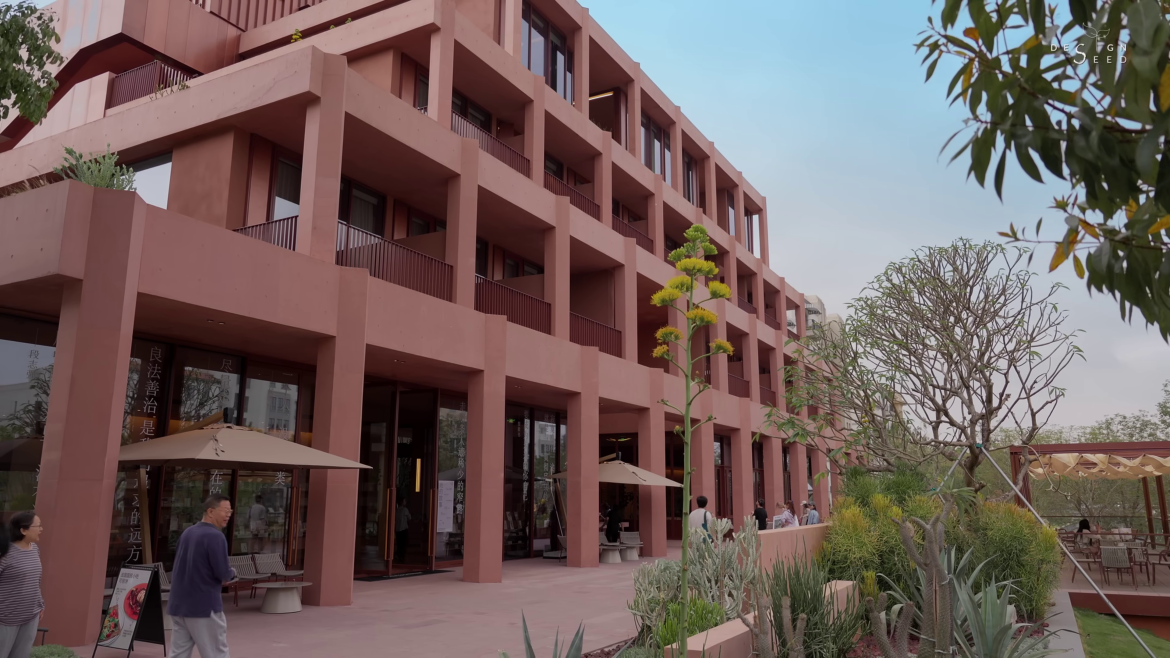
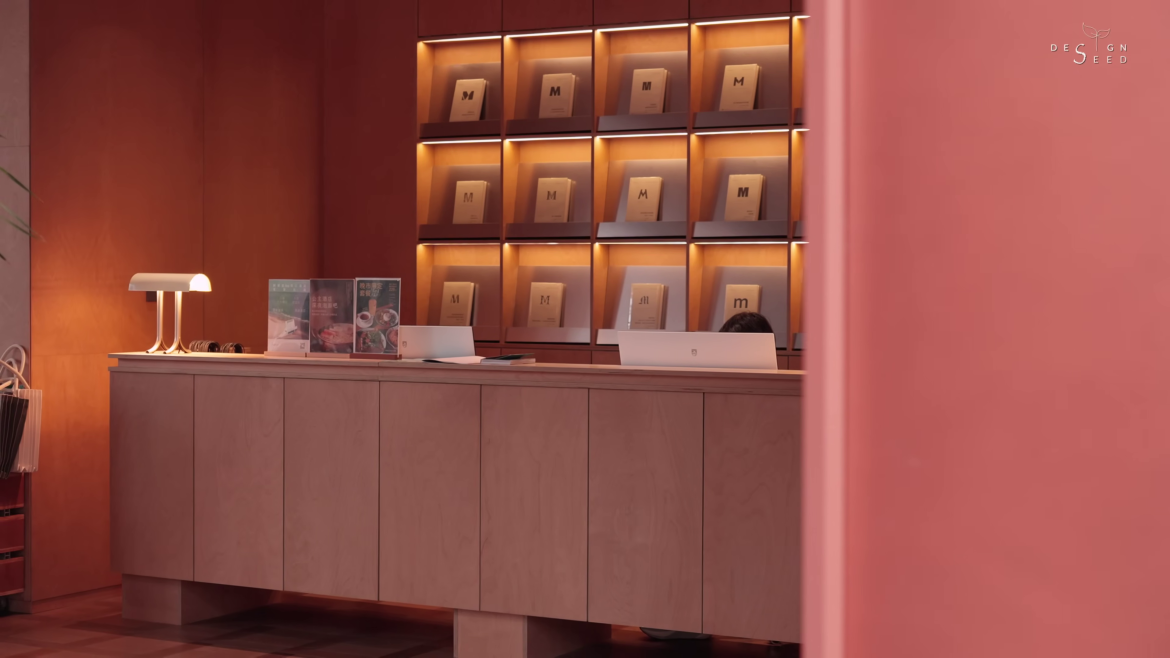
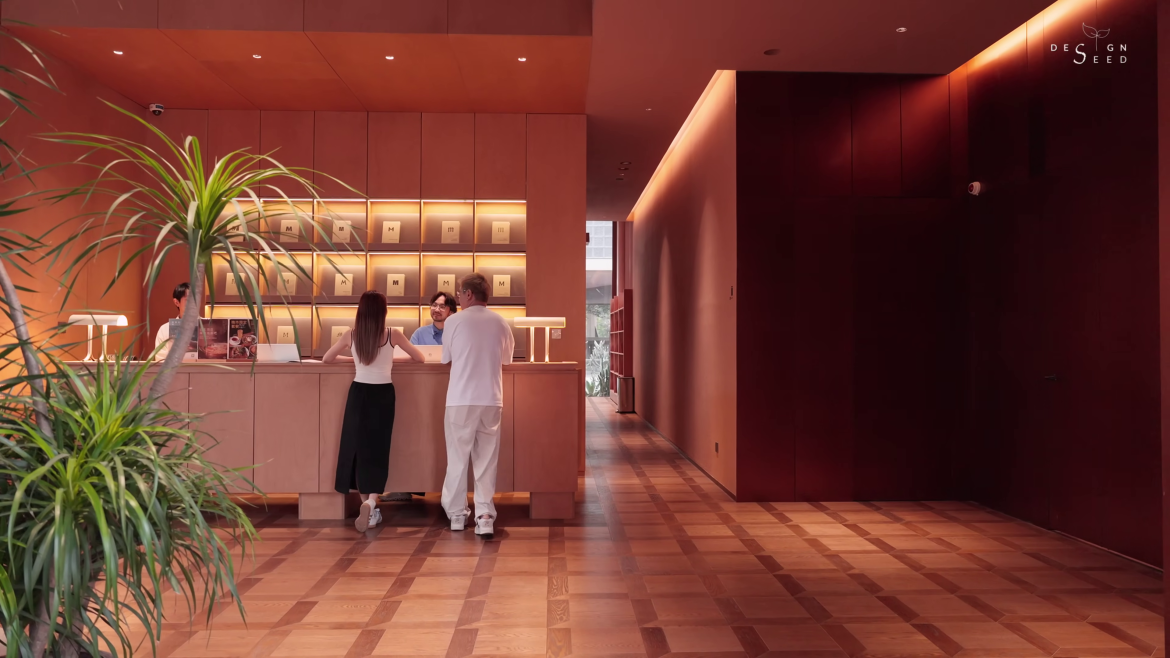
Rather than creating separation, the ground floor is designed entirely as a public space. A bookstore and reception flow into one another without partitions, while a café with light dining extends toward the riverside.
Anyone walking through the neighbourhood can drift beneath the colonnade and explore the space freely.
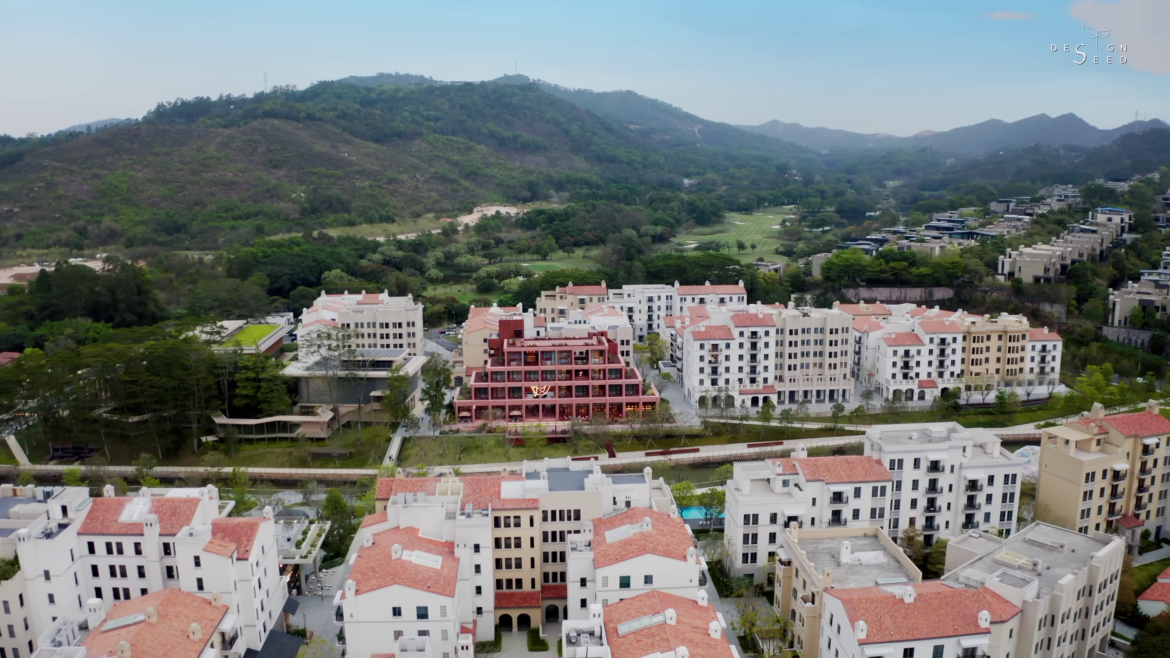
Located in the town of Aranya in China, the hotel sits surrounded by forests and lakes — “the kind of place people come to slow down,” Alex describes.
Right on the bank of the lake stands Author’s Room Hotel, designed by B.L.U.E. Architecture Studio for the brand naive IMAGINIST.
Four Volumes Wrapped in Terracotta
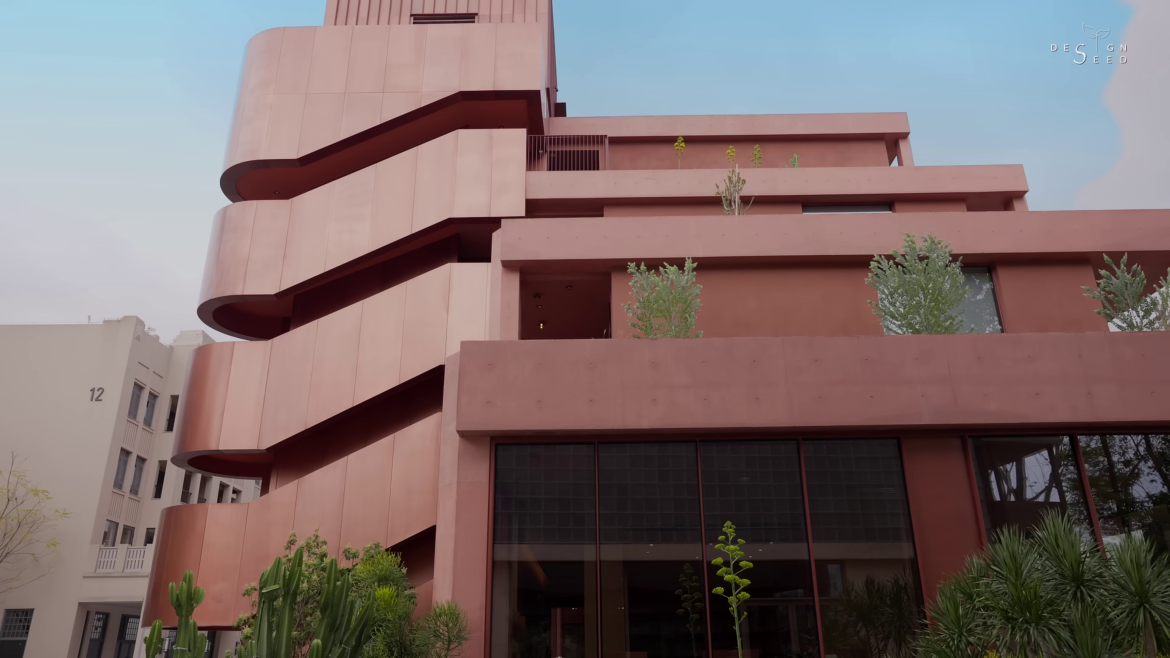
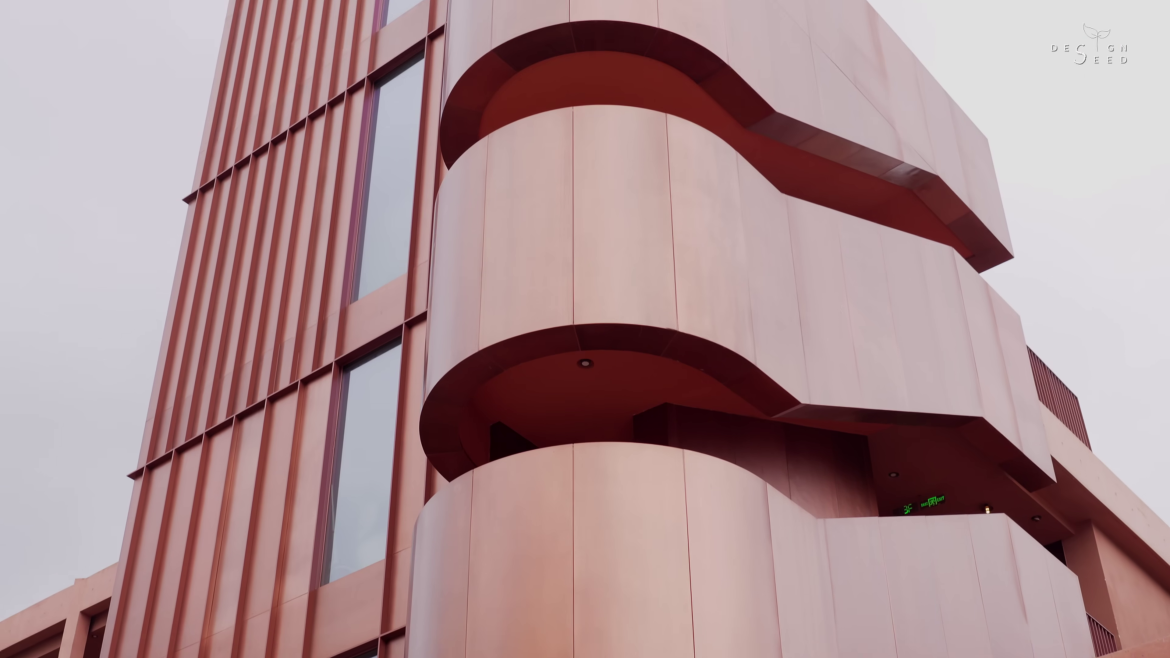
“The facade is a structure of four volumes stacked on top of each other,” Alex explains, describing the building’s warm terracotta grid.
Along the sides, curved red copper panels wrap around the structure in a more fluid and organic form, softening the geometry of the architecture.
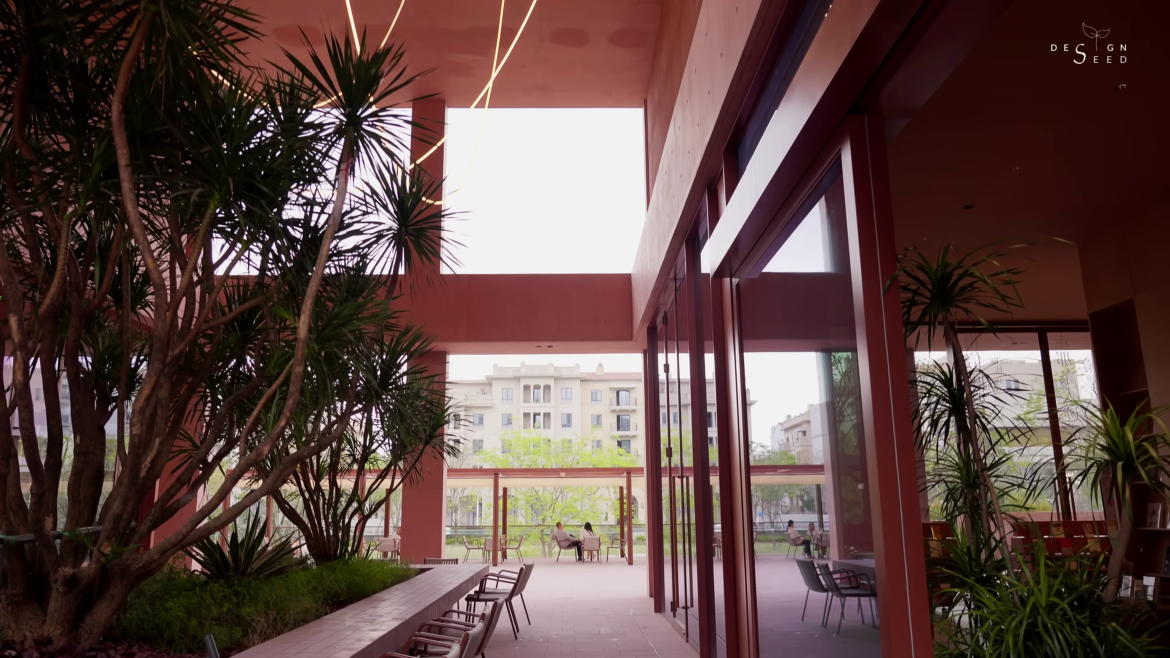
Within the symmetrical composition, the designers introduced two double-height semi-outdoor courtyards — one located on the ground floor and another on the third floor.
“Strategically placed to break the repetitive rhythm,” Alex says, “they make the spatial experience more dynamic.”
Designing Warmth Instead of Grandeur
“Step inside and you’re welcomed not by grandeur, but by warmth,” Alex says as the interior is revealed.
The reception counter feels understated, wrapped in raw and tactile textures that carry a quietly rustic quality. Rather than trying to impress visitors immediately, the interior invites them to slow down and notice the atmosphere around them.
Rows of light wood bookshelves line the space, creating contrast against the warm rustic palette.
Opposite the reception, beyond a large courtyard with pockets of seating, the café and restaurant begin to reveal themselves. Positioned deliberately across from one another, they create what Alex describes as “a subtle dialogue” across the semi-outdoor courtyard.
Suites Designed Around Openness
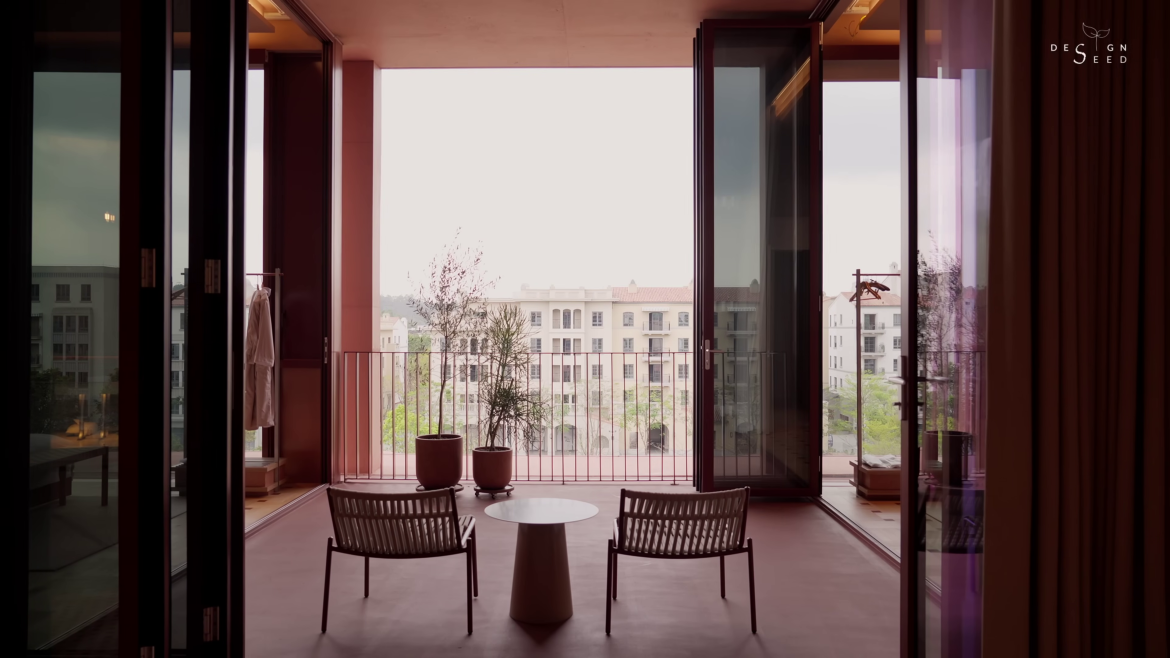
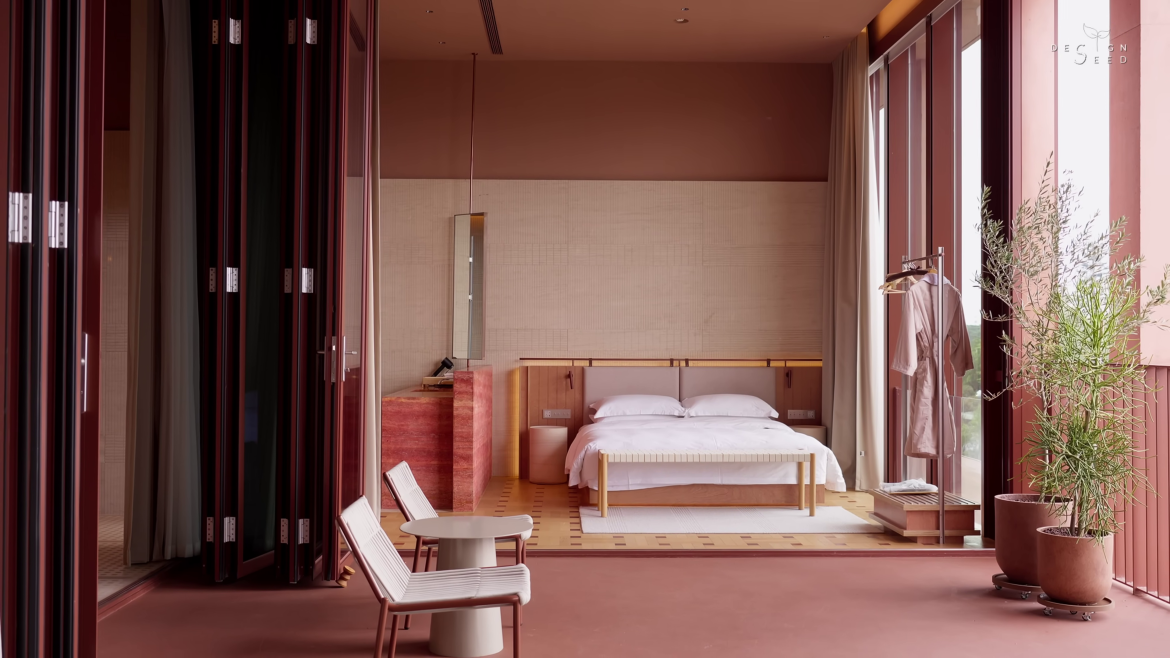
Beyond the public spaces, the hotel contains just 18 suites, each carefully designed to frame curated views of the surrounding landscape.
“What also sets the two-room suites apart,” Alex explains, “is how the sink is integrated into an open-plan space rather than being enclosed in a separate bathroom.”
This allows natural light and ventilation to move more freely throughout the suite, creating a room that feels more spacious and connected.
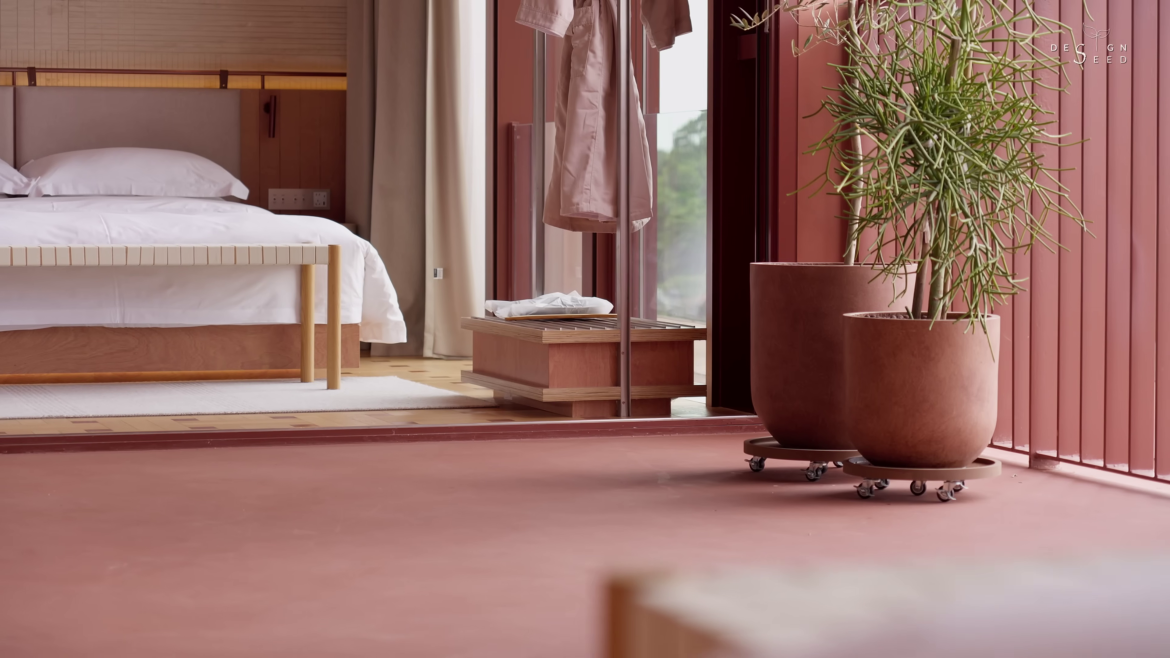
Warm materials such as wood grain stone, red plywood, and concrete bricks appear consistently throughout the interiors. According to the designer, these tactile finishes help create an atmosphere that feels grounded, welcoming, and comfortable.
Want to understand how good design works?
Join our Design Seed membership program for only $5 and get behind the scenes access in depth reels and our exclusive handbook that breaks down technical design knowledge into practical tips you can apply to your own home.
Back to the story:
More Than Just a Place to Stay
“What makes Author’s Room Hotel memorable,” Alex reflects, “is not just its architecture, but how it shapes experience.”
From its bold red facade to its intimate interiors, every part of the space is designed to slow people down and encourage them to stay a little longer.
Over time, Author’s Room Hotel has become more than simply a place to stay. It now stands as a distinctive landmark within Aranya — remembered not only for its architecture, but for the experience it creates.
Thank you for taking the time to read this Article. Stay tuned for more updates!