Reimagining a 100-Year-Old Hotel in Black & White | Shanghai Hotel Tour | Architecture
4 min read
Welcome to Shanghai, a city where the past and future exist side by side—and sometimes even within the very same hotel.
A Building Through Time
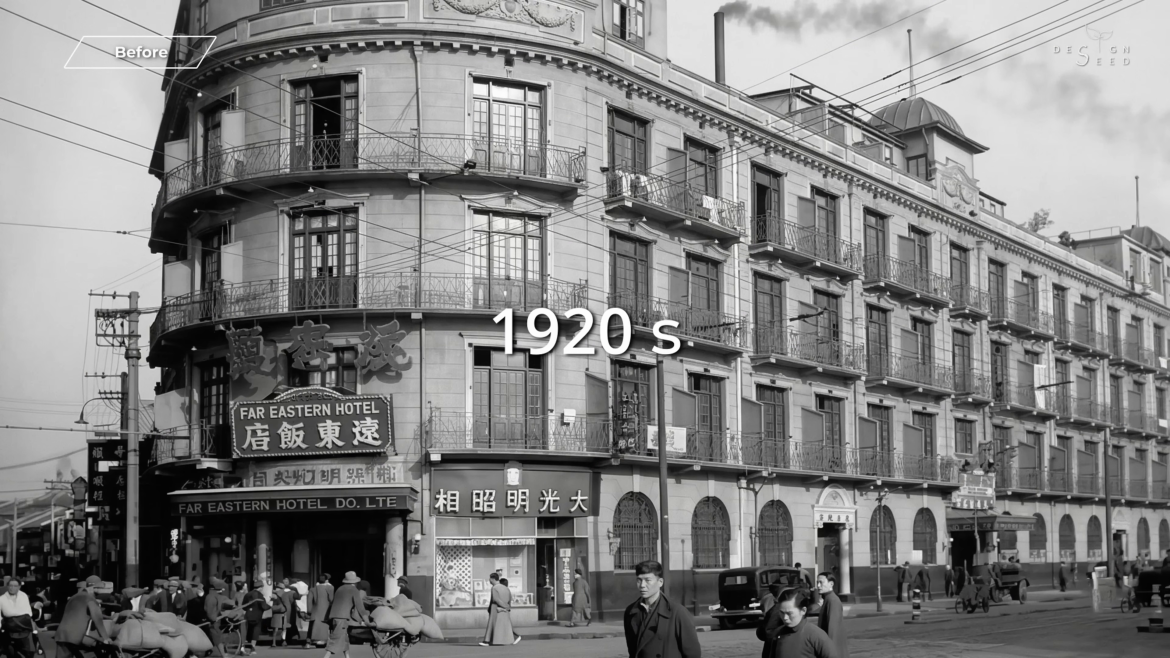
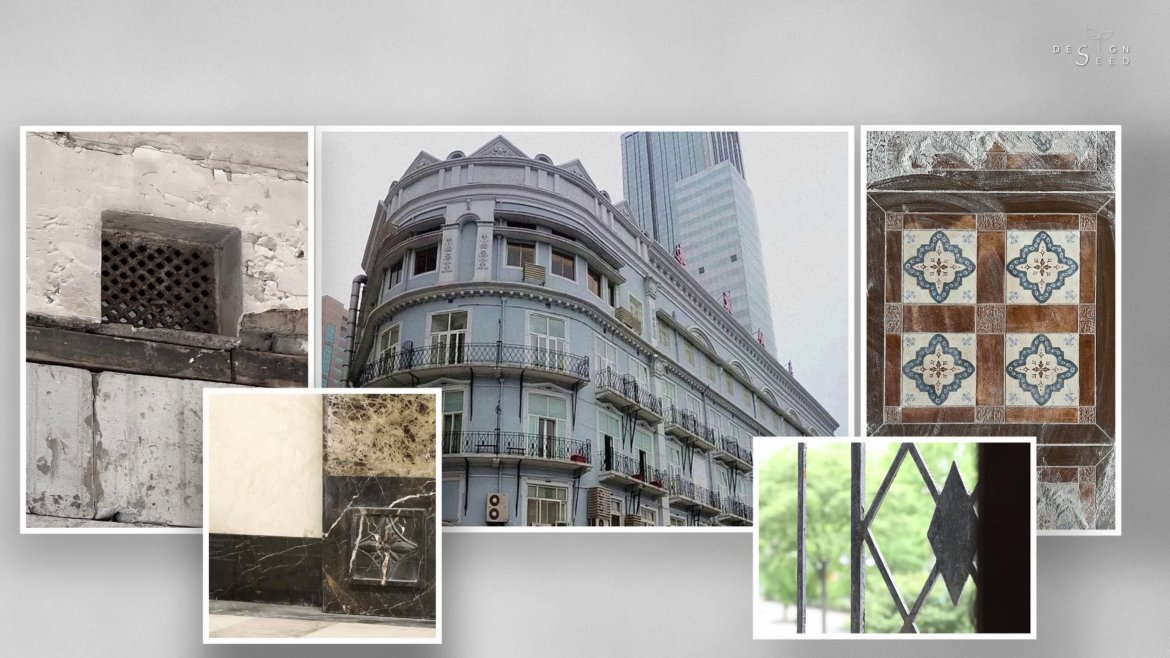
This building has been standing since the 1920s—through evolutions, revolutions, reinventions, and an entire century of change. But what you see today wasn’t always like this.
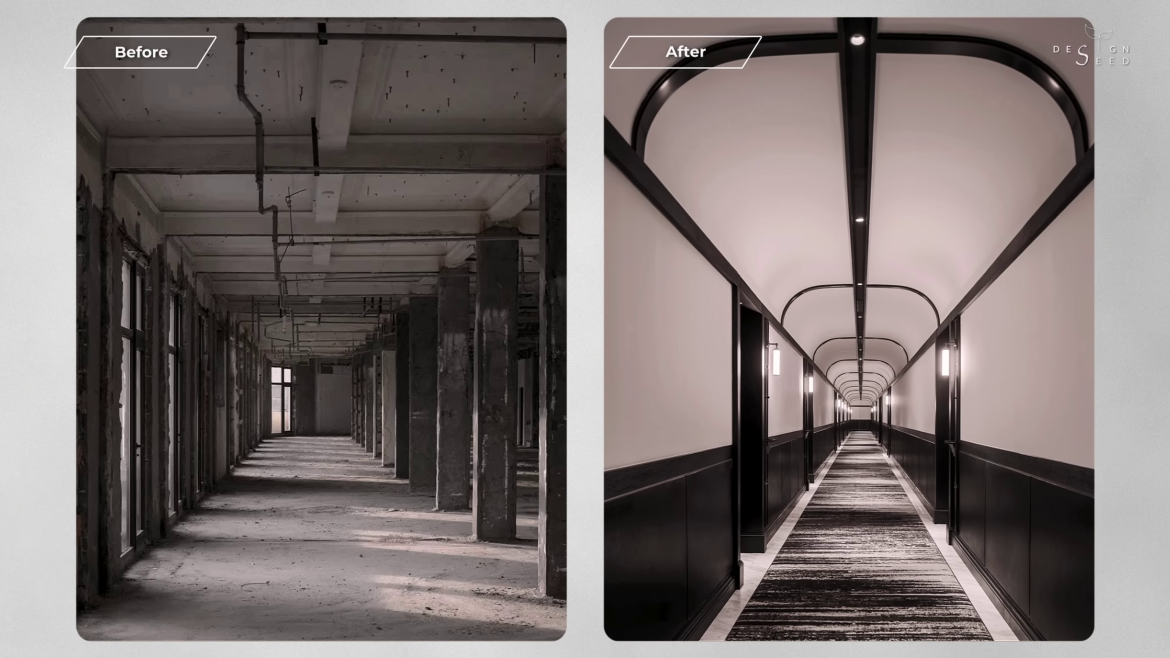
So how do you take a century-old landmark and transform it into a contemporary stay without removing its valuable history?
A Quiet Arrival
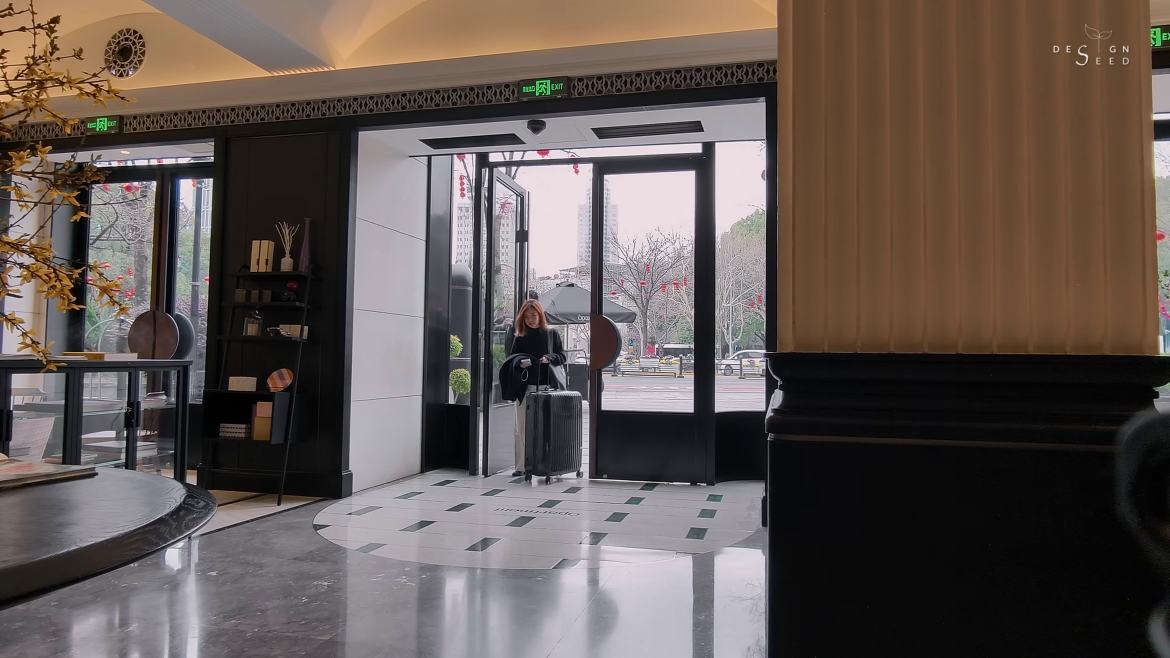
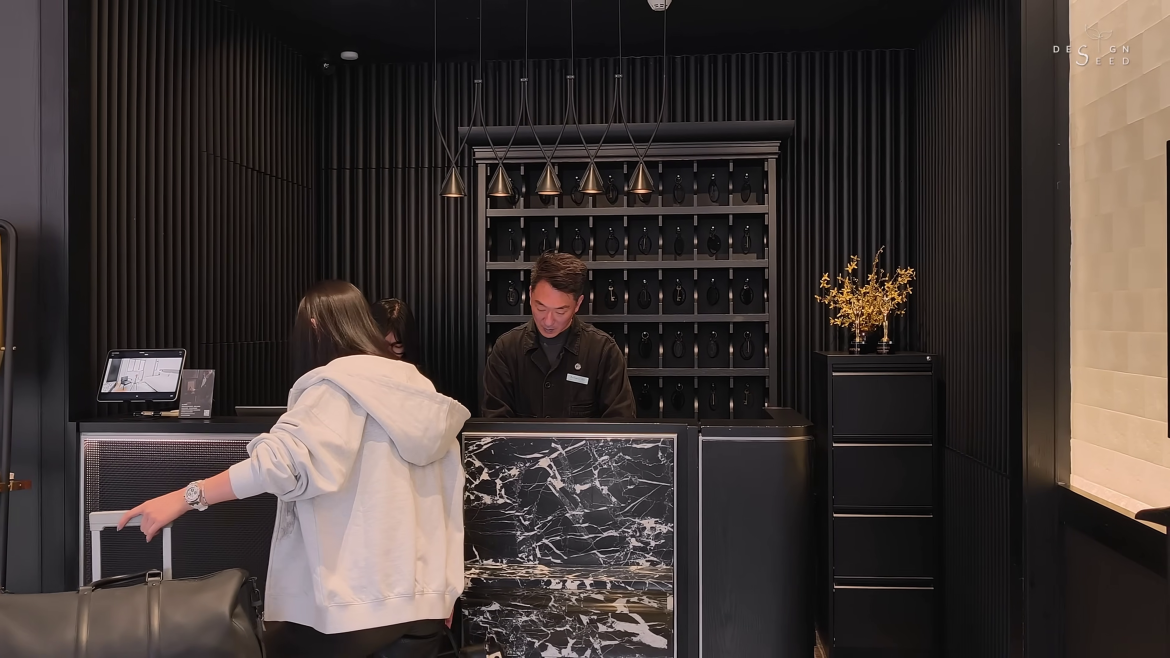
Outside, Shanghai is relentless—fast, loud, and constantly moving. But the moment you step through these doors, everything slows down.
The lobby doesn’t try to compete with the city. Instead, it invites you in quietly.
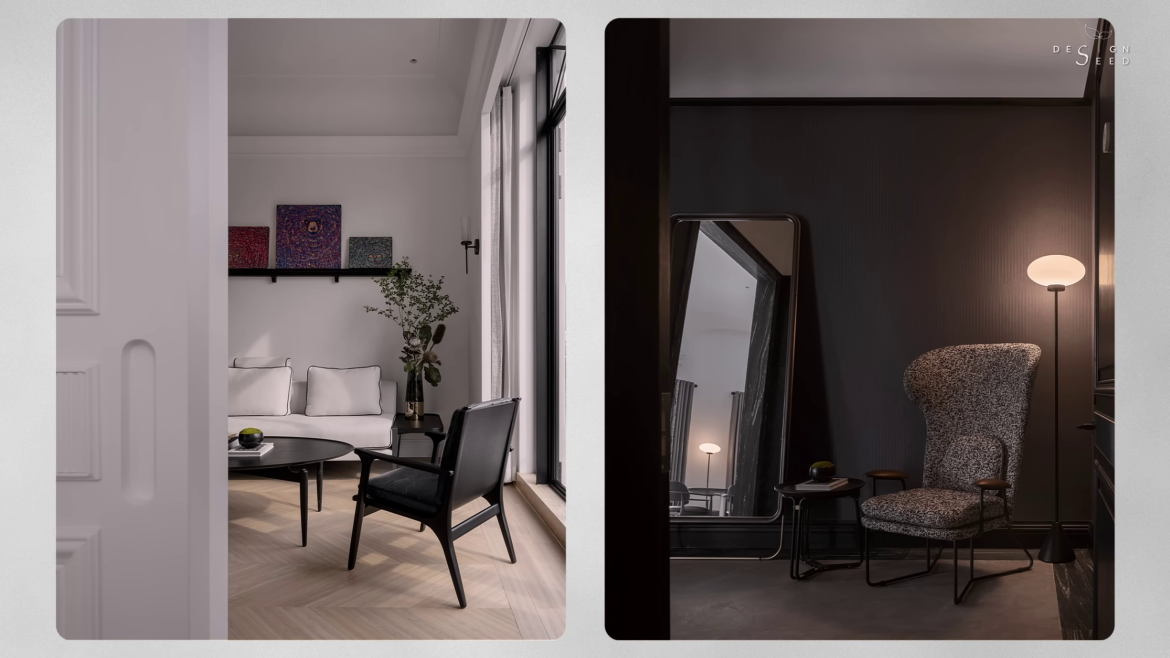
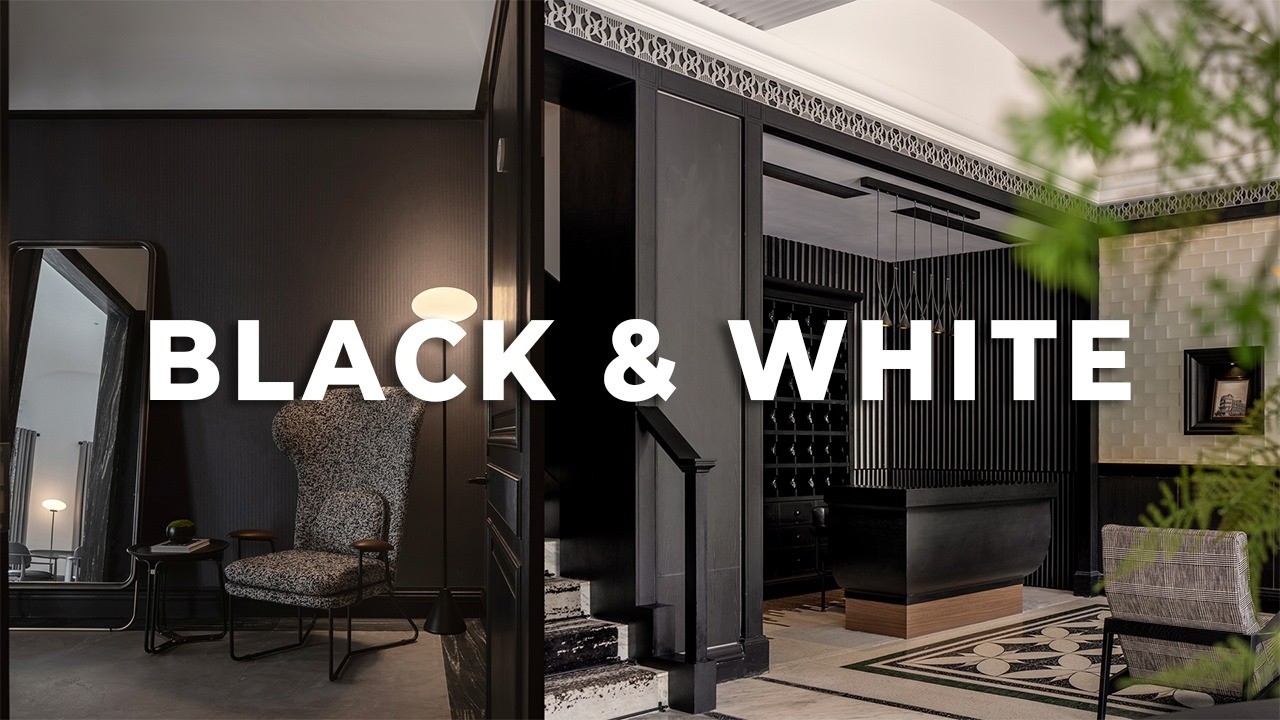
A black and white palette might seem simple, but here, simplicity isn’t about minimalism—it’s about intention. The monochrome palette stages the architecture, creating a powerful canvas. One that creates visual silence, allowing the building to finally breathe again.
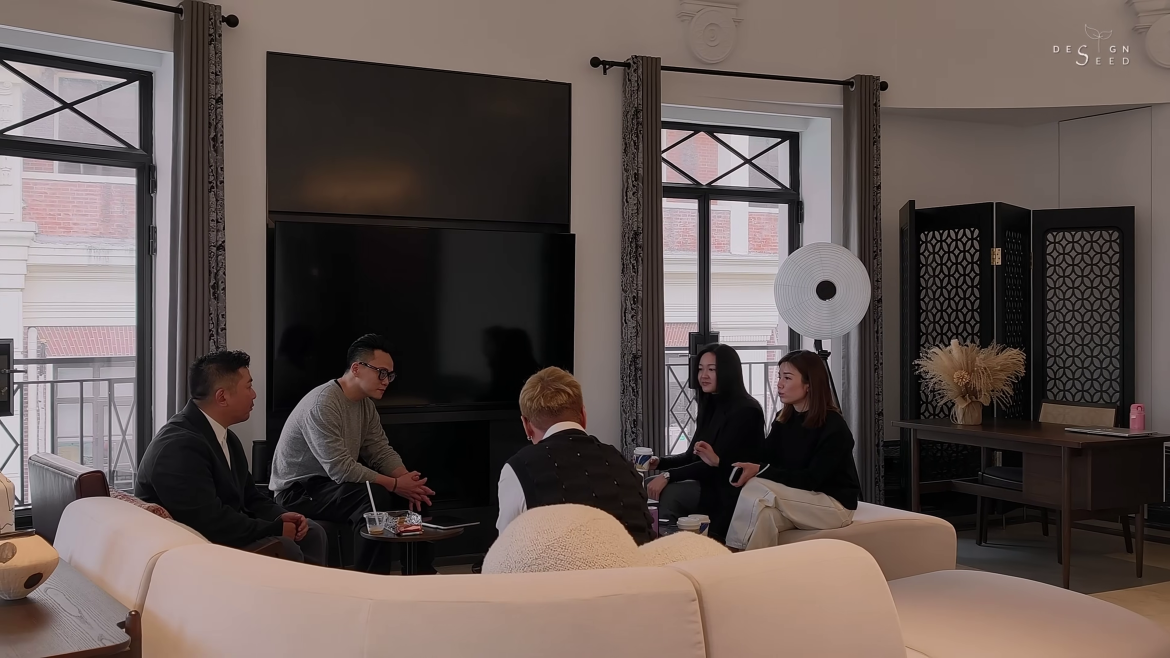
What’s unique about this project is that it was designed by Taiwanese designers currently working in Shanghai.
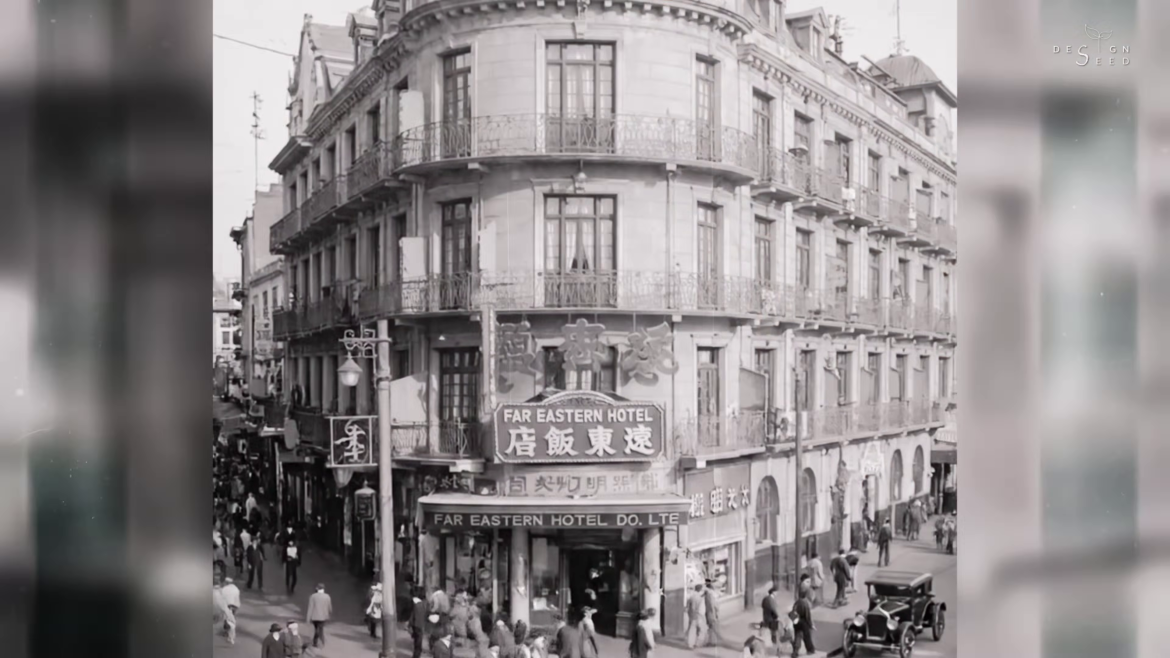
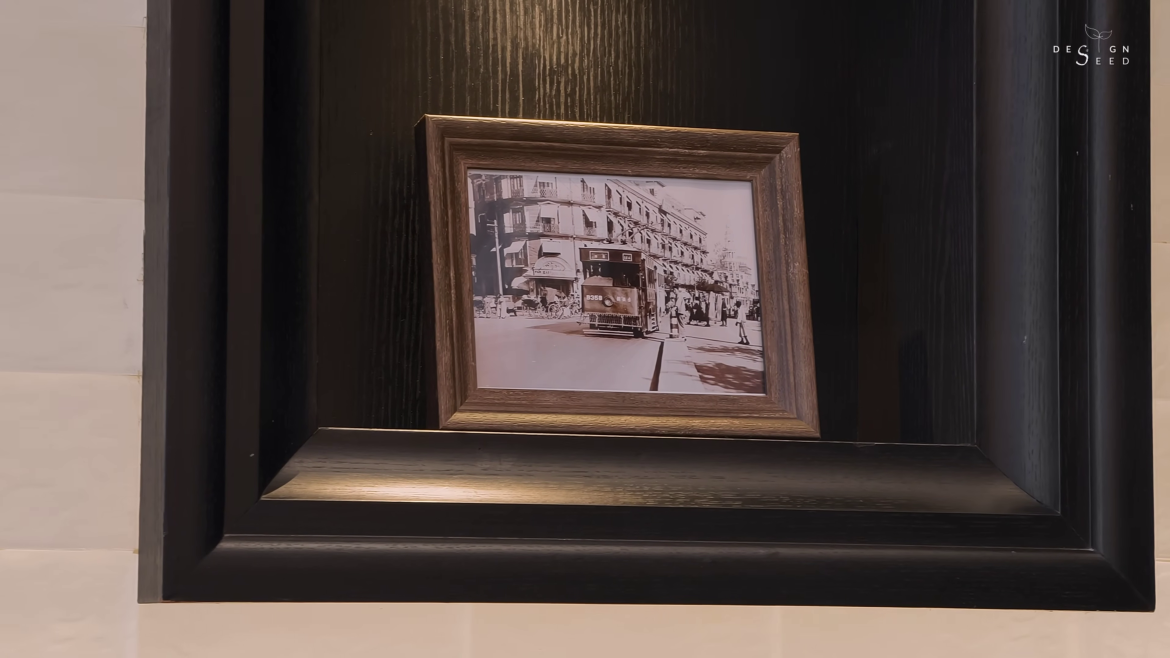
Carlie, one of the designers, explains that the decision to use a black and white palette came from an old photograph—it became their first impression. To them, old photographs represent the past, and when expressed through contemporary design methods, black and white becomes something timeless, unaffected by trends.
Within the space, black and white acts as a bridge between eras.
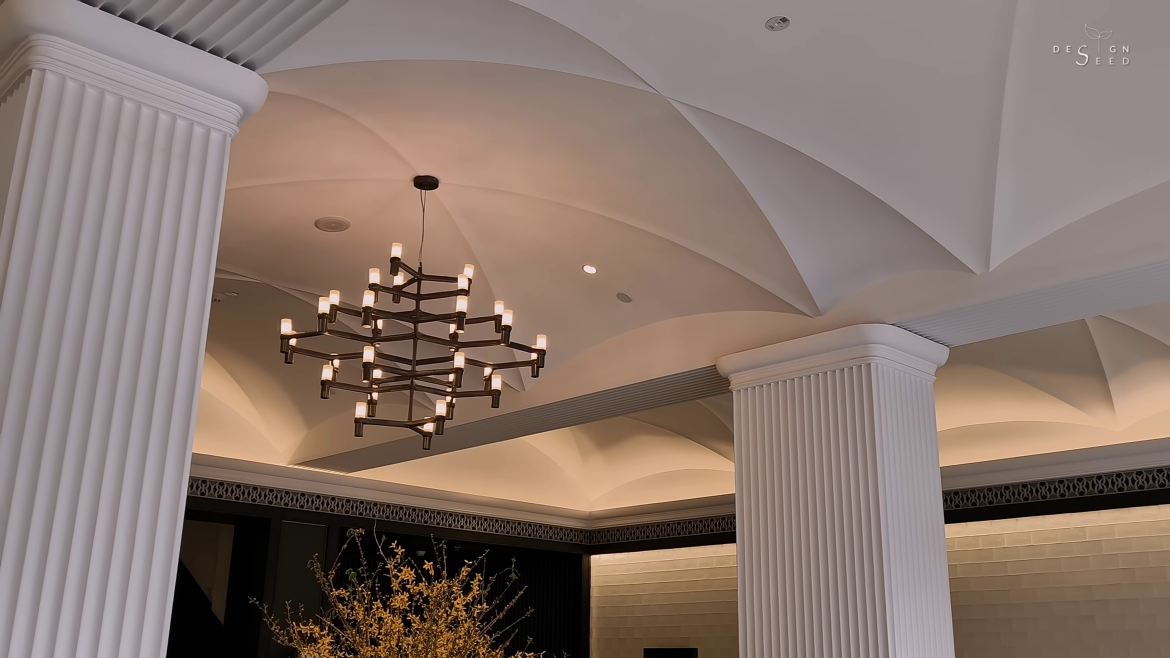
French elements were also a requirement from the very beginning due to the building’s historical background as French-style architecture. But instead of replicating a traditional French interior, the team chose to subtract—to reinterpret rather than imitate.
Introducing OPARTMENT
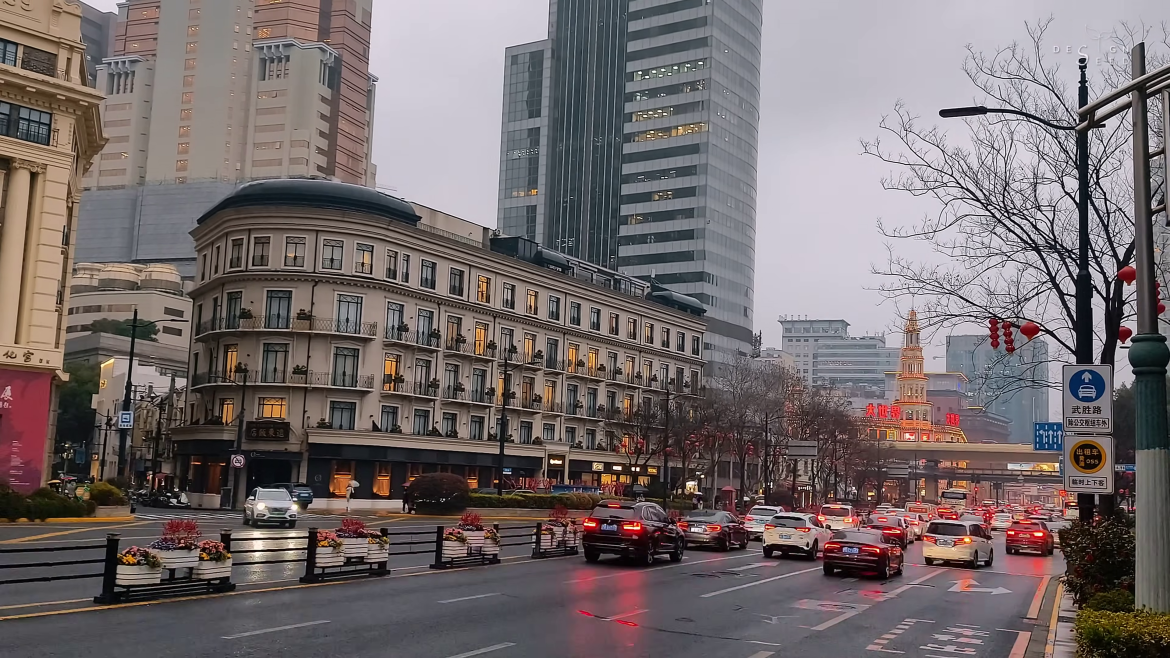
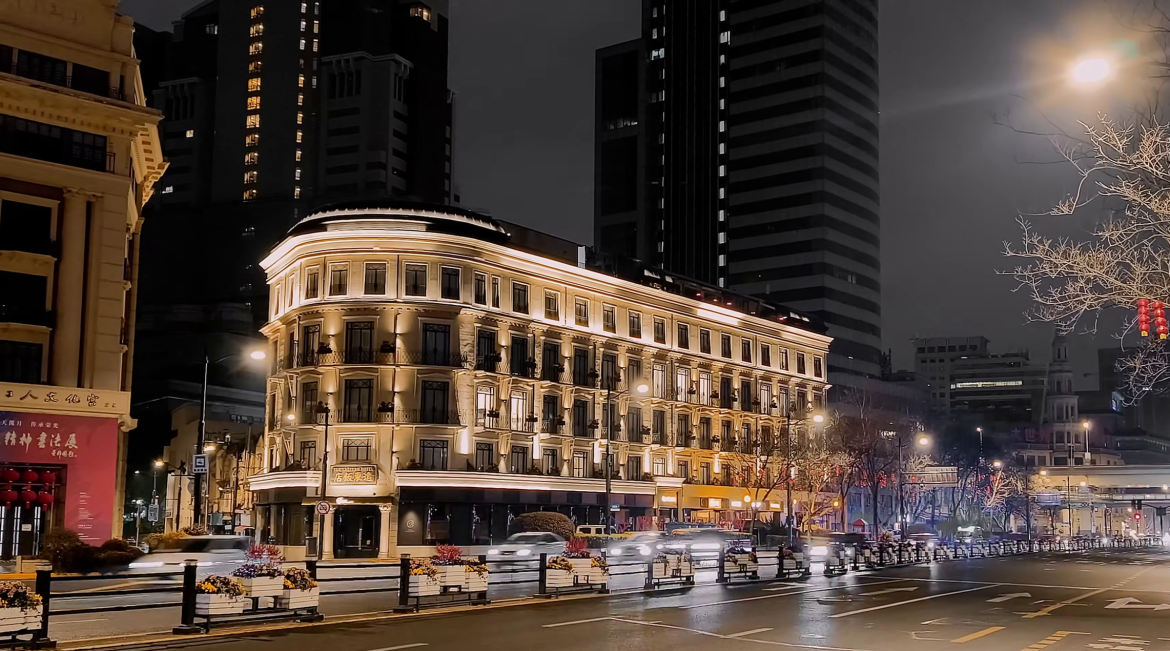
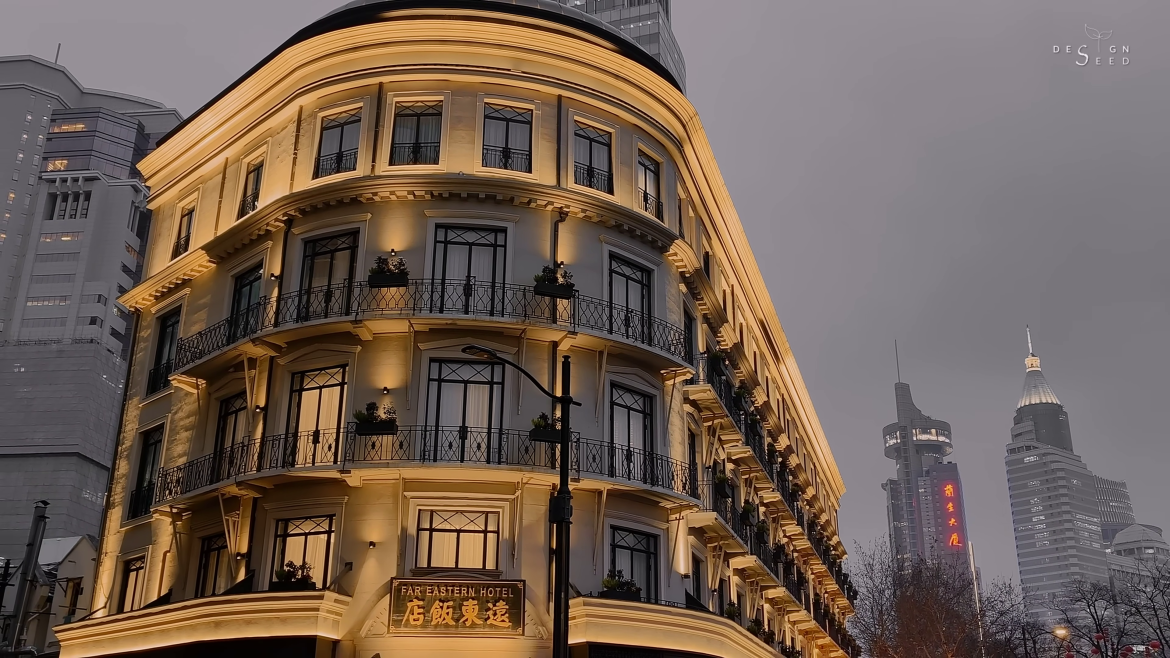
This is OPARTMENT, formerly known as the Far Eastern Hotel, located right at the heart of People’s Square.
It is one of the most valuable addresses in the city—but the real story here isn’t just about restoration. It’s about restraint.
Think of this building as a memory capsule, sealed in the 1920s, waiting for the right moment—and the right hands—to open it.
Reawakening a Landmark
When the team first encountered the Far Eastern Hotel, it was simply too old—unused and forgotten.
While the rest of Xizang Road remained bright and active at night, this particular stretch was dark. The project became a mission to re-engineer and reorder the focus point of the street—bringing life back into a forgotten piece of the city.
The Meaning Behind the Name
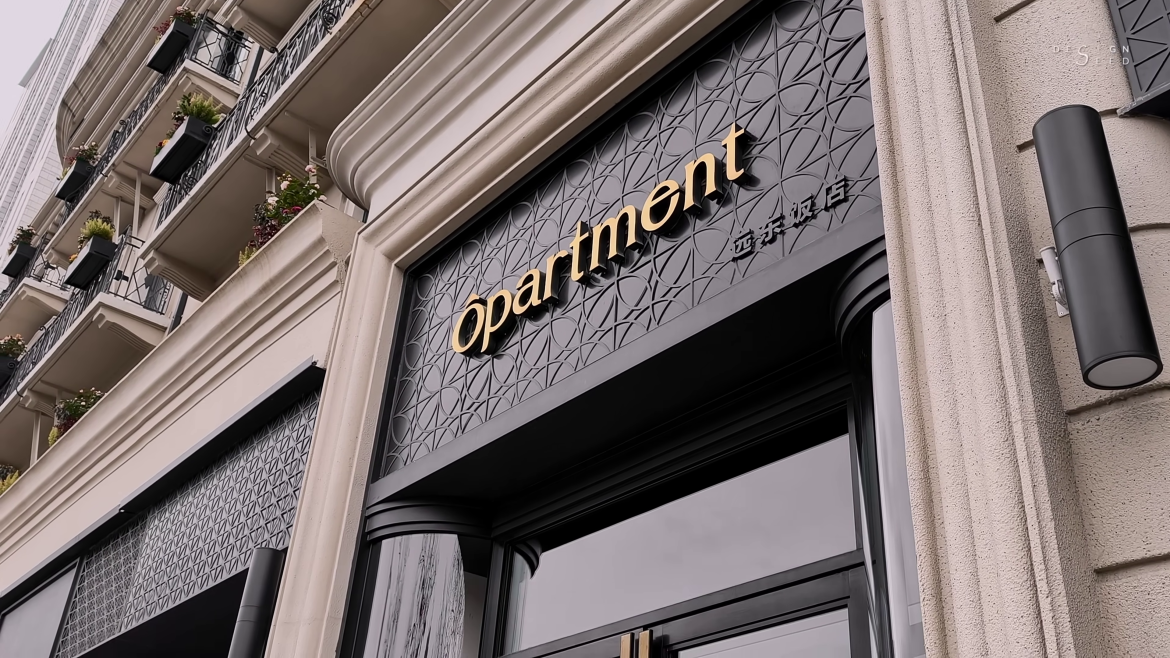
The name Ôpartment was created with intention.
The “Ô” replaces the “A” in apartment and represents “home.” The idea is simple: even though this is a short-term stay, it should feel like home—warm, comfortable, and personal.
Designing for Living
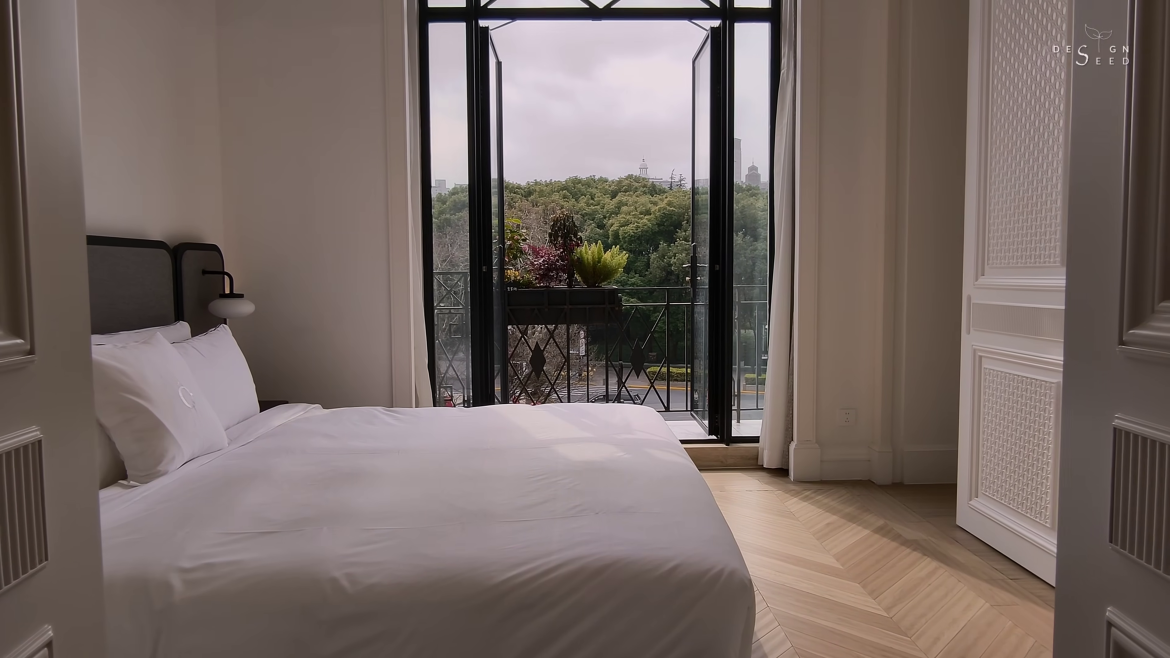
Step into a standard room, and the design language becomes personal.
These are generous, unhurried rooms—the kind that exist in older buildings from the 1920s. It doesn’t feel like a design statement; it feels lived-in and calm.
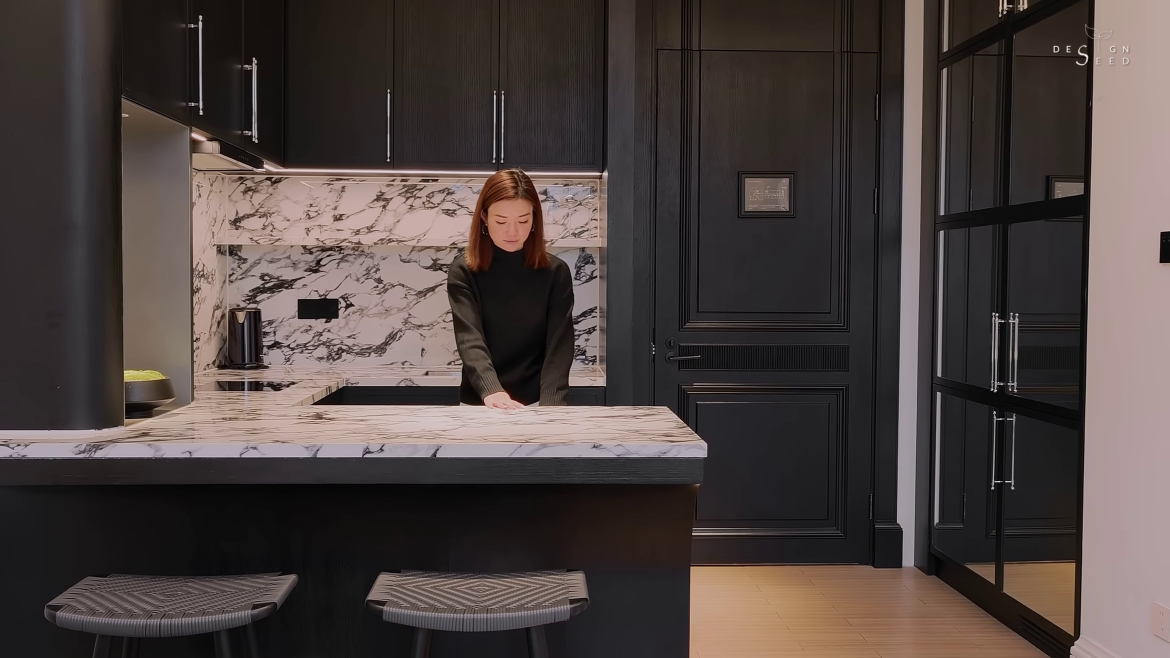
Each room is thoughtfully equipped with a full kitchenette, along with a washer and dryer. Because at its core, OPARTMENT isn’t just a place to visit—it’s designed to feel like a home away from home.
Guests are even encouraged to personalize their space—adding aromatherapy, candles, flowers, and personal belongings to instantly create a sense of familiarity.
A Language of Restraint
The bathroom continues the same language of black and white—simple and deliberate.
Want to understand how good design works?
Join our Design Seed membership program for only $5 and get behind the scenes access in depth reels and our exclusive handbook that breaks down technical design knowledge into practical tips you can apply to your own home.
Back to the story:
When restraint is done well, it becomes its own form of luxury.
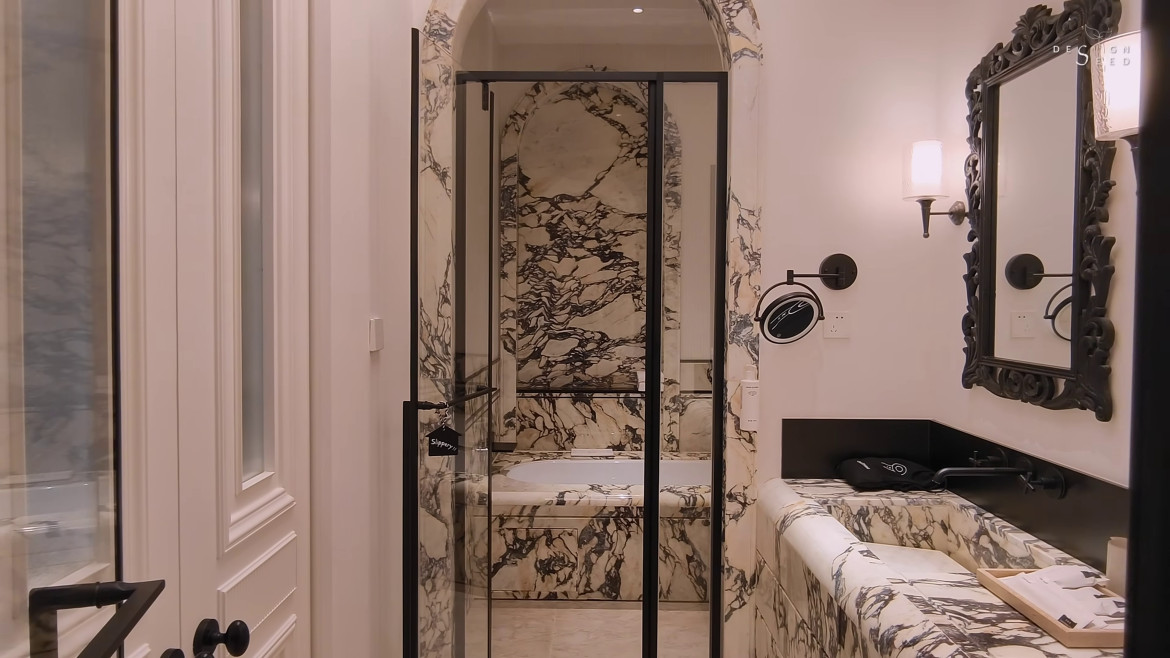
In the largest suite, this monochromatic language becomes more dramatic—not through colour or excess, but through materiality.
Bold marble envelops the sink and wraps the bathtub, creating a space that feels both striking and composed. The textures are rich and layered, offering a quiet kind of luxury that invites pause.
A Different Approach to Hospitality
In a century-old hotel like this, you might expect a grand dining room to match. But OPARTMENT takes a different approach.
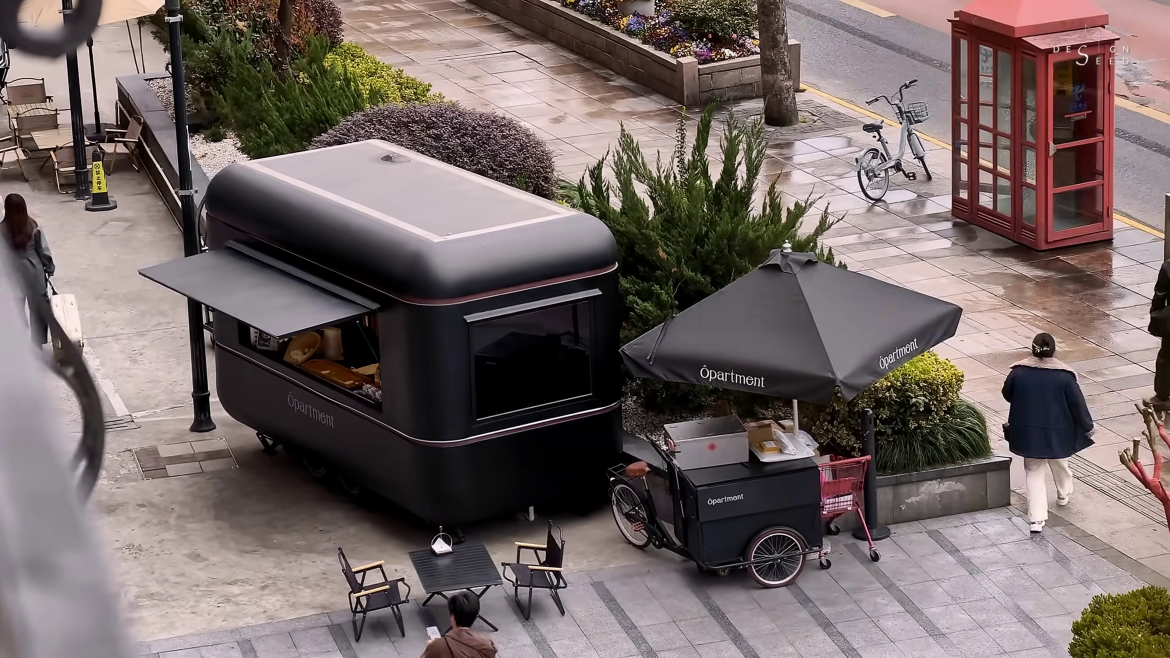
Instead of an in-house restaurant, a caravan outside serves simple, unhurried meals to people passing through one of Shanghai’s busiest intersections.
The philosophy is clear: guests are encouraged to explore the city’s vibrant food culture. Surrounded by famous eateries, the team even provides curated lists of nearby local restaurants.
A City Within a Building
Shanghai is a very special city.
A hundred years ago, this building welcomed celebrities and foreigners from around the world. That legacy still lingers today.
Rather than over-designing or forcing a new identity, the team chose to respect what was already there.
A Stay Rooted in Memory
OPARTMENT is a hotel unlike anything else in Shanghai—not because it is the flashiest or the most modern, but because it has character.
In a city full of extraordinary places to stay, finding one that truly connects you to its history—its memory—is rare.