Homey & Cosy Muji-inspired Interior Design HouseTour |Desa Park City| Semi-D House Transformation
5 min read
In the quiet neighbourhood of Desa ParkCity, what was once a modern tropical semi-detached home has been completely reimagined into a calm, functional sanctuary inspired by the simplicity of Muji living. For the homeowners, the transformation was deeply personal — a dream home shaped around practicality, family connection, and the comfort of everyday life.
“Because we like neutral colours and natural materials, we thought of a Muji design concept that really suits us,” the homeowners shared. “It’s like a dream come true.”
Reimagining a Restrictive Layout
In today’s episode of Design Seed, Alex Lee and the team explored how a once compartmentalised tropical residence evolved into a bright, seamless family home tailored for expansion and flexibility.
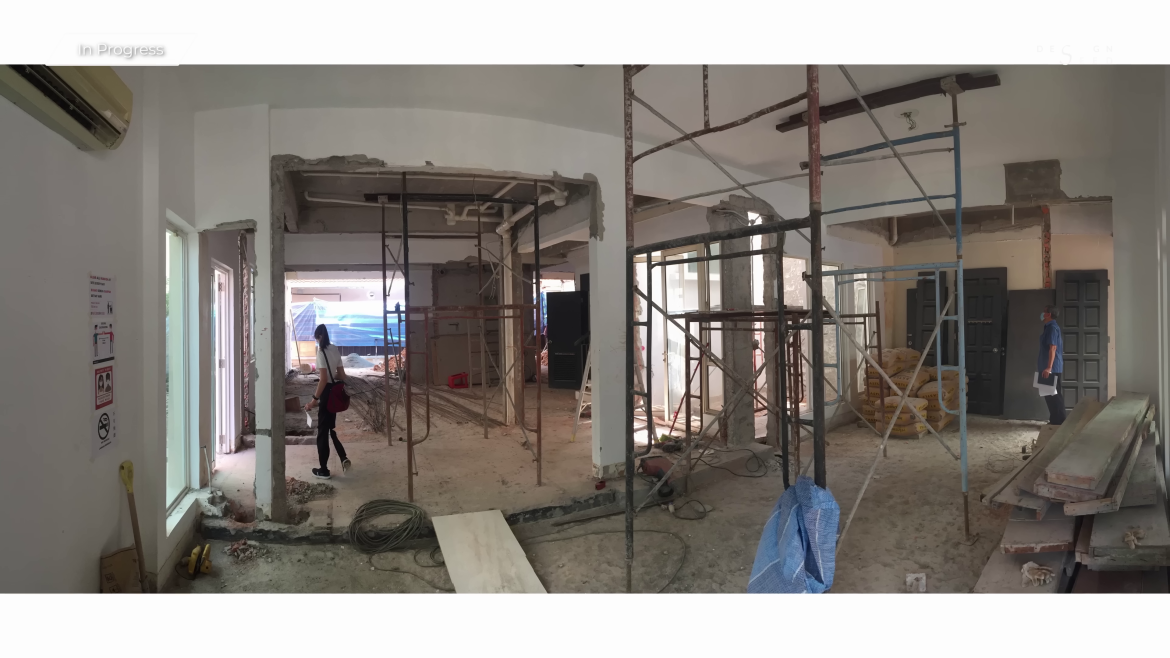
The original house, while architecturally modern, came with multiple courtyards, confined walkways, and underutilised spaces that no longer suited the growing needs of the family. The clients requested larger communal areas, fewer dividing walls, and a more user-friendly layout that prioritised functionality without compromising warmth.
“The original structure itself was not so user-friendly,” Alex explained while walking through the existing floor plan. “We wanted to shift the experience into something more practical and connected.”
The homeowners echoed the same sentiment, saying they wanted a space that felt “clean and clear,” while still carrying subtle design details that added personality to the home.
Opening Up the Heart of the Home
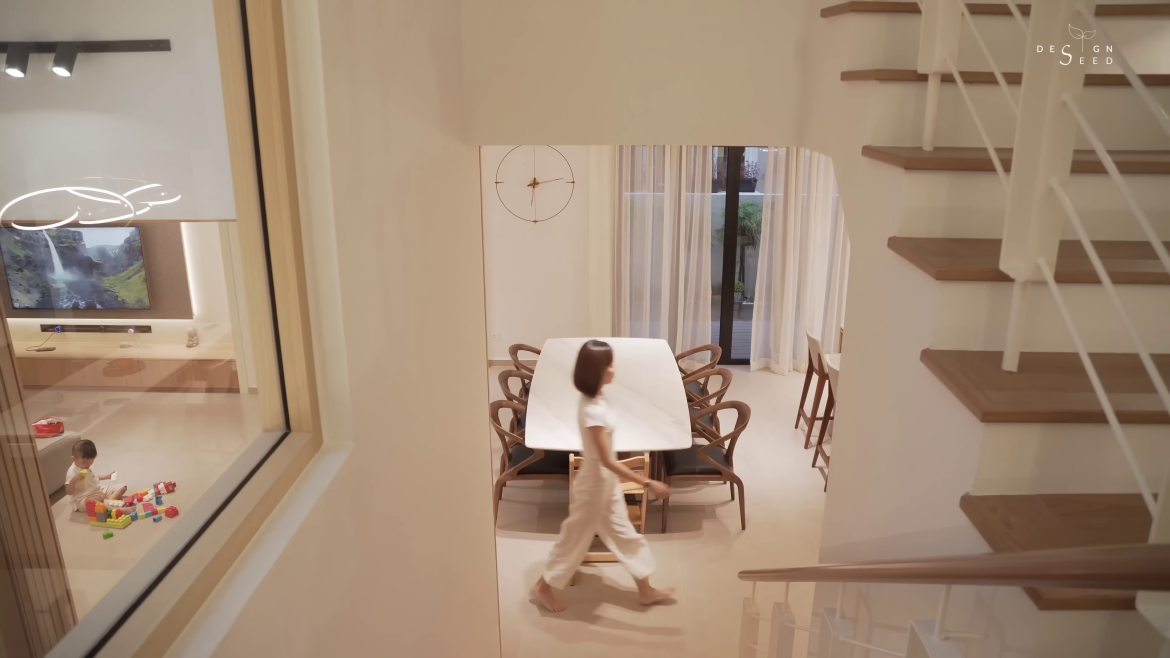
To achieve this, the team reworked the ground floor extensively. The foyer and outdoor courtyard were expanded while the central courtyard was retained to continue bringing natural light into the centre of the home.
The guest bathroom was relocated, and the rear section of the property was extended, transforming what was once a narrow and fragmented floor plan into a spacious, welcoming environment designed around family interaction.
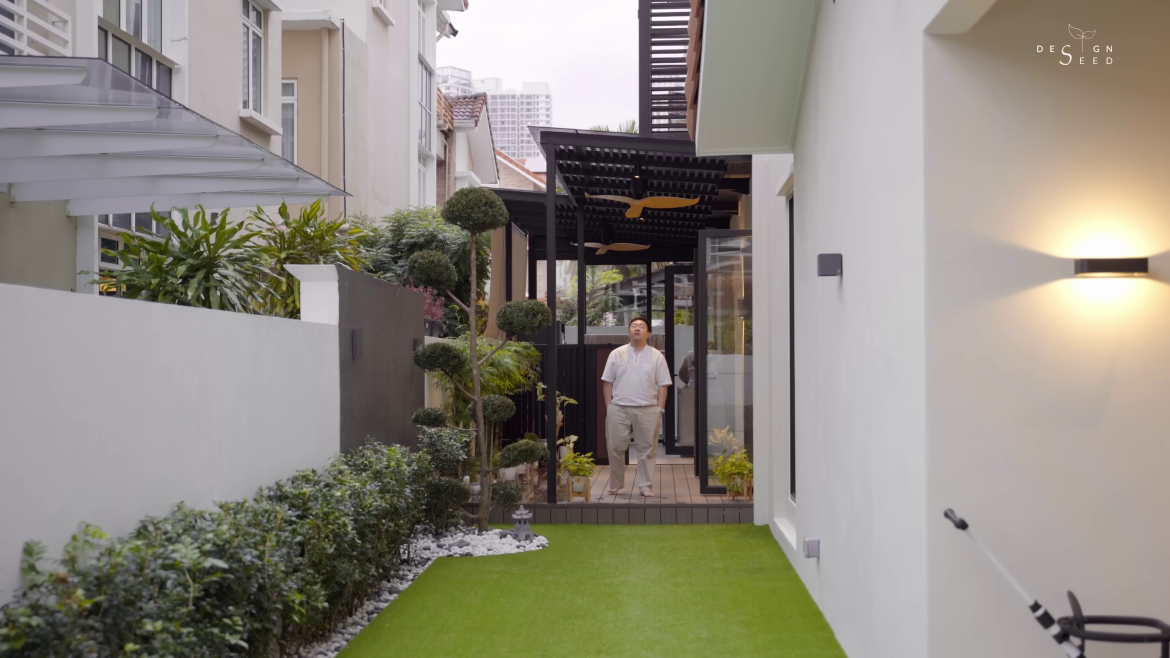
Taking advantage of the semi-detached side garden, the designers collaborated with landscape specialists to create a lush outdoor extension that visually connected with the interiors. Timber decking stretched the dining area outward toward the verandah, allowing the space to naturally accommodate small gatherings and family events.
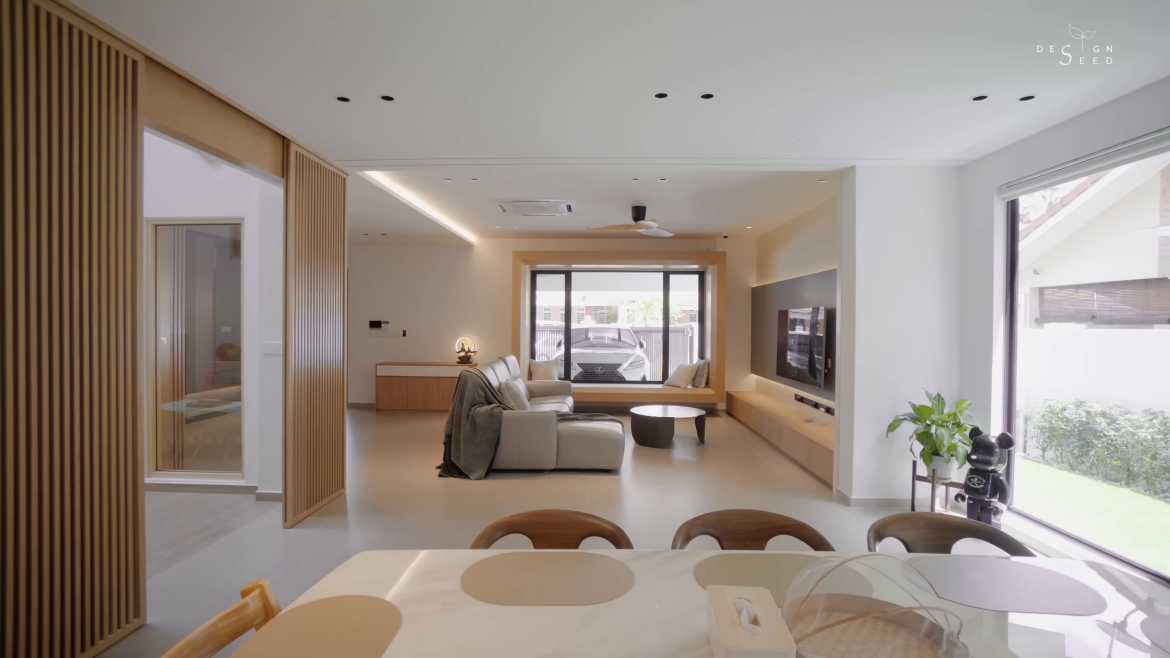
Large floor-to-ceiling windows were strategically introduced to frame the landscape and widen the perception of space throughout the home.
Transforming Constraints Into Features
One of the most challenging aspects of the renovation involved the home’s existing structural columns. Many of the walls the clients hoped to remove were supported by hidden structural elements underneath.
Alex revealed that extensive engineering calculations, structural strengthening, and vibration tests had to be carried out before the layout could safely be reconfigured.
“It was certainly worthwhile when the outcome turned out like this,” he said.
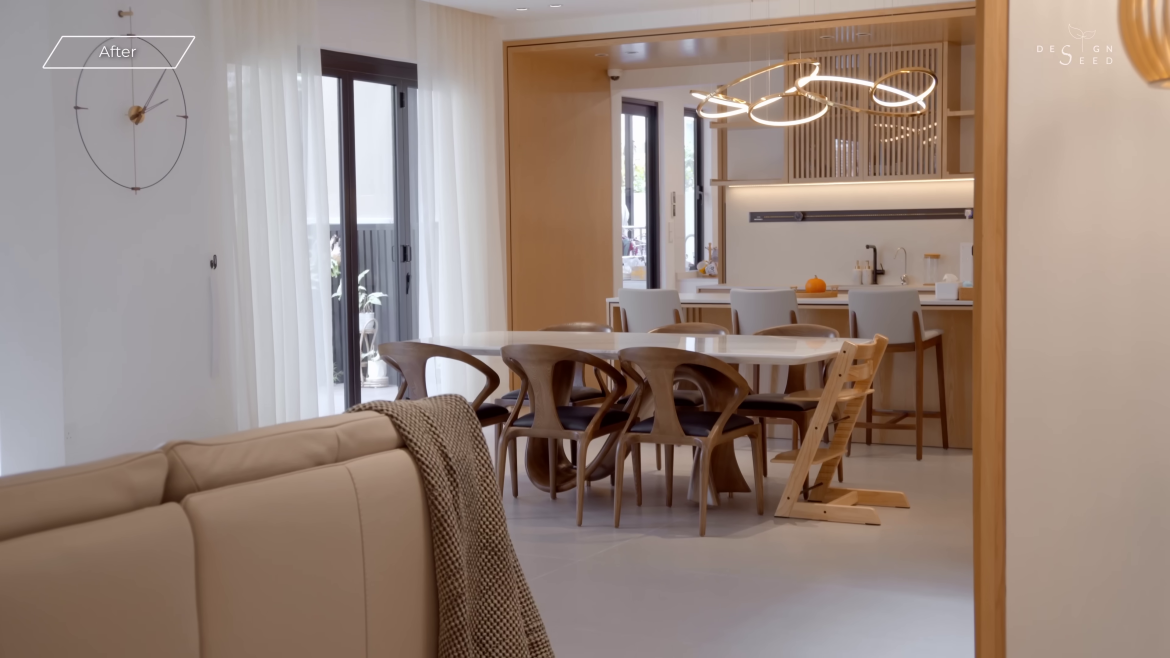
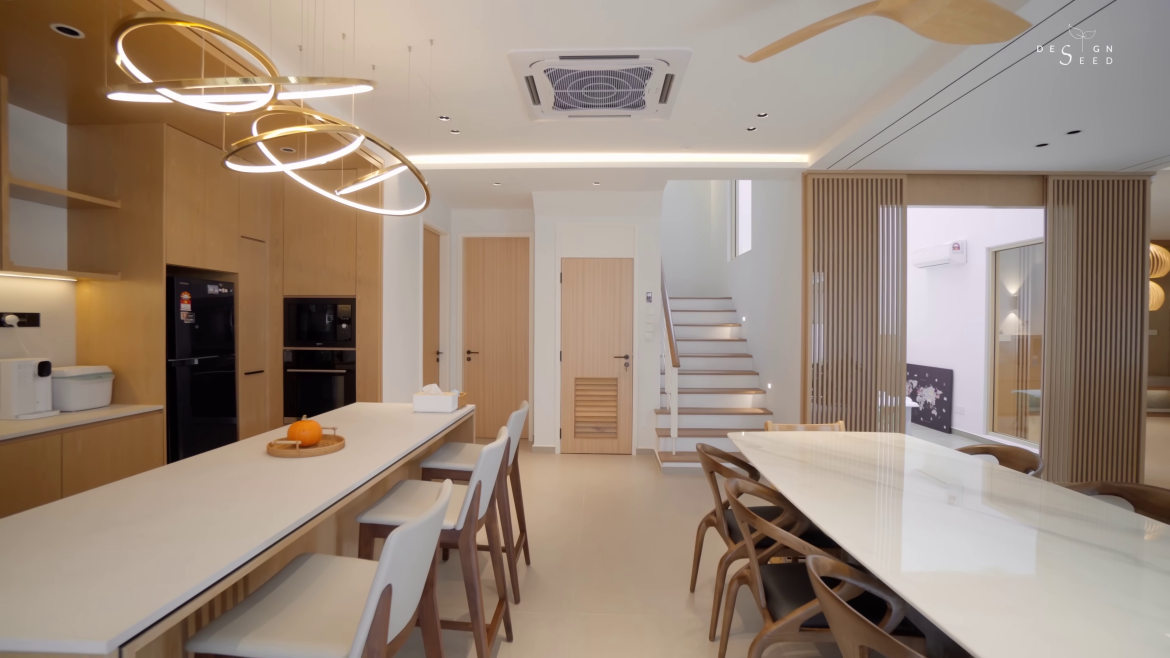
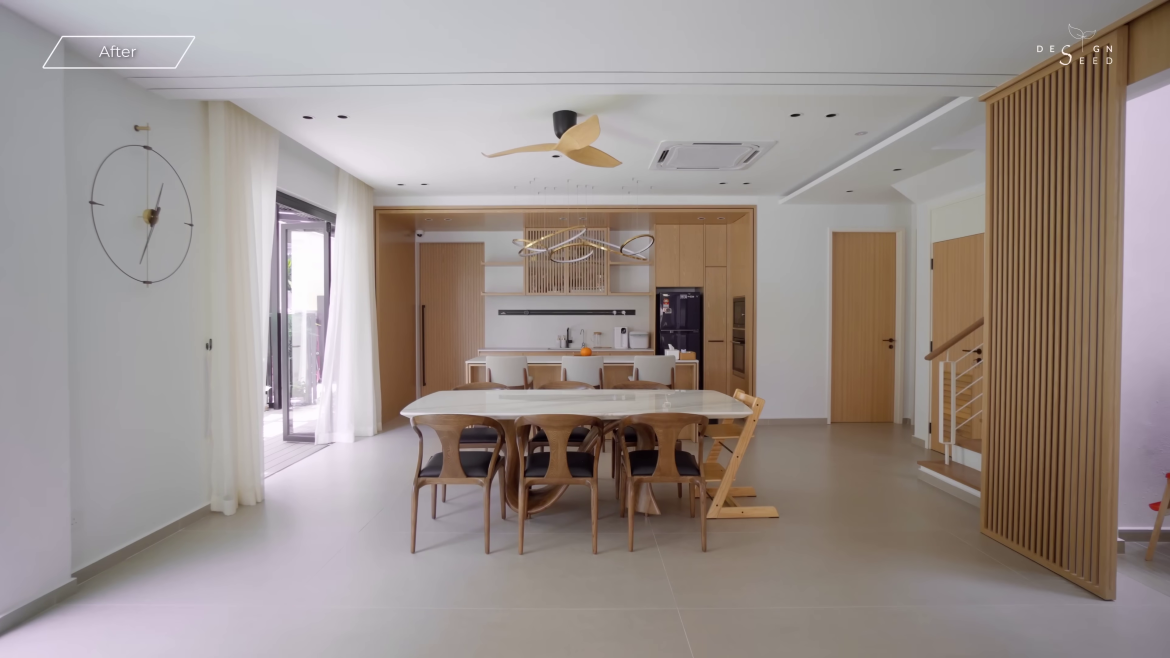
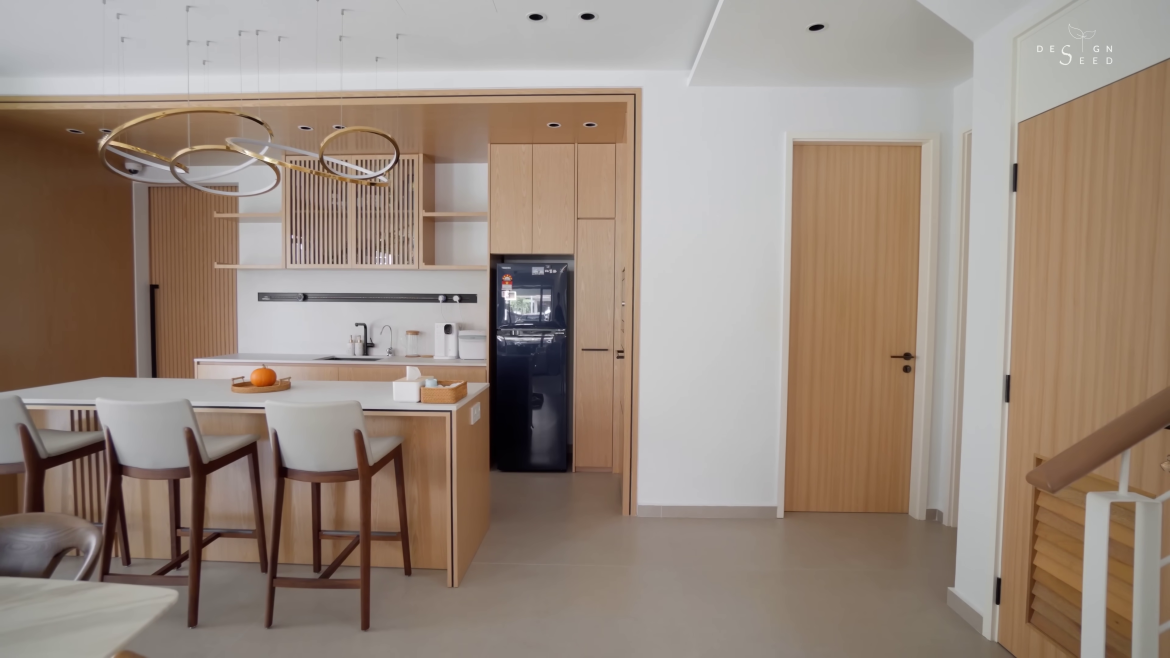
Instead of hiding structural irregularities completely, the design team embraced them through thoughtful carpentry features. In the dry kitchen, a curved timber arch elegantly framed the cabinetry and appliances, transforming awkward proportions into a warm focal point for the dining area.
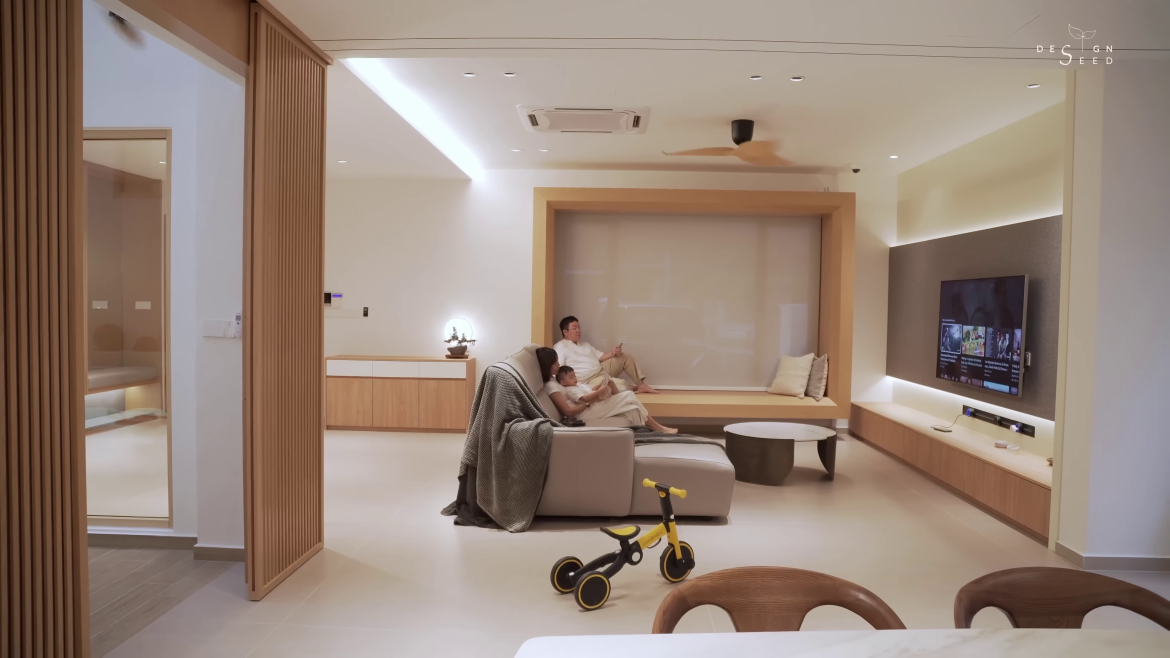
Meanwhile, the living hall introduced framed timber detailing that visually connected the indoors and outdoors. The feature doubled as additional seating while maintaining the clean, minimal language of the overall interior.
“We didn’t want to waste any space,” the homeowners explained. “There are a lot of pocket spaces with different functions, but the designers connected everything very well.”
A Home Filled With Light, Greenery, and Calm
For the family, the emotional impact of the redesign became immediately apparent the moment they stepped into the completed home.
“When we come back from work, the environment is cosy and calming,” they shared. “We have greenery, sunlight, and a very different feeling that helps us relax our minds.”
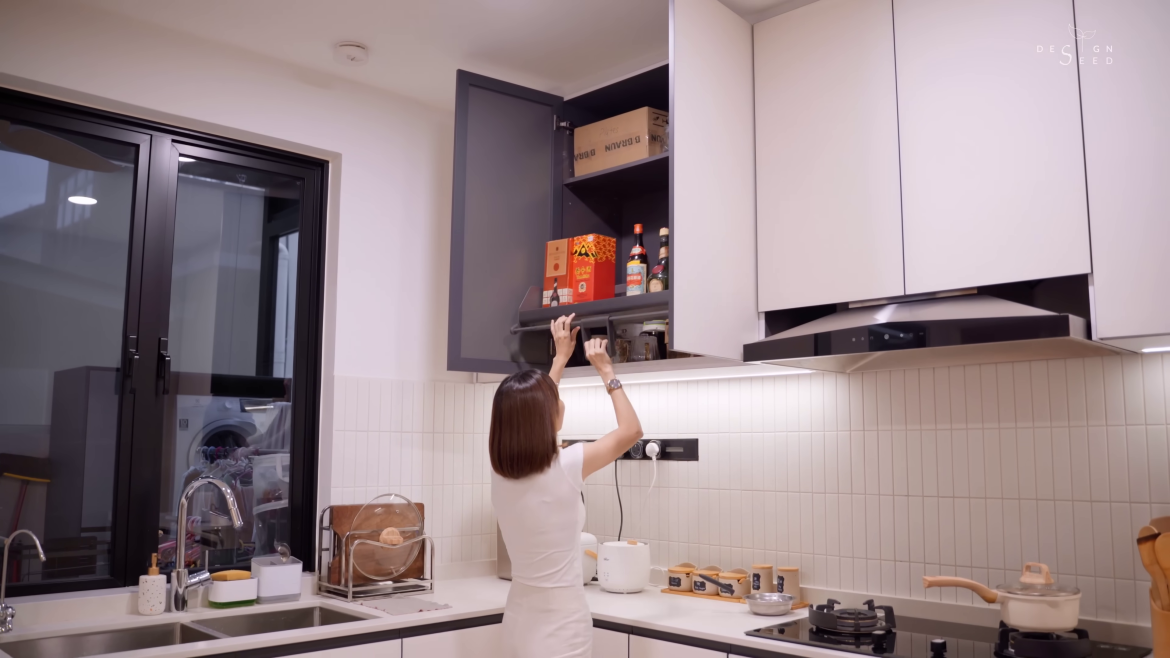
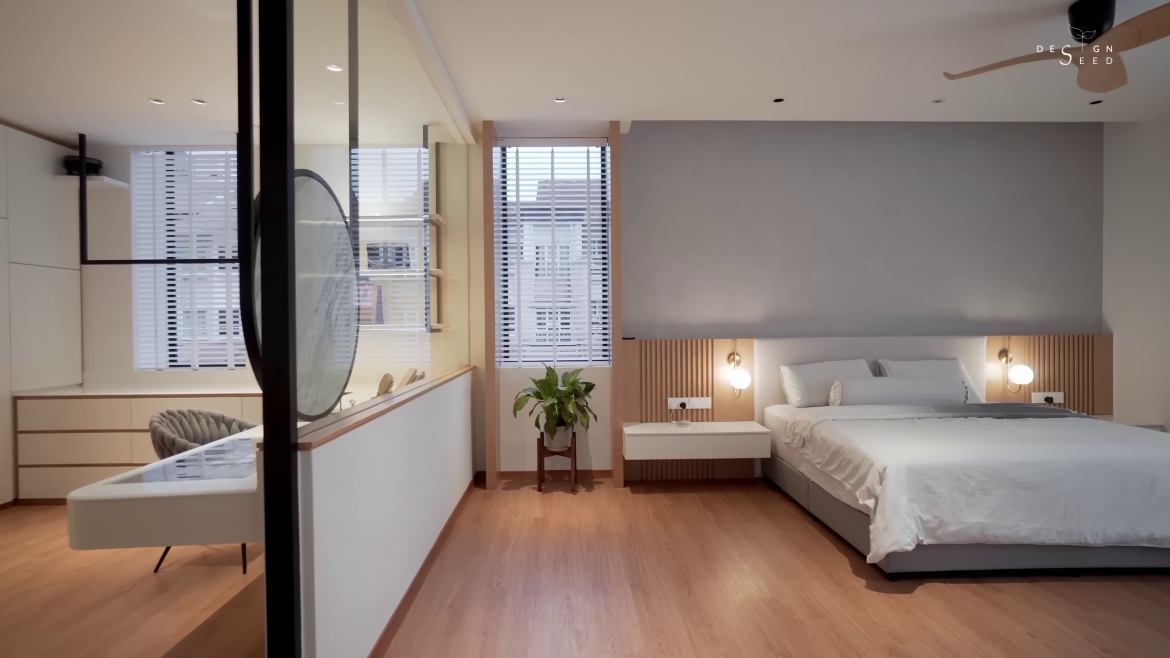
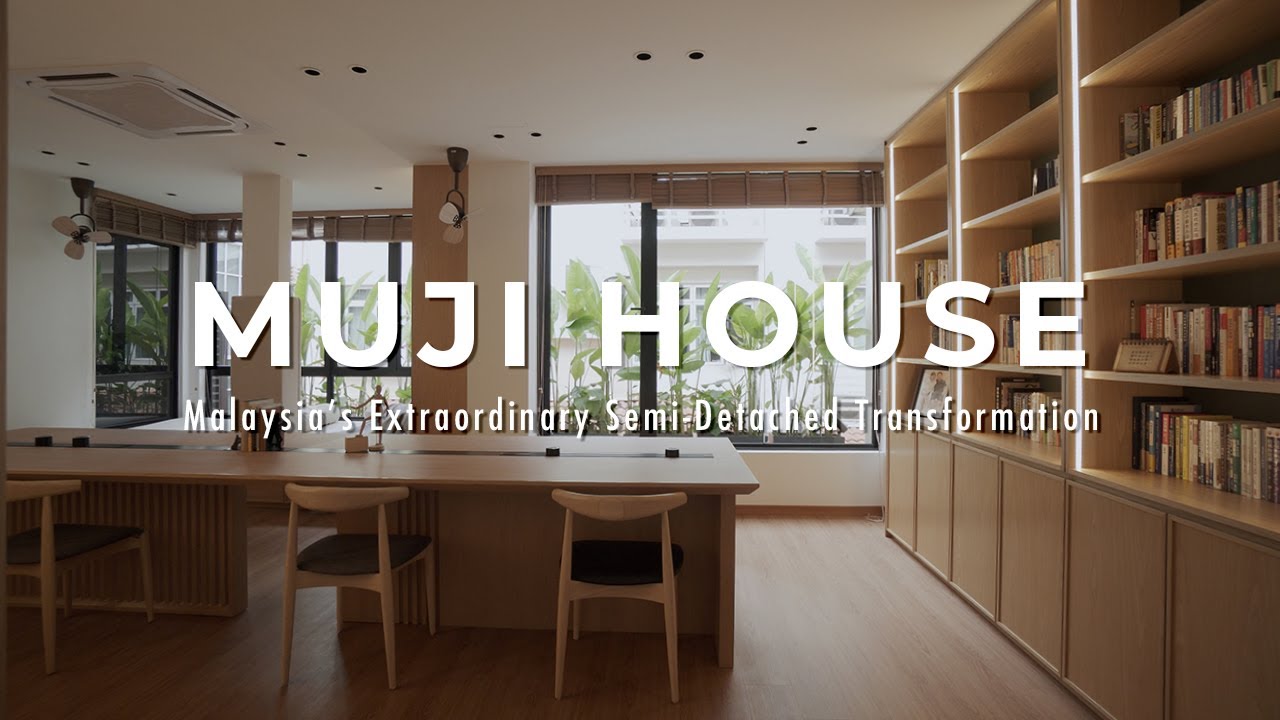
Throughout the house, neutral cream tones, light timber finishes, and soft textures create a soothing atmosphere inspired by Japanese zen principles. Built-in storage solutions were carefully integrated to maintain visual cleanliness while supporting daily practicality.
The homeowners particularly appreciated the seamless cabinetry and thoughtfully crafted furniture pieces, describing them as both sustainable and highly functional.
“They actually have ample storage space for me to hide all my stuff,” the wife joked.
Elevating Everyday Spaces
On the first floor, the renovation continued with a complete overhaul of the existing bathrooms and private spaces.
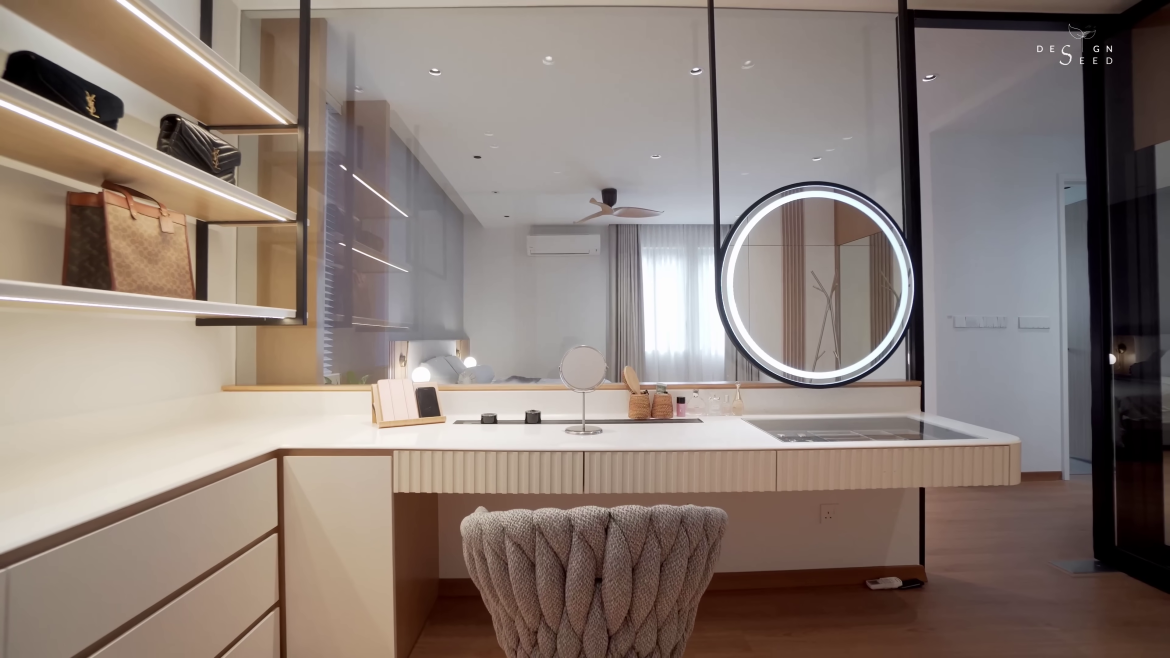
A previously problematic lanai area suffering from severe leakage issues was transformed into a spacious walk-in wardrobe. Glass panels were intentionally installed between the wardrobe and sleeping area to minimise disturbance while maintaining openness and light flow.
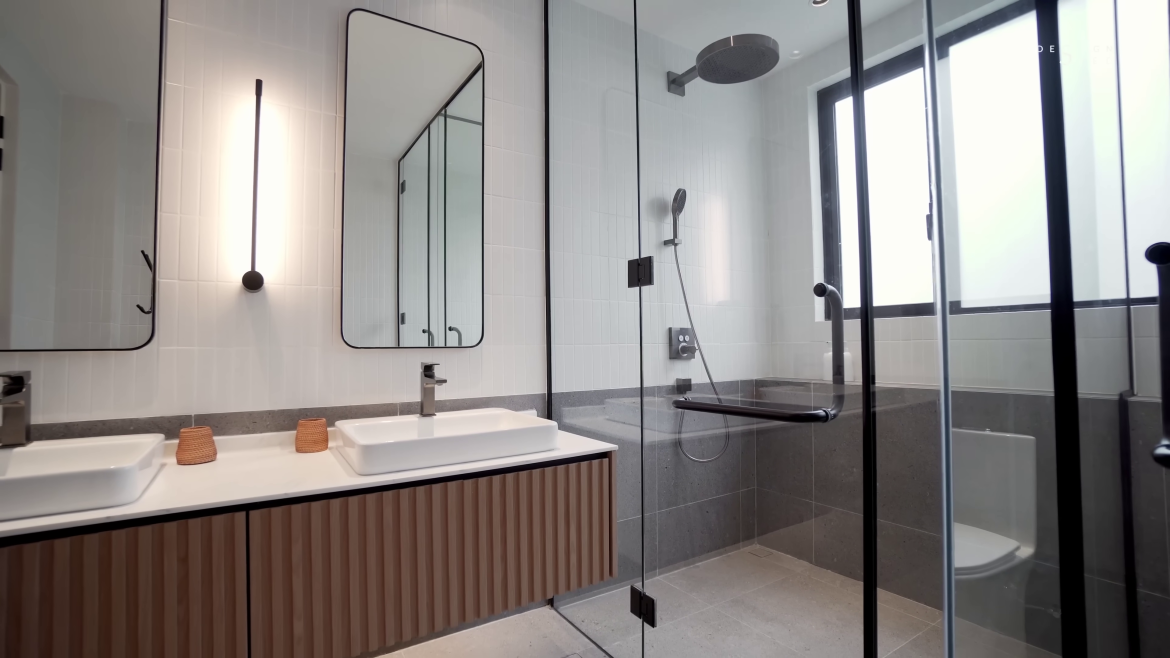
The bathrooms underwent some of the most dramatic transformations in the project. Many were previously too narrow to even accommodate proper wash basins.
To visually enlarge the spaces, the designers combined grey terrazzo finishes along the lower walls and flooring with vertically stacked white tiles that elongated the perception of height. Black aluminium shower screens and Hansgrohe sanitary fittings introduced a bold contrast against the otherwise soft neutral palette.
“One bathroom was too narrow to even fit a fair-sized wash basin,” Alex recalled. “We took that challenge as an opportunity to craft a statement piece that enhanced both the bathroom and bedroom.”
A Reading Room Built Around Family Culture
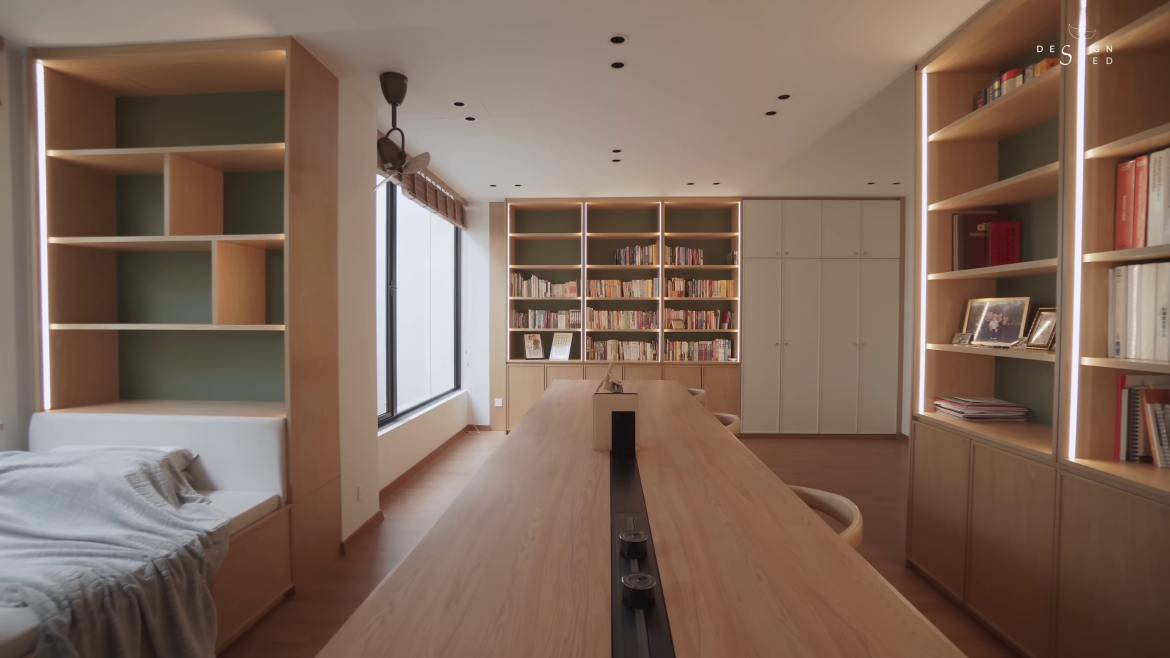
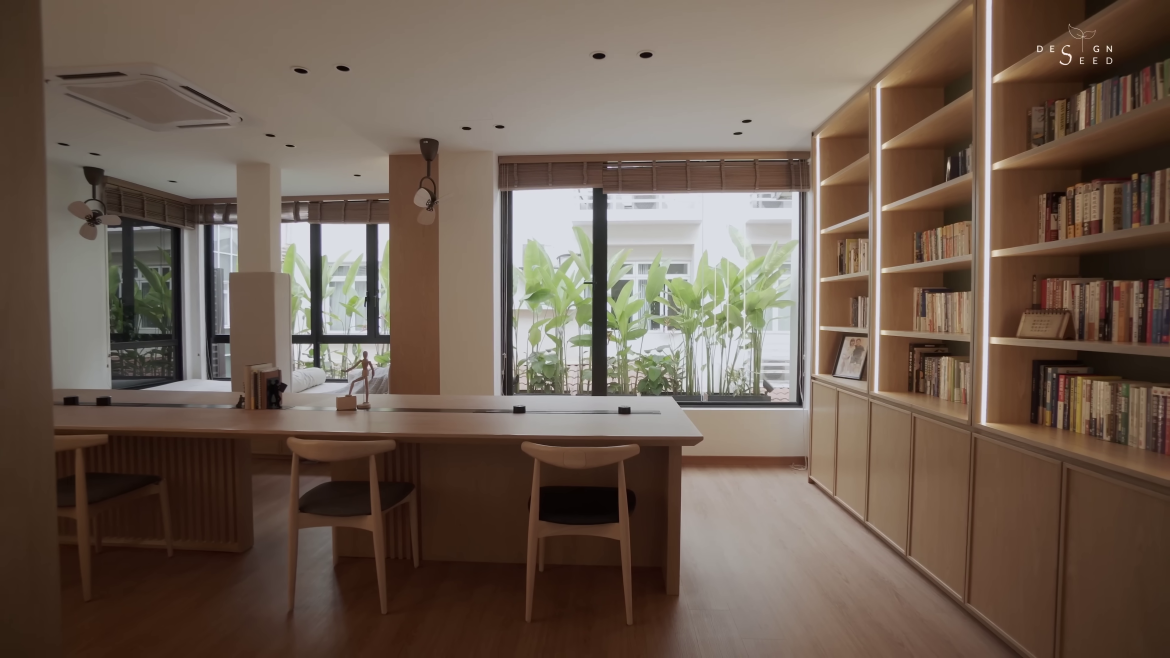
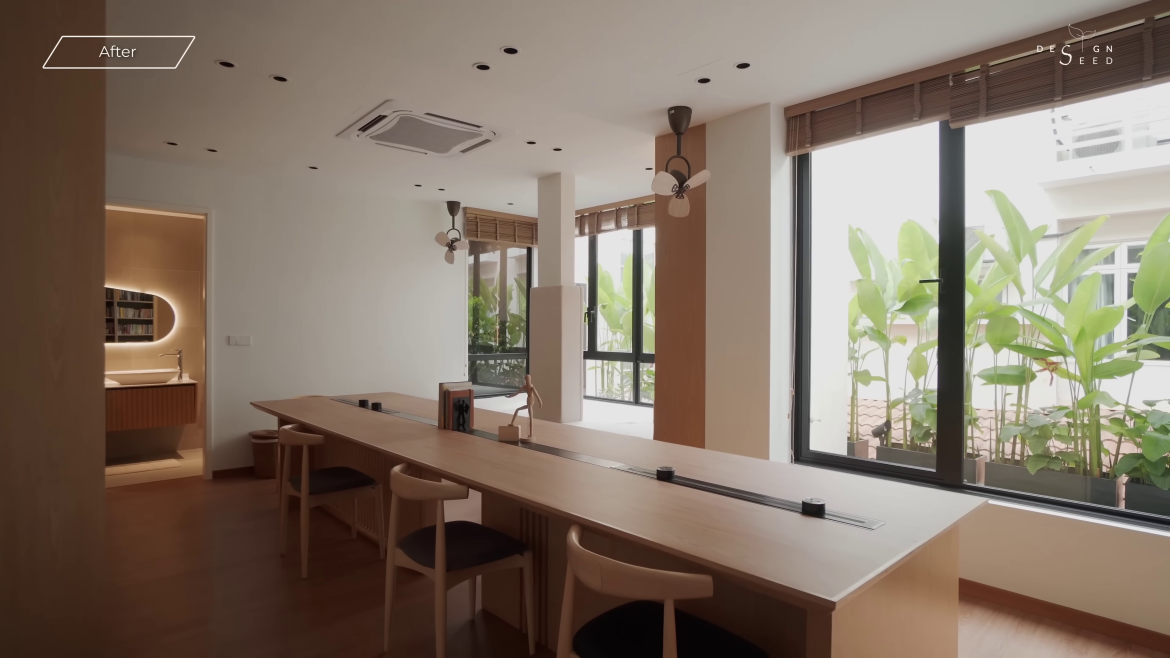
Among all the transformations, the reading room quickly became one of the project’s defining features.
The homeowners revealed that cultivating a reading culture at home was one of their biggest priorities. Since the husband had maintained a habit of waking up at 4am to study and take notes since secondary school, the family wanted a dedicated sanctuary where everyone — including their young son — could learn and unwind together.
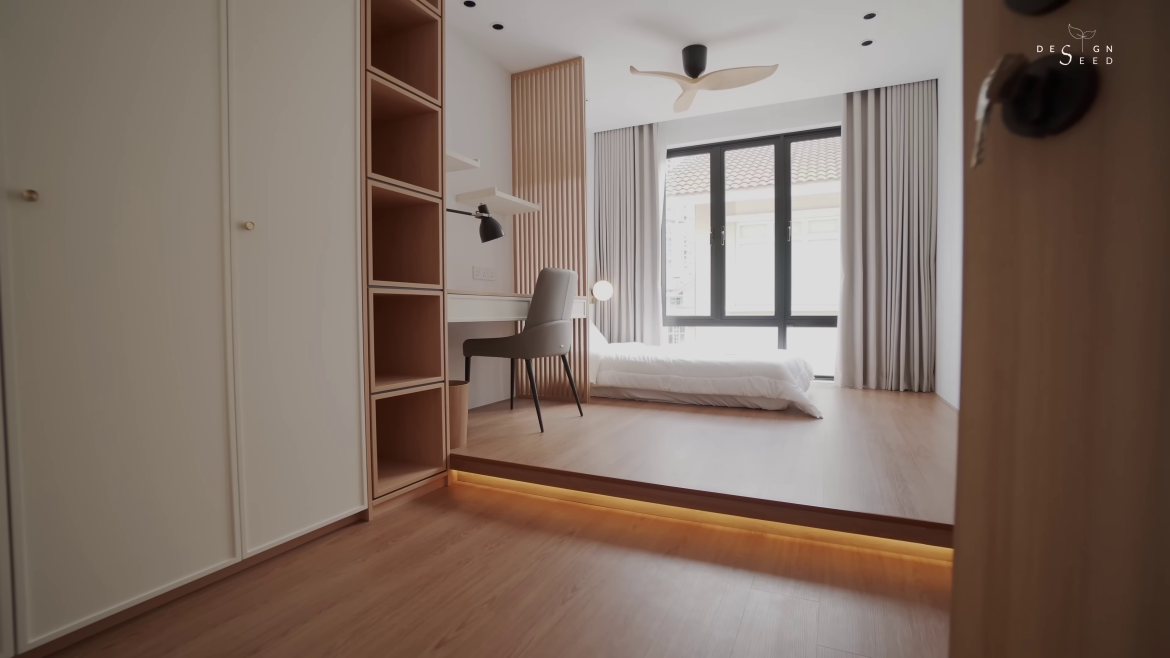
To make this possible, the team demolished two rear bedrooms and merged them into a spacious mini library filled with natural light and layered functionality.
A dreamy day bed was incorporated into the room, allowing the space to shift effortlessly between productivity and rest.
Want to understand how good design works?
Join our Design Seed membership program for only $5 and get behind the scenes access in depth reels and our exclusive handbook that breaks down technical design knowledge into practical tips you can apply to your own home.
Back to the story:
“We want this house to have a spacious study room so the whole family can study together,” the homeowners said.
Outside the study, planter boxes and small outdoor corners were added to strengthen the connection between nature and the interior experience. According to the homeowners, these green pockets became essential moments of pause whenever they needed to reset mentally.
“When we have a mind block, we can just walk outside and sit there,” they explained. “The air and environment help us think more clearly.”
A Minimalist Home That Feels Deeply Human
As the walkthrough came to an end, Alex reflected on how the project successfully transformed a tropical resort-style property into an entirely different kind of home — one rooted not in extravagance, but in emotional comfort and intentional living.
“The tonality of the entire home was to depict a Muji-inspired concept,” he explained. “A serene, organised, warm, and welcoming environment.”
Through subtle carpentry detailing, organic materials, and carefully connected spaces, the home ultimately became more than just a minimalist renovation. It became a retreat from the pace of urban life — a place where the family could disconnect from work, reconnect with each other, and simply feel at ease.
“That’s the meaning of home,” the homeowners said. “After a tiring and hectic working day, stepping into this house allows us to spend quality time together.”