1950’s Bungalow Transformed Into Beautiful Courtyard Home | Green Pockets | Architecture Ideas
6 min read
What does modern tropical living look like when designed for both people and dogs?
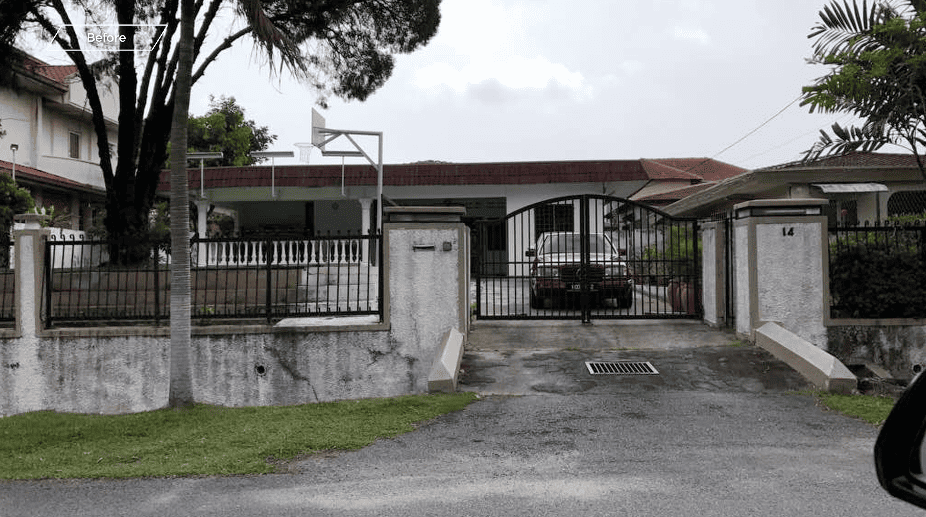
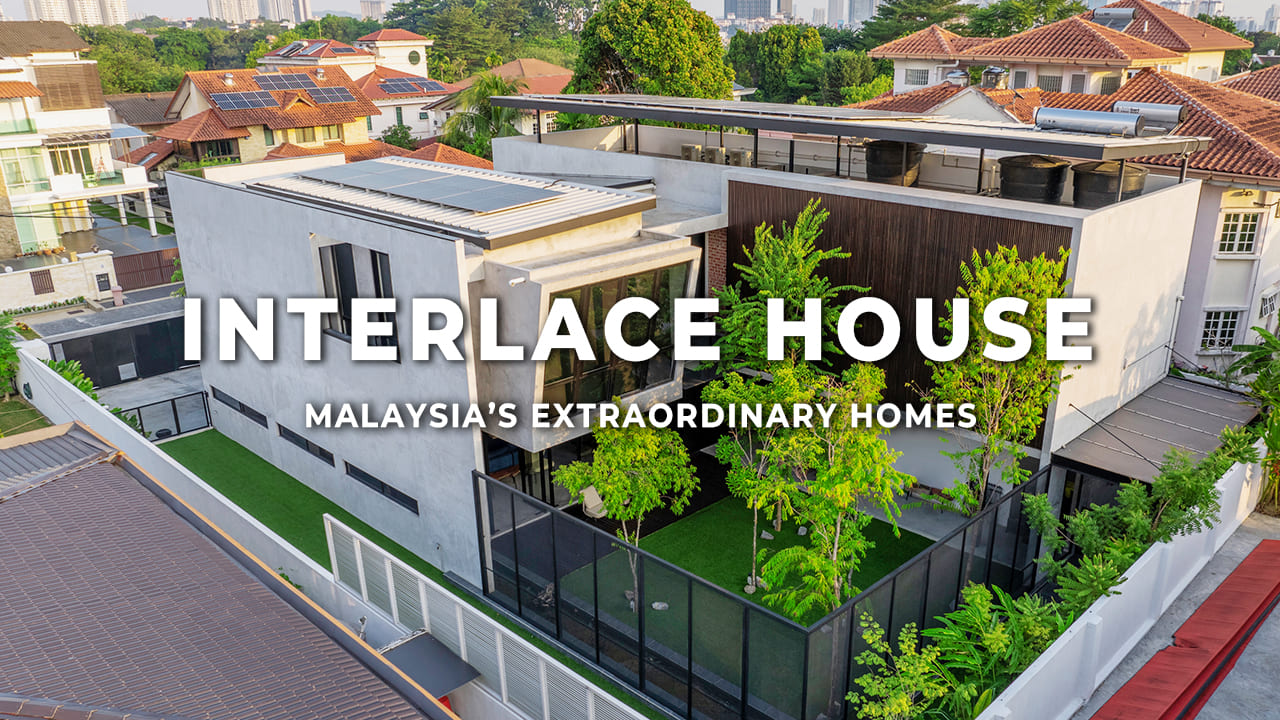
In Petaling Jaya, a 1950s bungalow has been transformed into this stunning home where interlocking blocks create lush courtyards, open plan living, and a sanctuary for both family and pets.
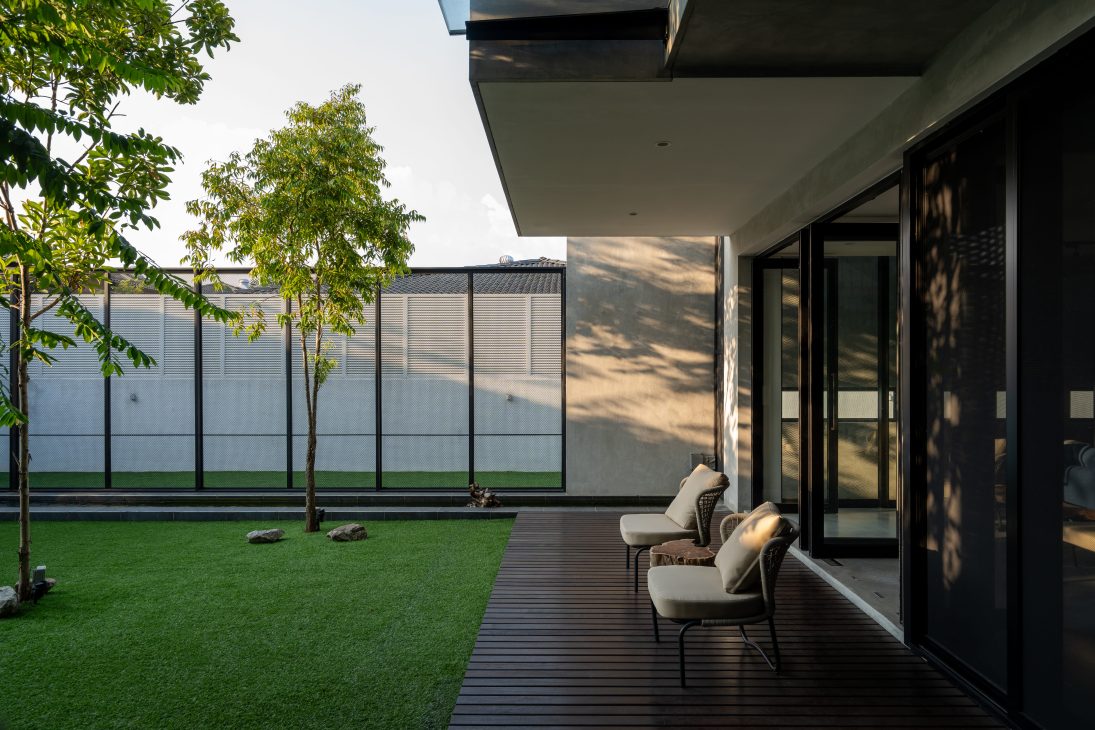
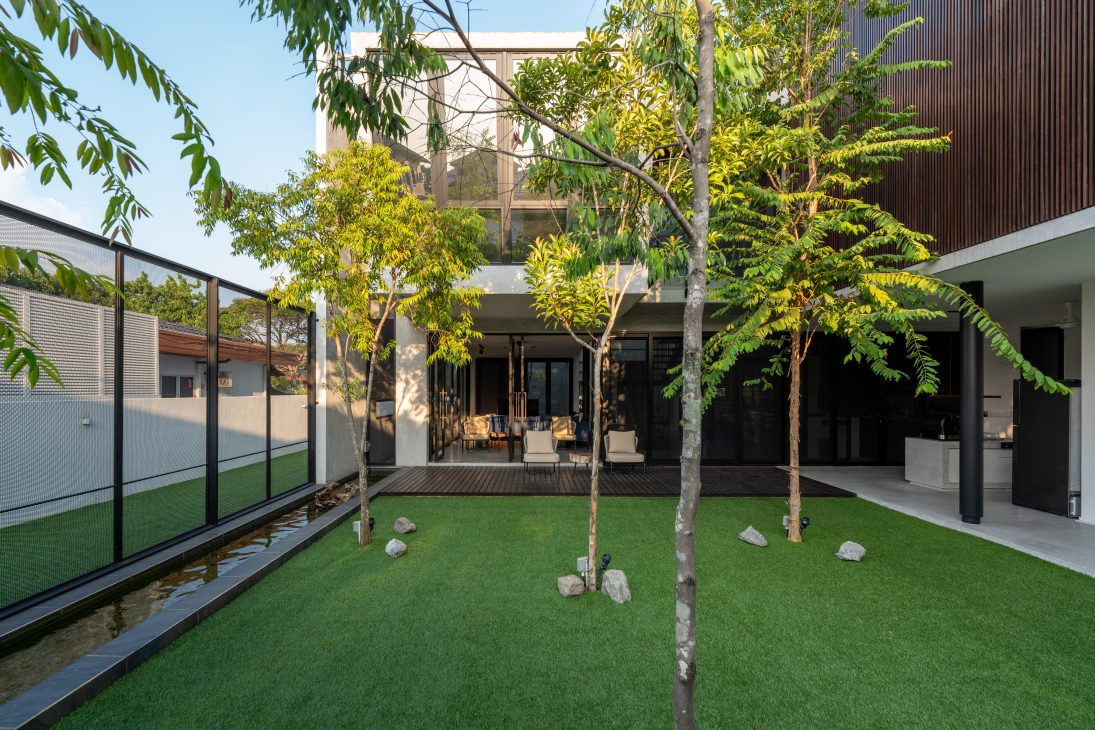
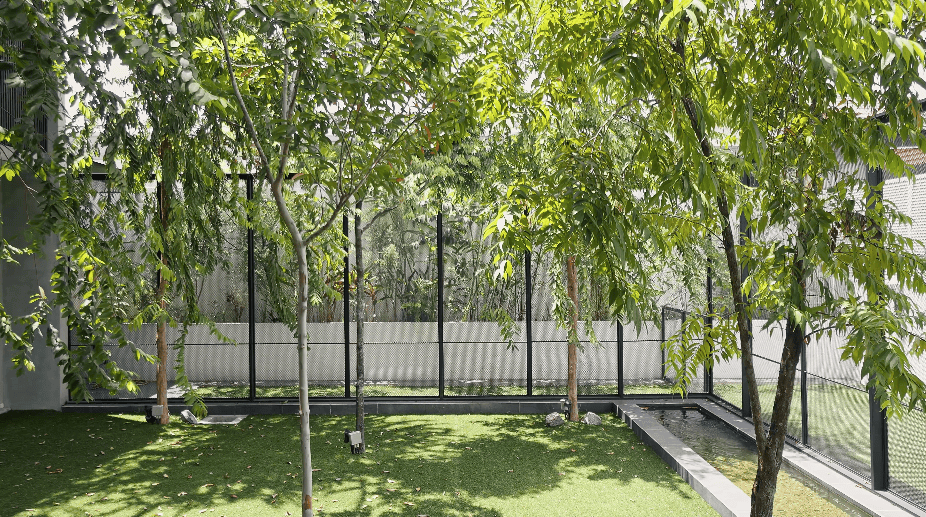
The houseowner shares with us, “One of our favourite spaces is the back courtyard, where we can sit down in the evening, watch the sunset filter through the trees, and at night when it’s lit up, engages us and brings us a sense of outdoor connection — even in the evening as well as in the daytime.”
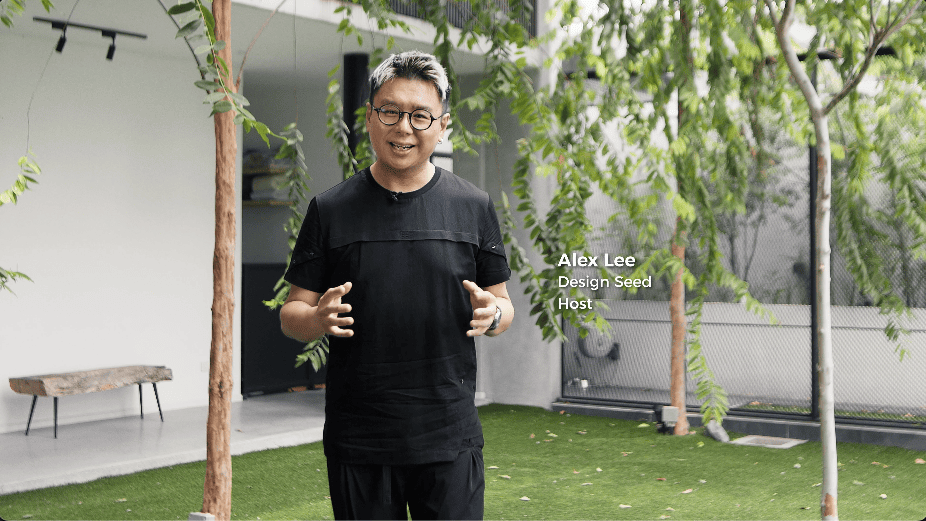
My name is Alex Lee and I am from Design Seed. Welcome to the Interlace House.
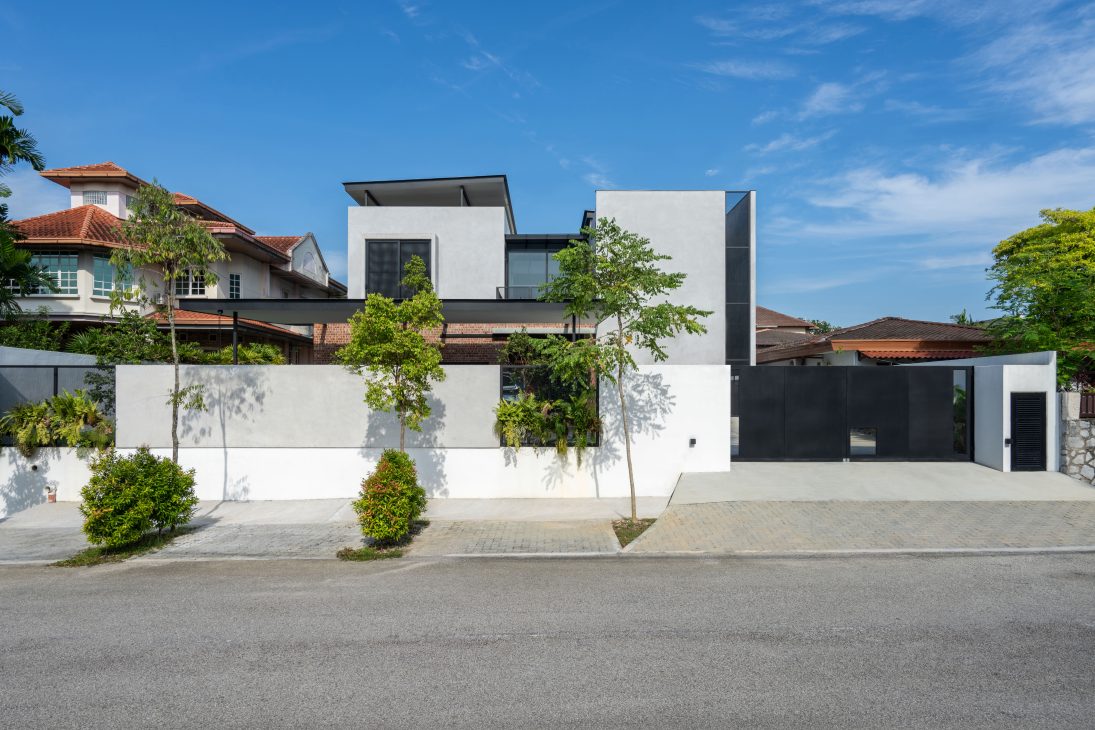
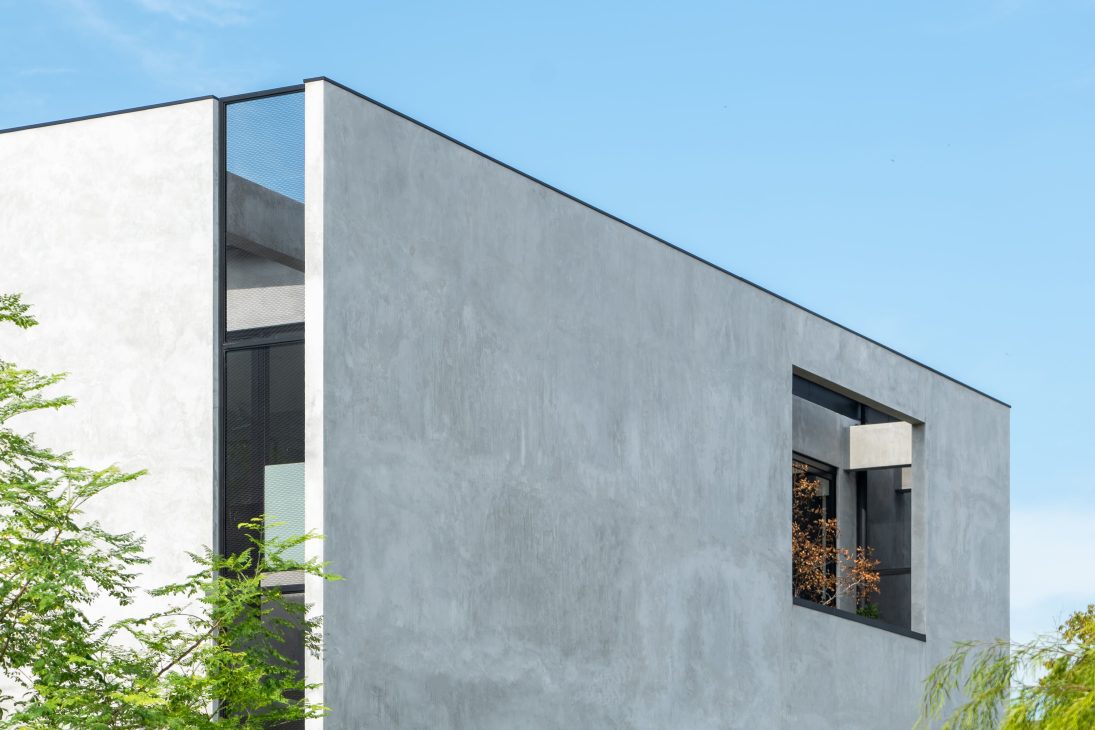
From the street, the Interlace House presents itself as a fortress of privacy. Its concrete walls stand tall, creating a bold modern impression — a design that sparks curiosity of what lies within.
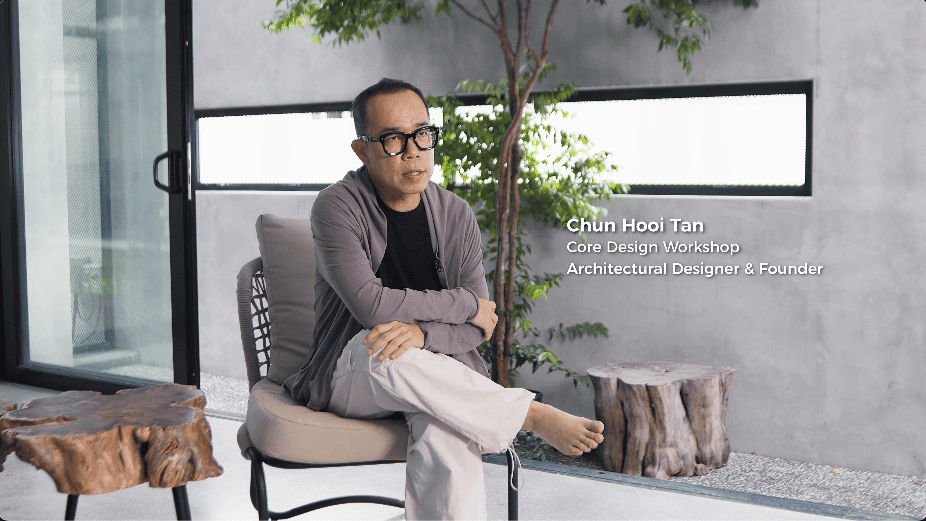
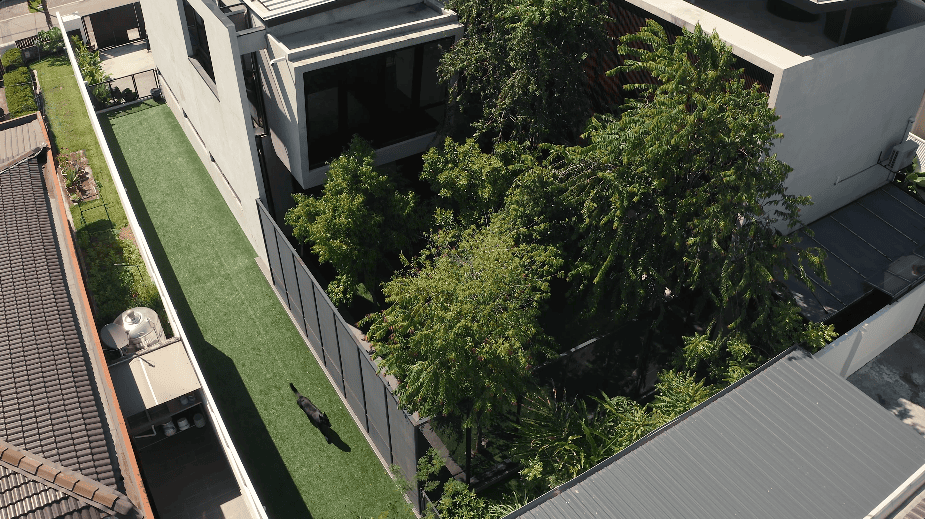
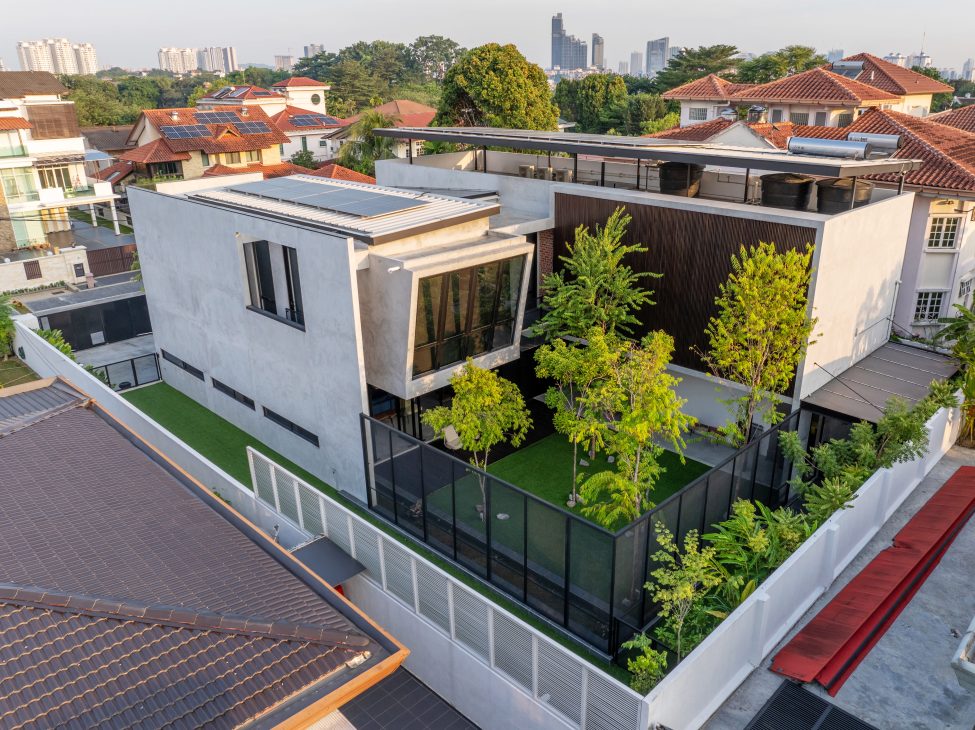
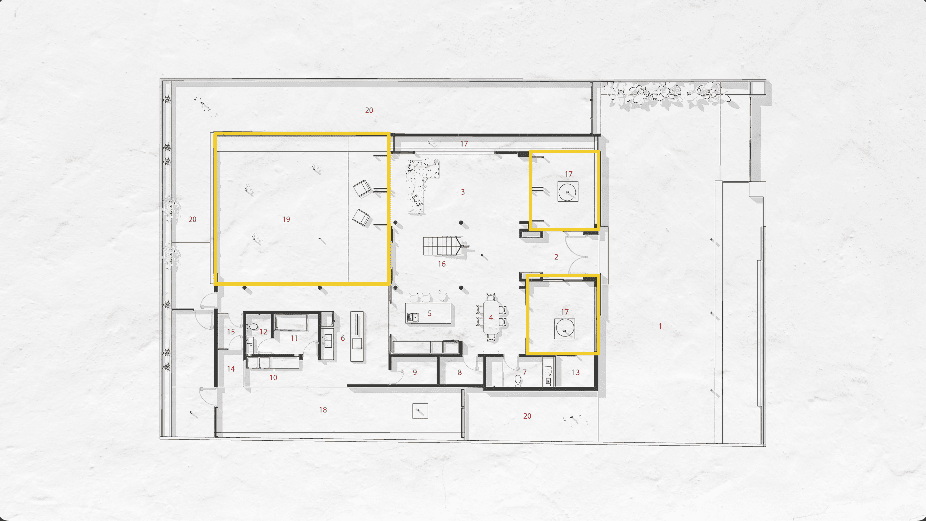
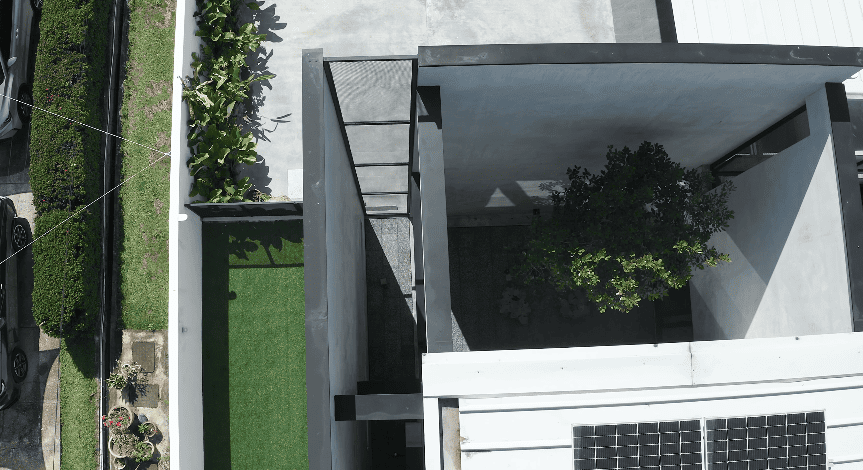
The architect for this house is Tan Chun Hooi, from Core Design Workshop. He explains, “This house is called Interlace House. The total build up is around 4,005 square feet. The house is actually arranged into three interlocking blocks with multiple courtyards in between, creating both openness and privacy. And these courtyards also give us the focal points to the spaces, so we are not just looking purely inward, but we are looking into multiple courtyard spaces around the house.”
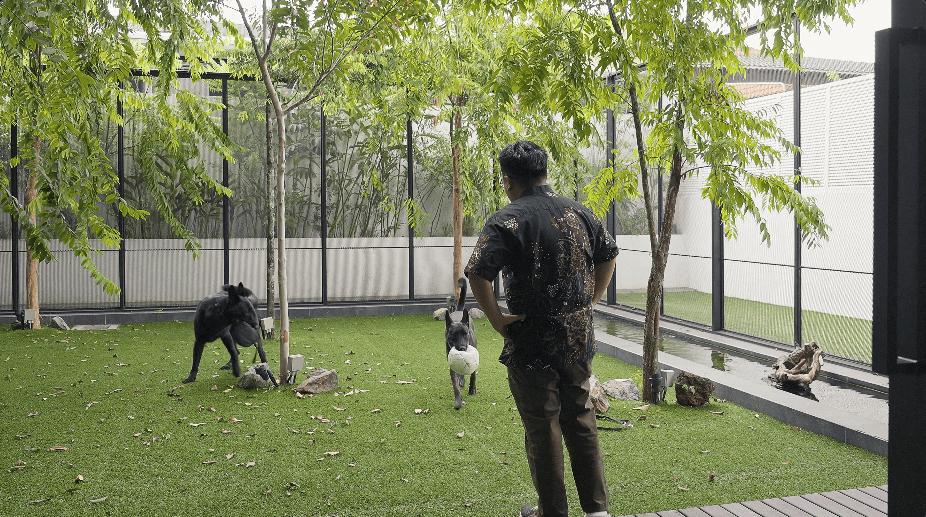
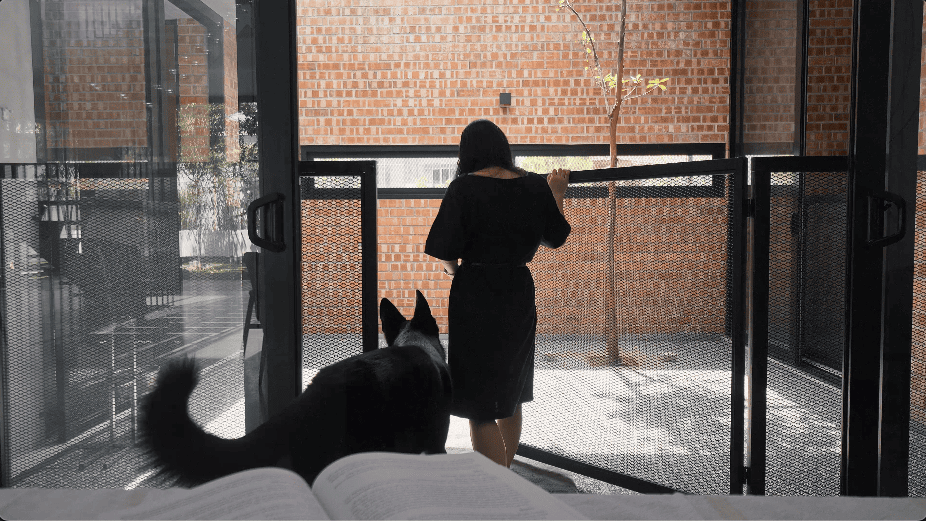
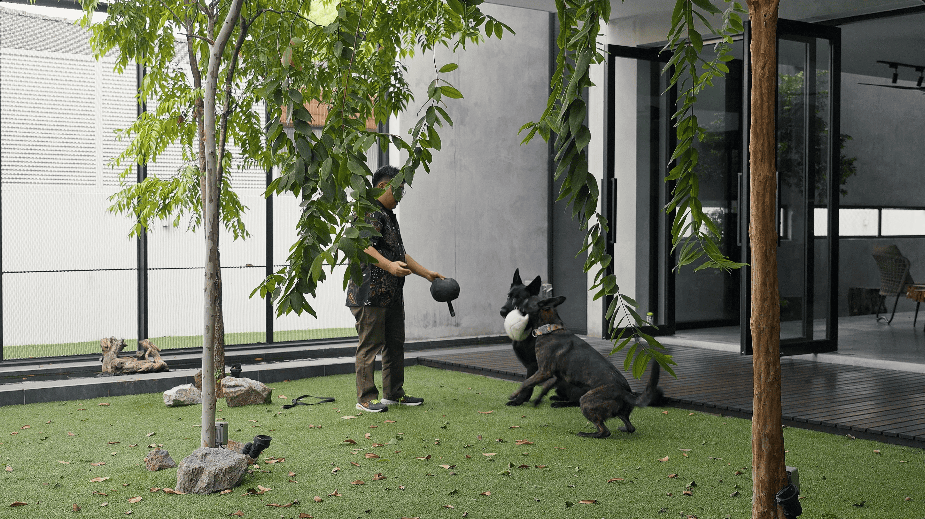
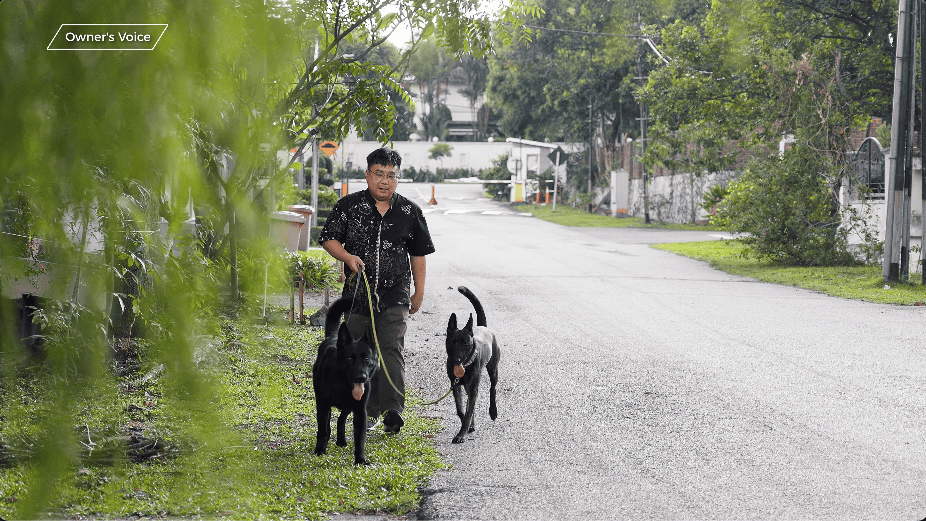
“So living in a big city, it is very important to us to feel close to nature, so our brief was to create a house that was natural in terms of the material used, open to sunlight, as well as to be close to plants and trees, and have open spaces to allow our dogs to run about. So the dogs are integral part of our lives. It gives us companionship but as well as security,” explained the houseowner.
Beyond the tall facade of concrete and perforated metal, you’re invited into a completely transformed atmosphere — one of light and nature.
Tan explained, “From the outside of the house, it looks very minimal with all walled up. Once you step inside, there’s a sense of calm openness. You will start seeing greenery, lights and openness. You don’t feel the house is as enclosed as what you could feel outside.”
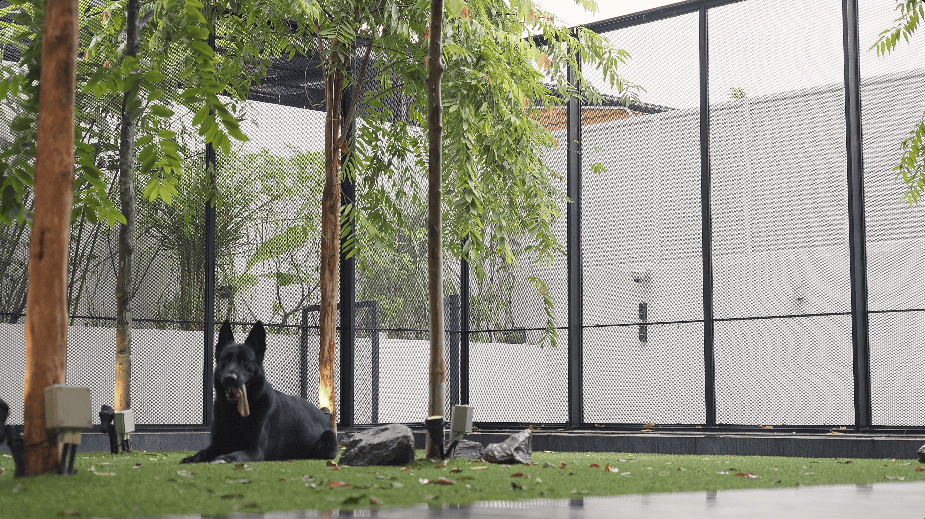
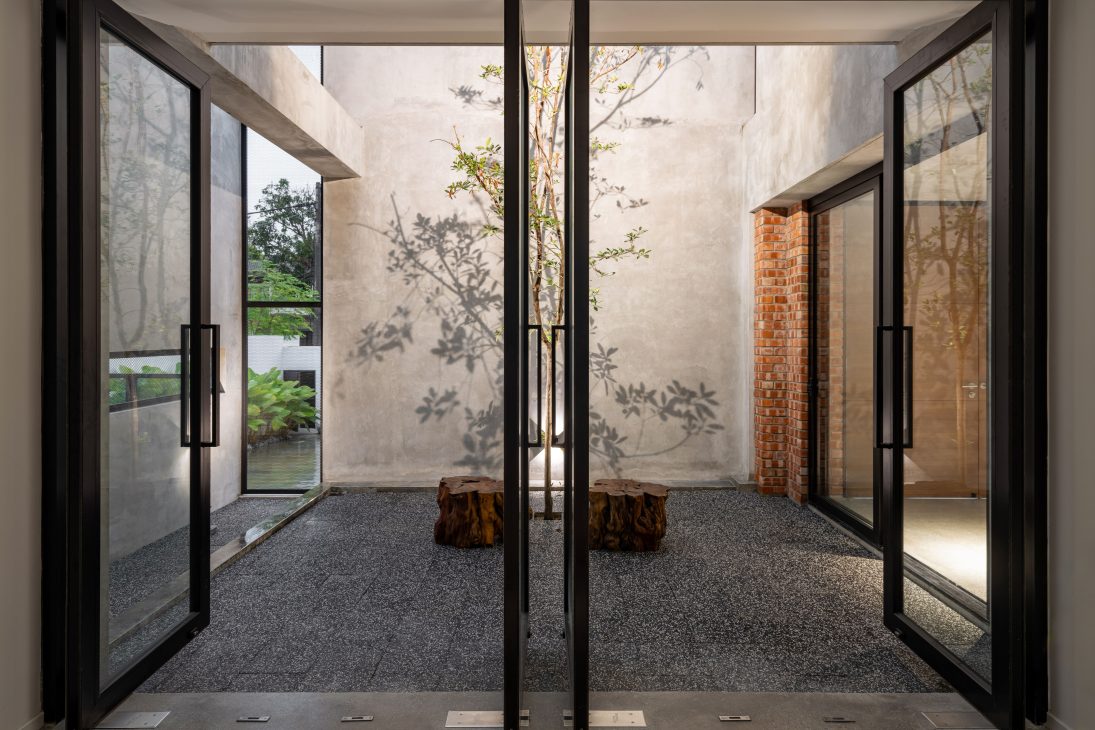
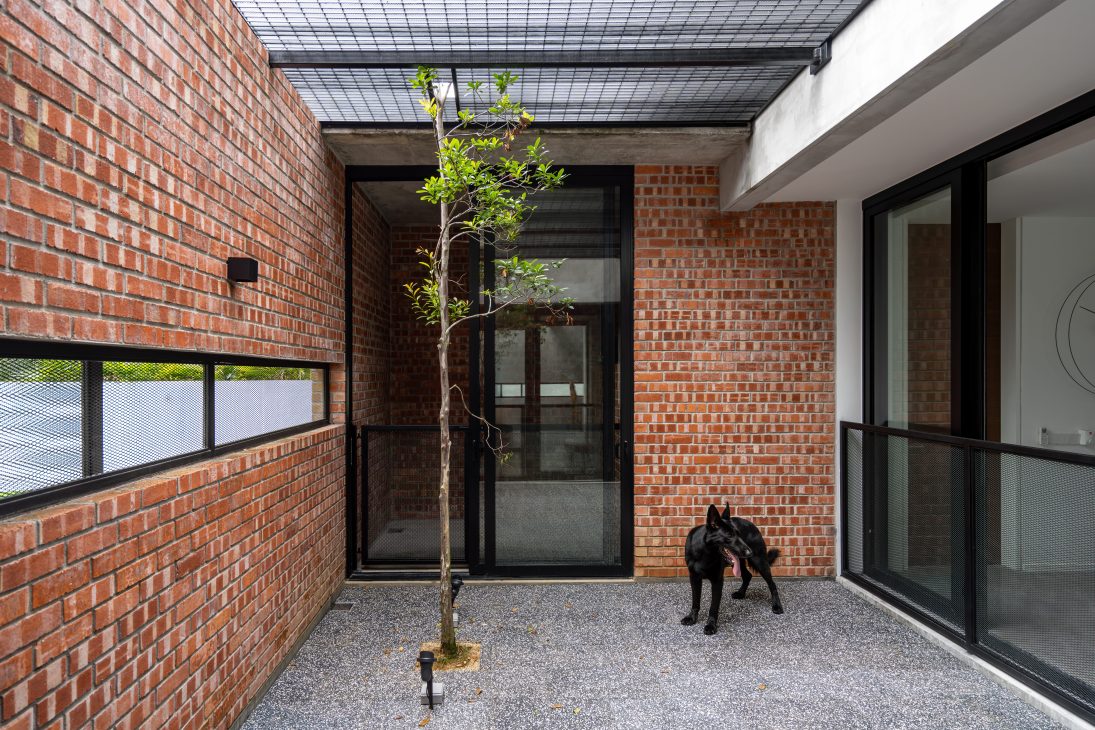
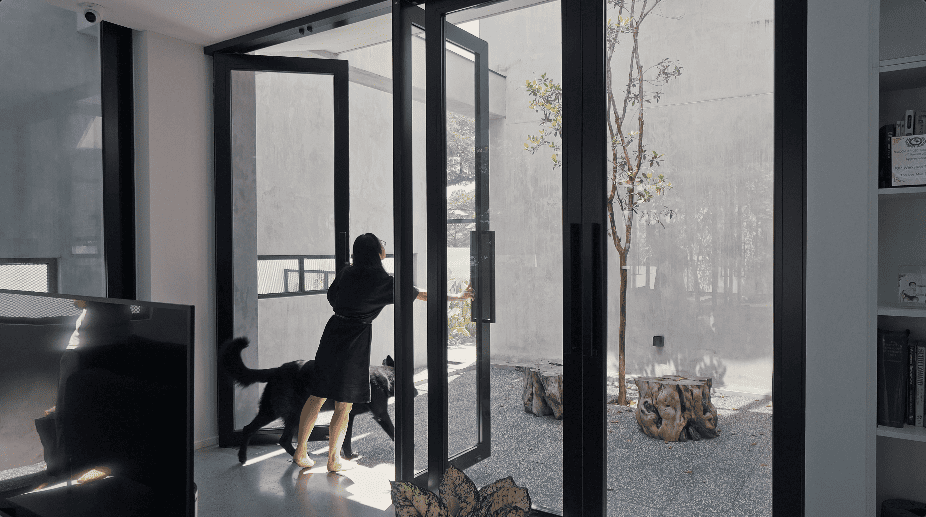
From the entry, nature frames your journey with two courtyards on either sides. To one side, a relaxing rock garden sits grounded in simplicity and light. On the other, a courtyard of warm red bricks invites daylight and natural ventilation into the curated pet spaces.
What makes this family home special is how the pet spaces are not simply added, but thoughtfully woven as part of the home. Here the pets aren’t just residents, they’re family — and they too share the home’s warmth and its deep connection to nature.
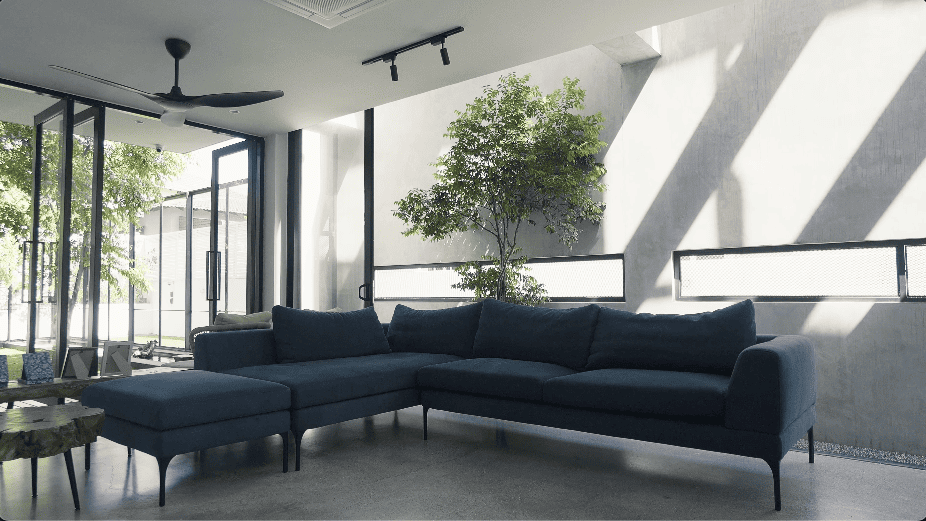
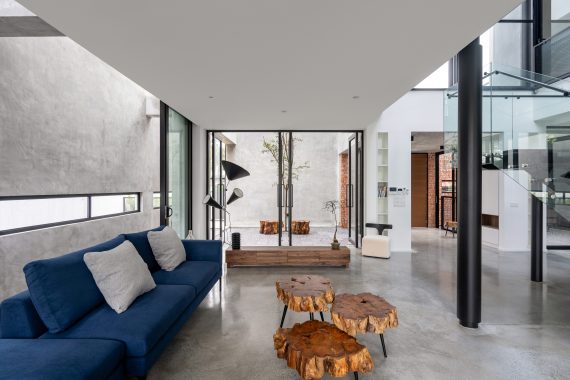
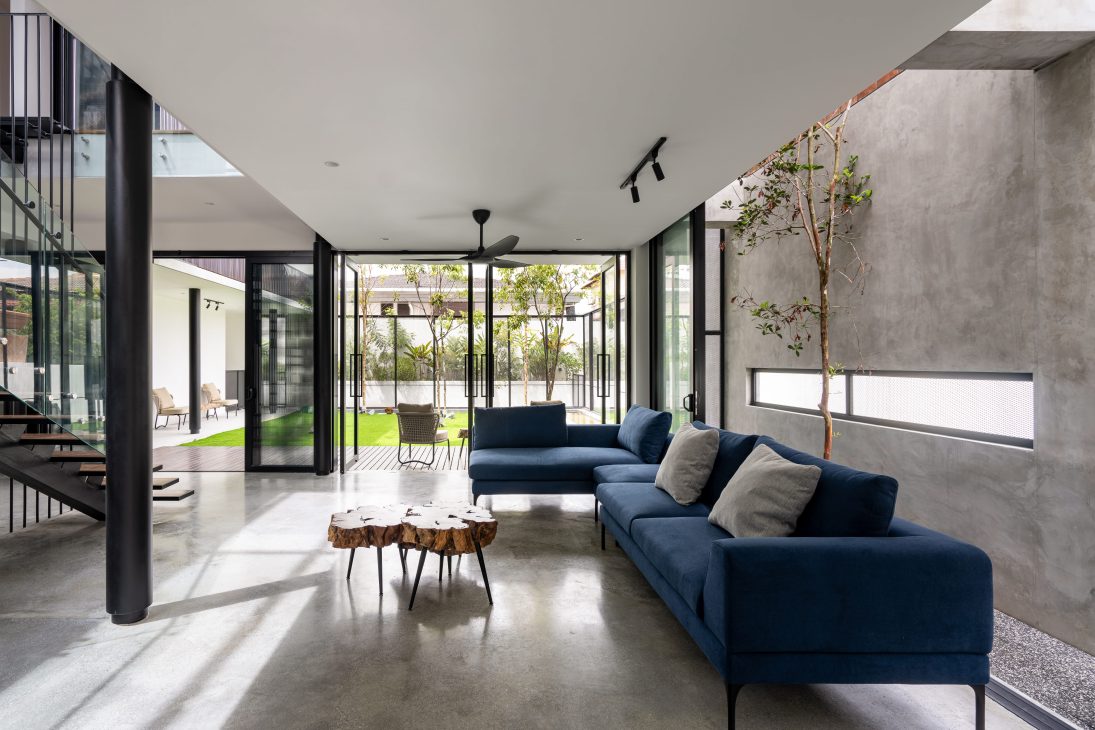
Running the length of the living room, an open courtyard forms the spine of the home, while large sliding glass doors invite nature into its heart.
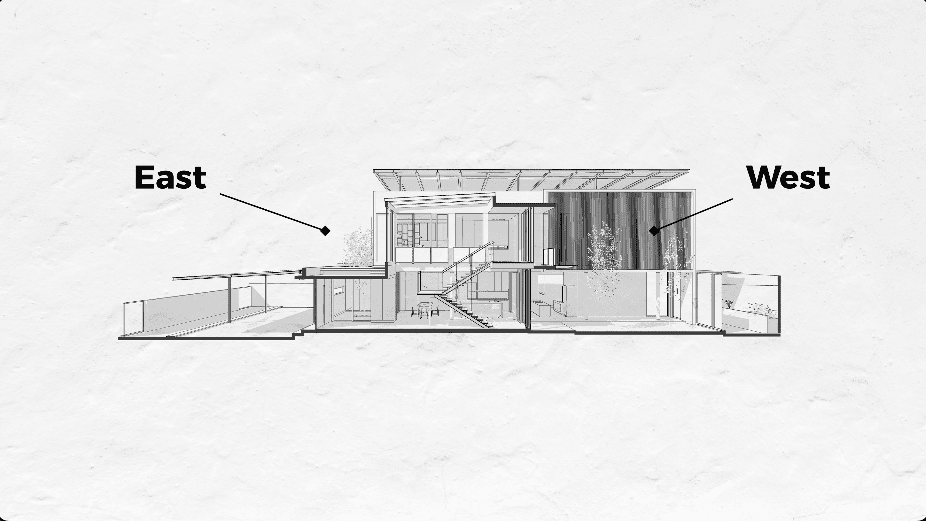
The architect explained, “The biggest challenge of this site is that the house faces east in the front and west at the back. So the morning sun comes in from the front, but we are directly facing the neighbour’s house. That means the only side we can really open up is the back, which unfortunately faces the west sun.”
“Whereas the back, the setting sun — that actually gives us a lot of heat gain. So that’s how we start to design the house around a garden that is at the west facing. So the garden itself was meant to be like mini forest that create a lot of shades to block off the sun, especially the afternoon heat,” Tan explained.
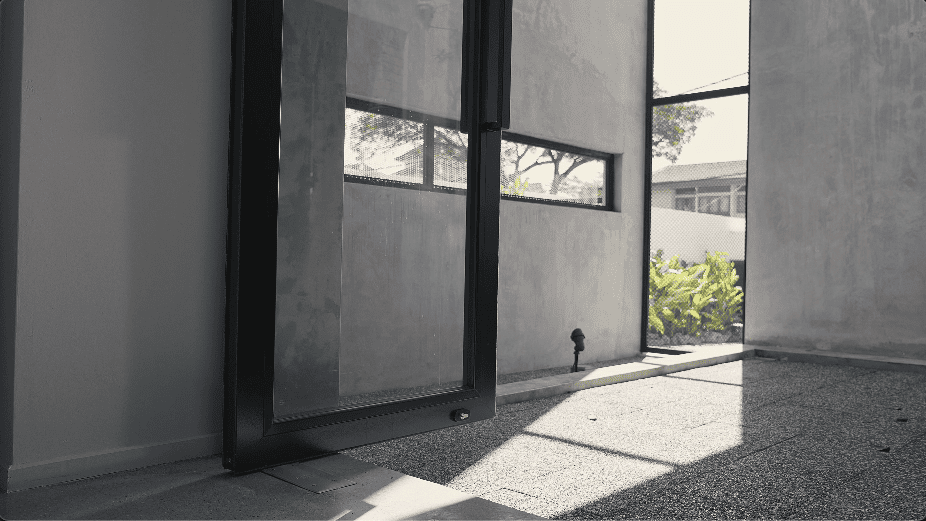
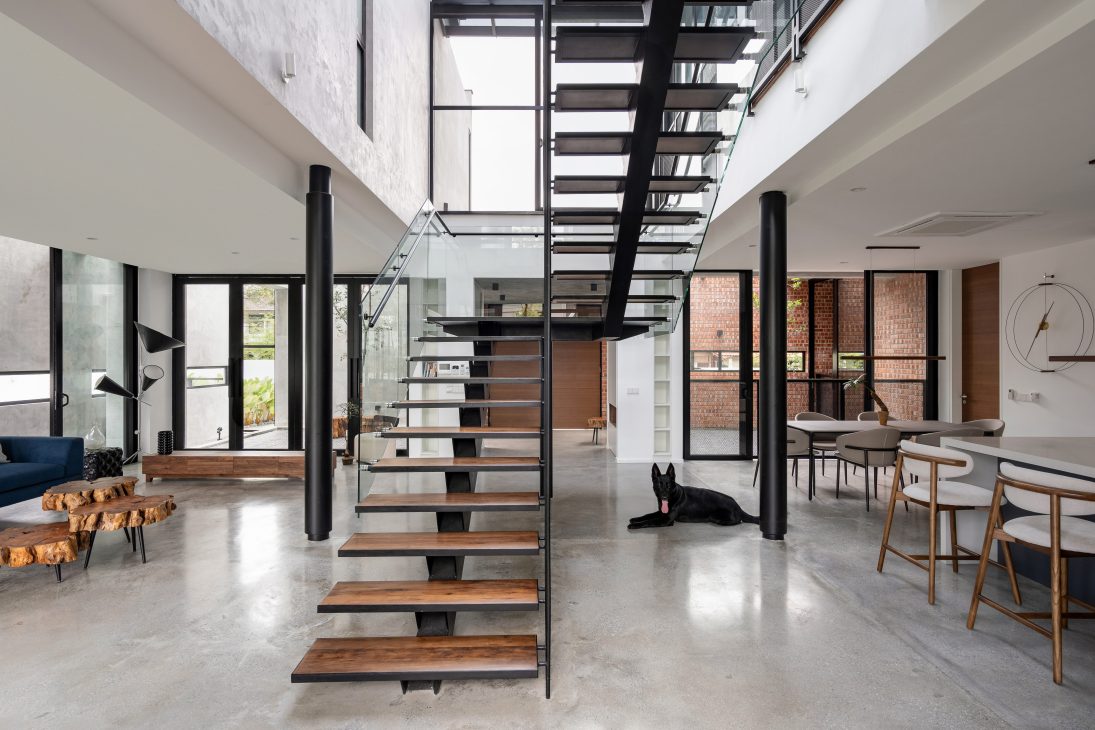
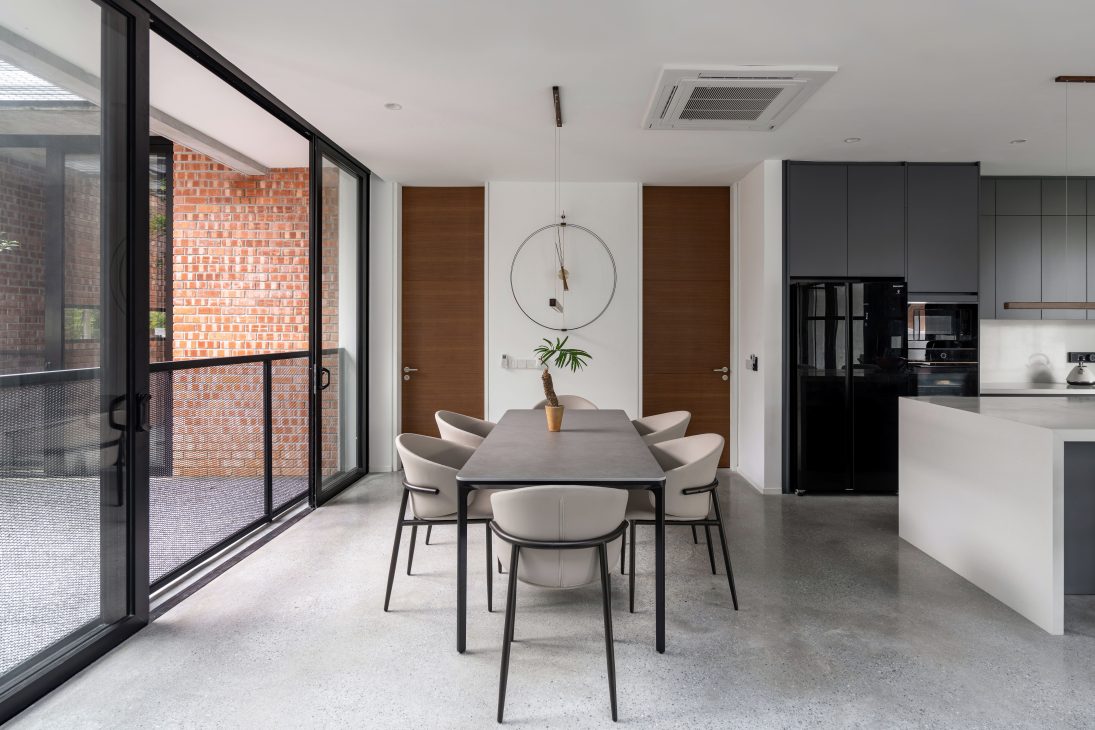
The architect continues elaborating, “On the material of the house, we don’t use very luxury materials. Instead, we choose something very simple and honest. On the walls we use skim coated walls, and on the floors are all polished concrete floors. And then we use Chengal timber for the decks and sunscreens. These three different materials actually create balance and also warmth to the house.”
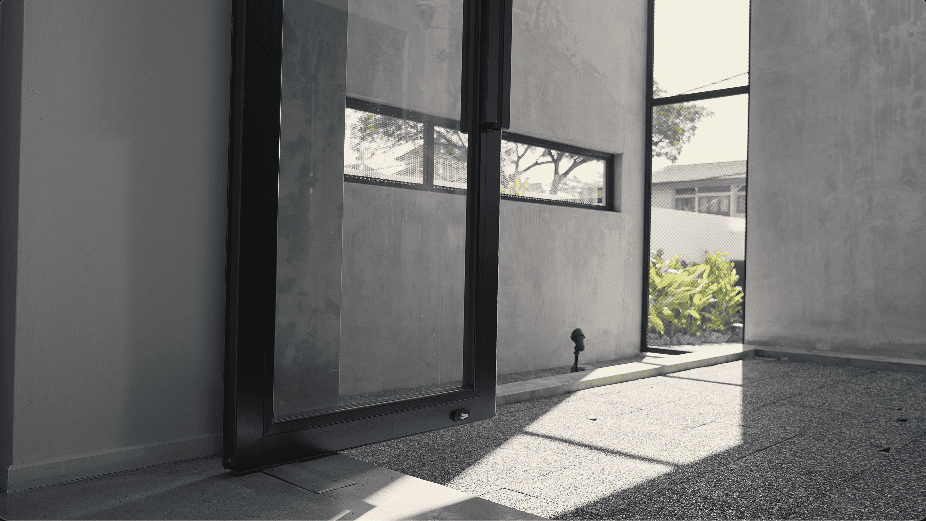
In Malaysia’s tropical weather, huge windows like these can often cause heat build up and glare. To counter this, the architect thoughtfully added an exterior concrete shell, shielding the interiors while still inviting natural light in.
“Although the house is walled up by very high walls, there are slits of openings, and then is actually screened by perforated metals. This allows incoming air and also actually give a chance for the owners to have a glimpse of what is going on on the outside. Actually serve dual purpose for the ventilation and also for privacy,” says Tan.
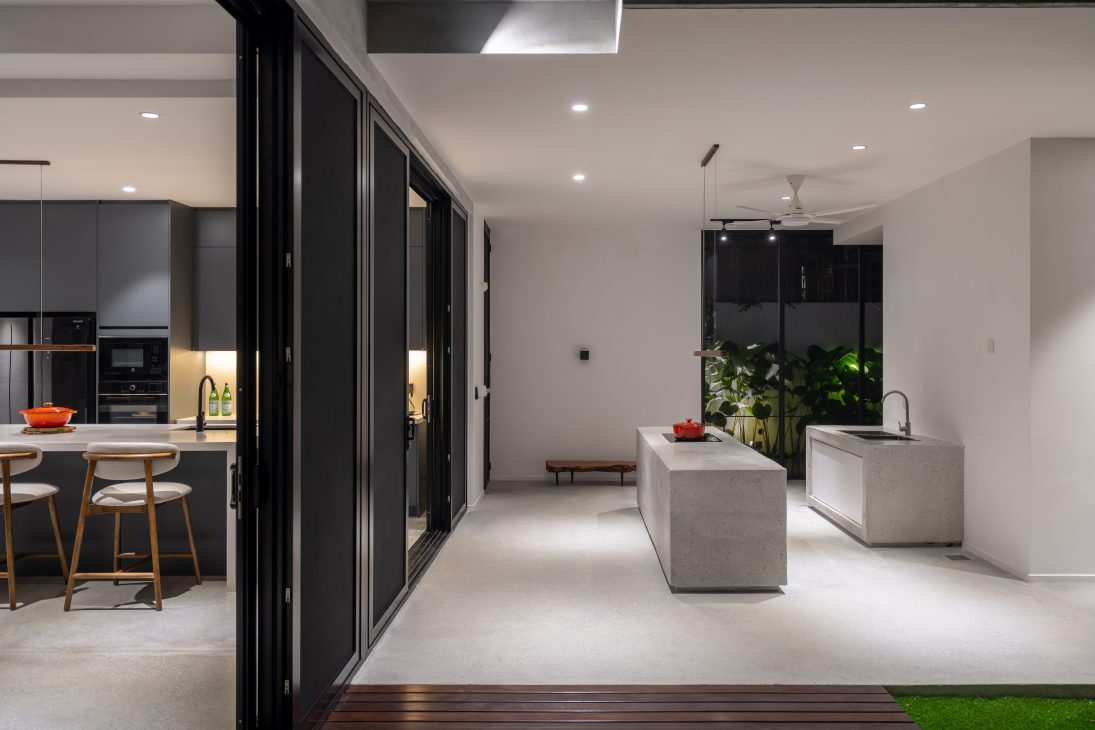
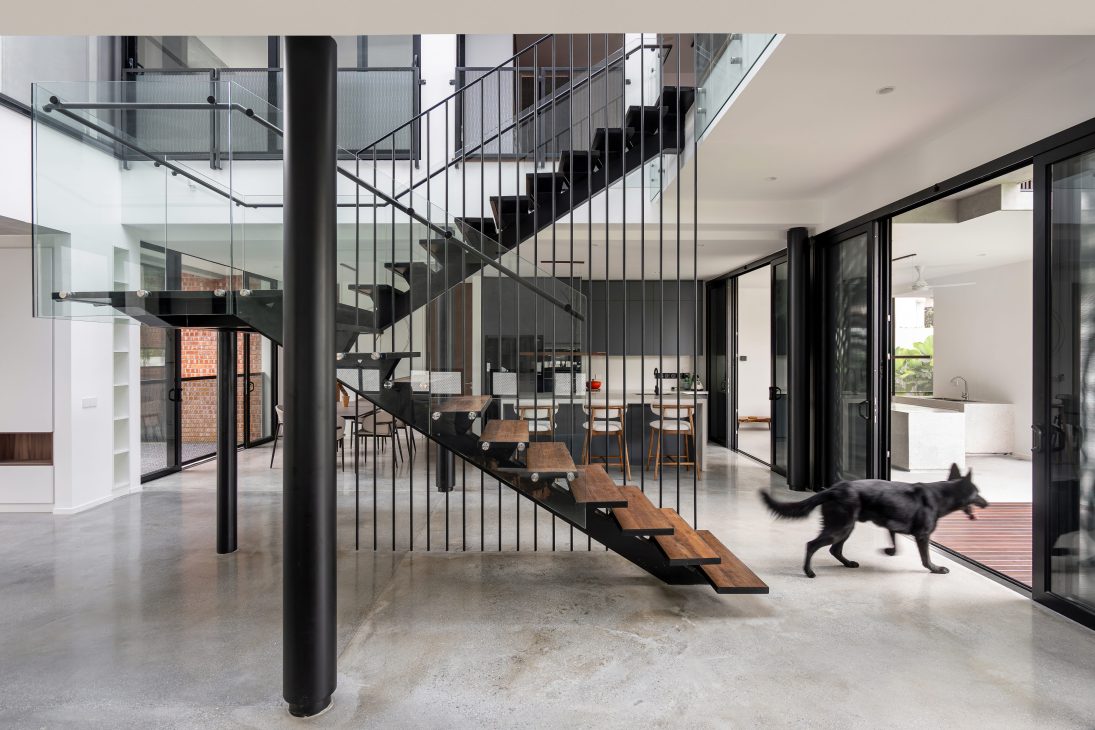
An open plan living and dining space anchors everyday life in the soothing rhythm of nature. By opening the wet kitchen to the courtyard, cooking is transformed into an immersive outdoor experience. A kitchen island in polished concrete reflects the home’s modern and practical character.
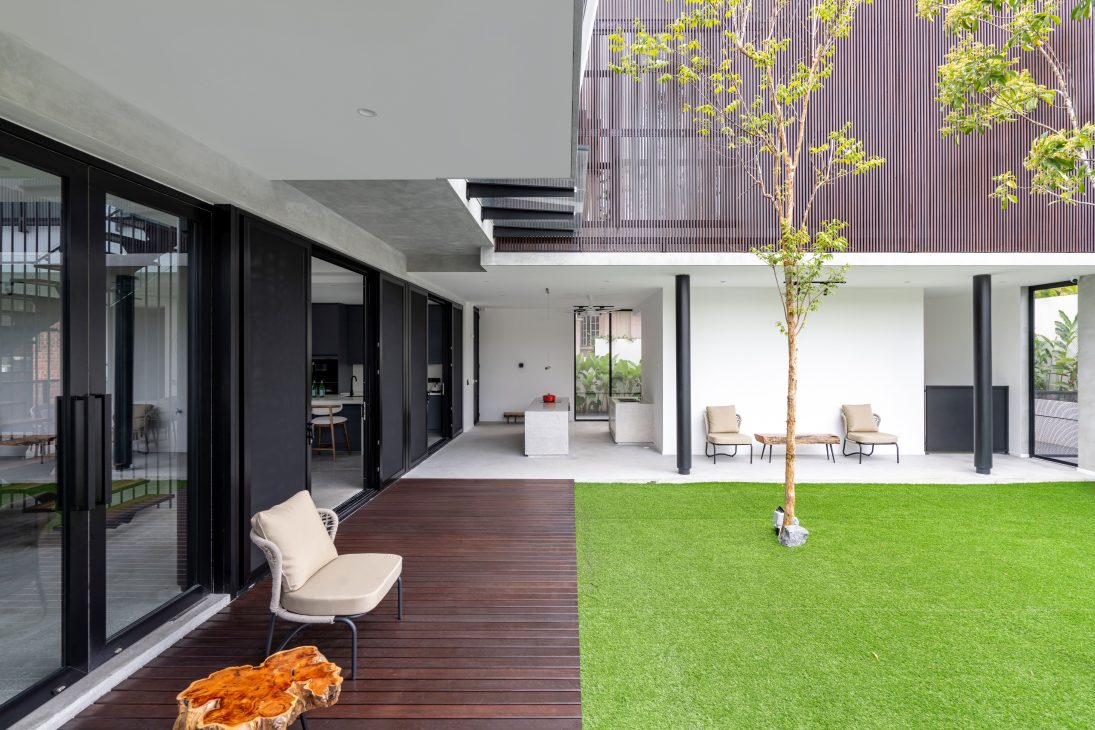
The living spaces open out to a spacious courtyard with a small pond — a serene retreat for both humans and pets. These outdoor spaces become a natural extension of the living room.
A dedicated herb garden here is a clever design move in a neighbourhood where homes stand back to back. Instead of facing the neighbour’s wall, you can create your own scenery, one that’s both beautiful and useful.
By using interlacing blocks, the courtyard multiplies into pockets of spaces that become quiet retreats for the dogs. It’s a home where nature and life are always interwoven.
“Because they actually have more than just one pet, so when there are multiple pets, meaning that it needs a lot of compartmentalization. That’s why we created a lot of courtyards to accommodate the needs,” explains Tan Chun Hooi.
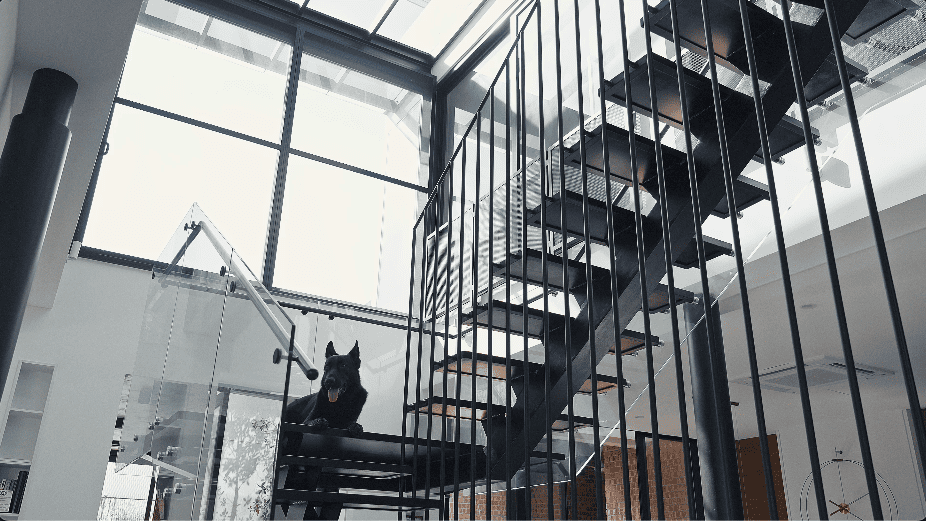
Framed in glass and a slim steel railing, the staircase complements the openness of the skylight, allowing light to cascade through the heart of the home.
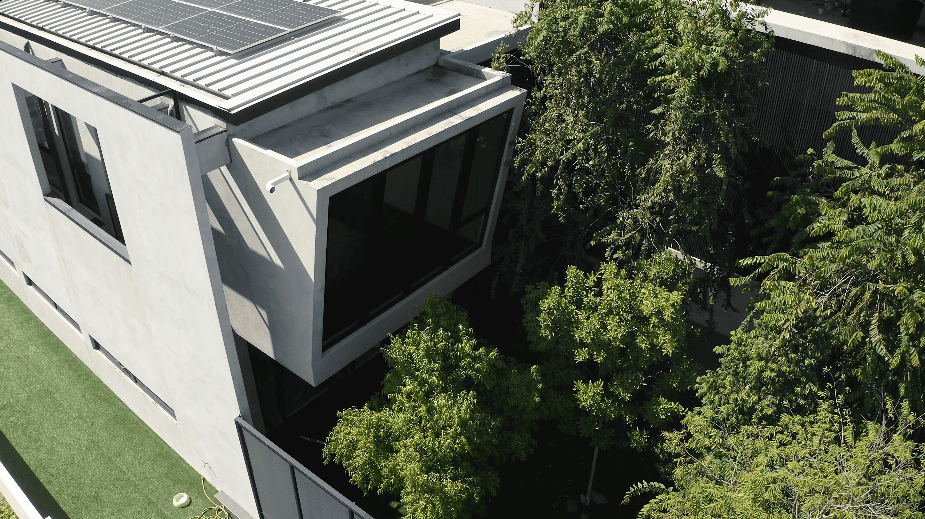
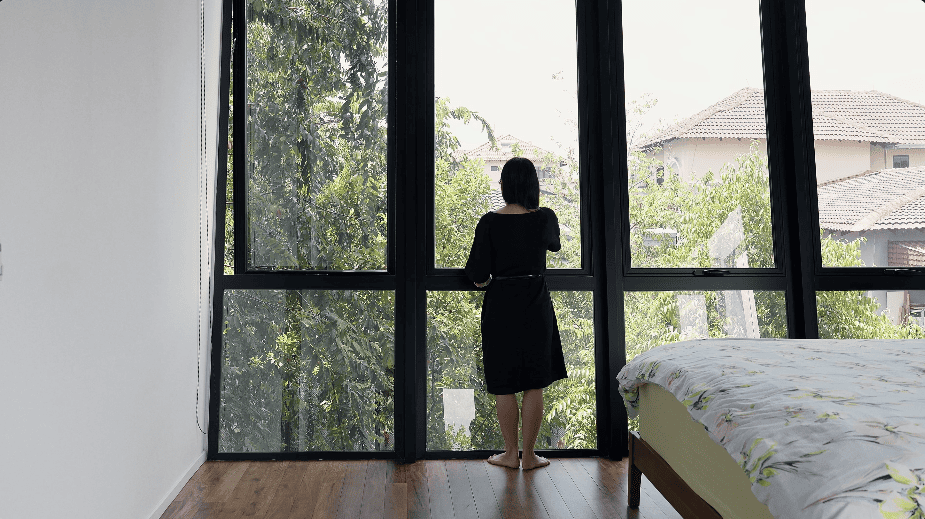
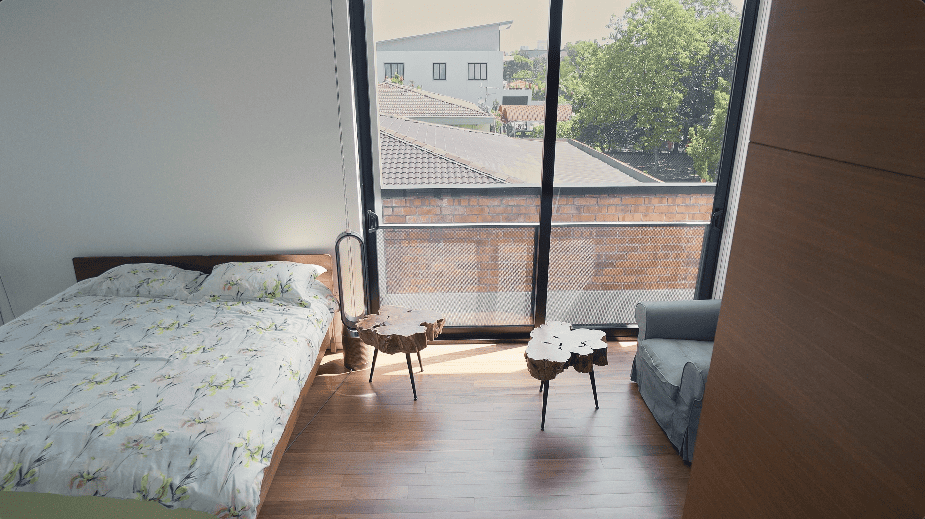
Upstairs, the master bedroom unfolds as a peaceful sanctuary with views of the green courtyard. A clever design of slanted windows draws the gaze towards nature below.
Tan explains, “We actually created a slanting window that gives you a visual attention down to the garden instead of looking ahead to the neighbours.”
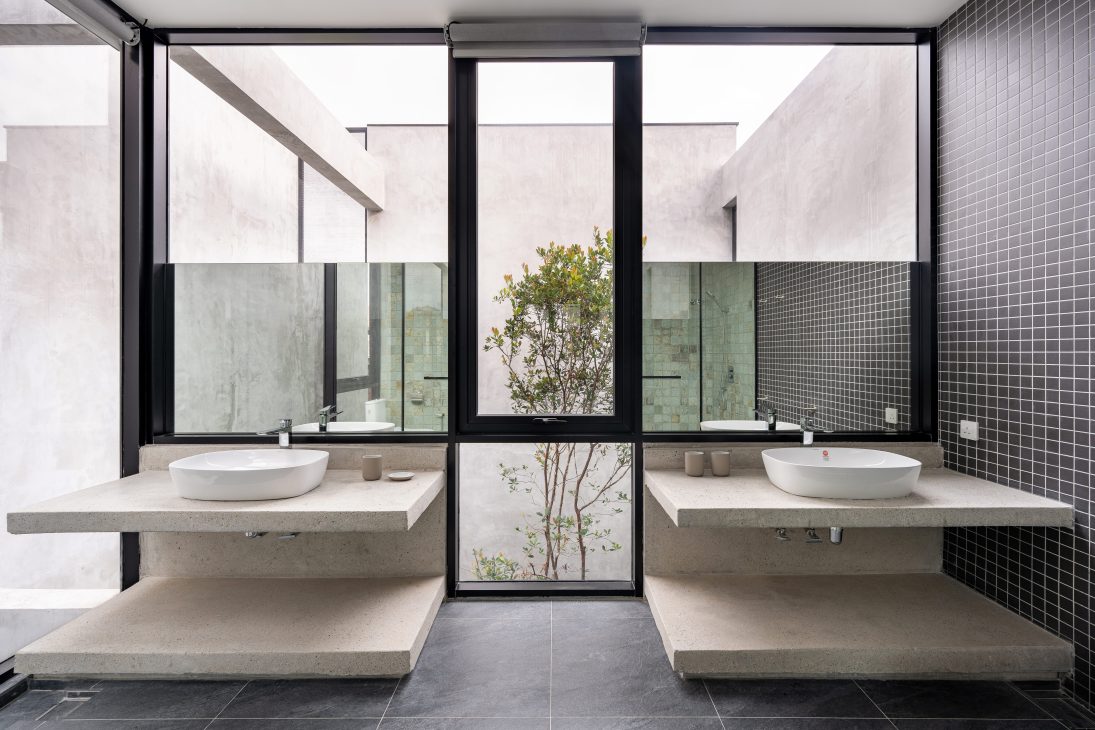
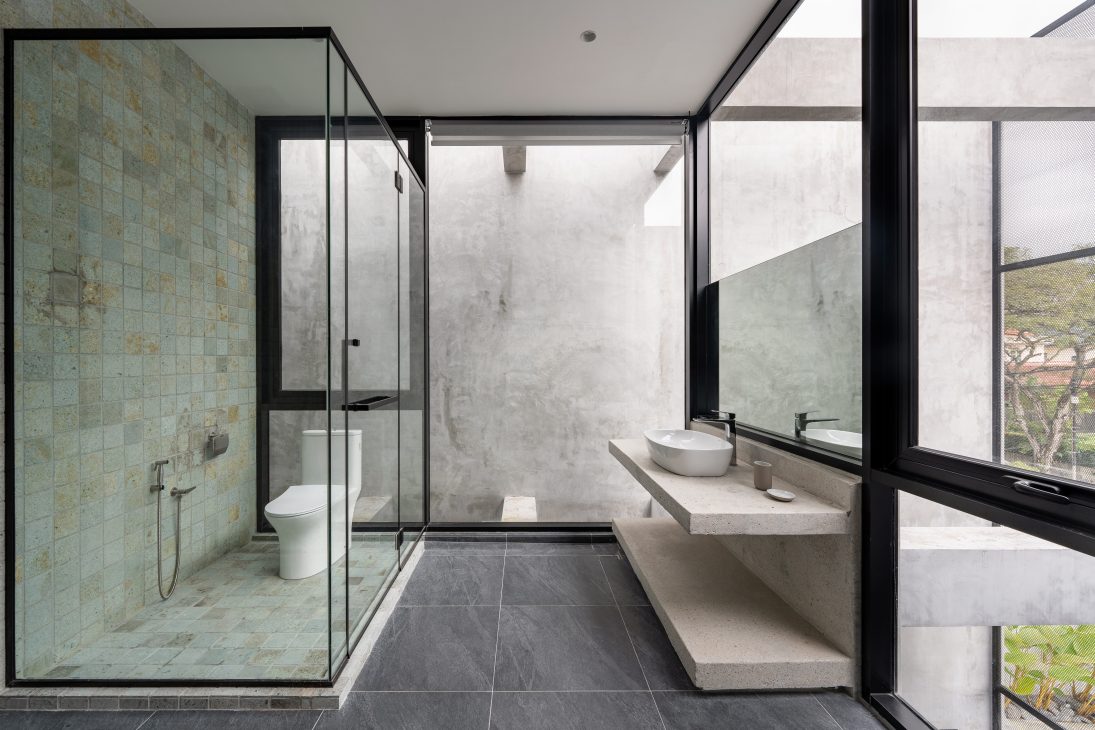
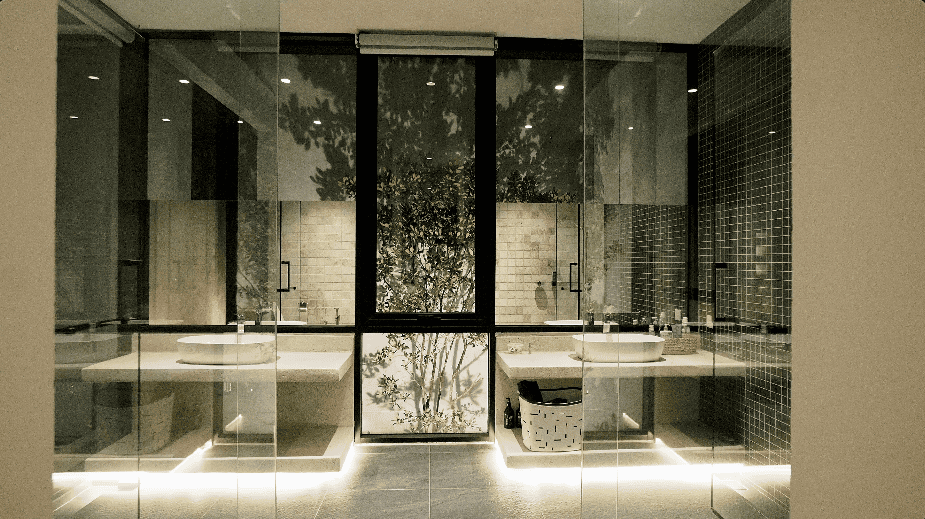
The highlight is the modern yet minimalist master bathroom. Opening to a double volume courtyard with lush views, this bathroom effortlessly balances privacy and openness.
“The master bathroom is actually placed at the front of the house where it is fully glazed, yet it is covered and surrounded by all the walls. That actually create openness and yet also achieve the privacy that is needed,” explained Tan.
“We have a very open bathroom, and at night, it’s lit up from a backlight against the tree — which again allows nature to be brought into a private space such as a bathroom,” says the houseowner.
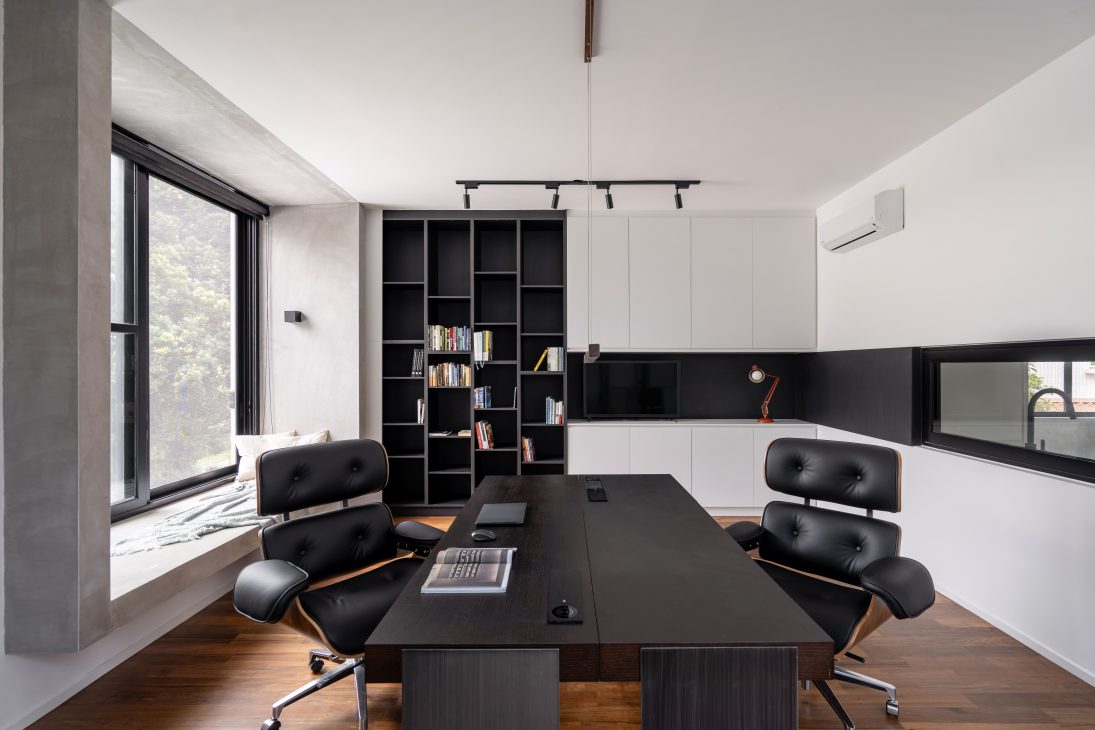
Every room in this house is curated with a view of greenery. The study is a calming, productive space completed with a cozy day bed, inviting both focus and rest.
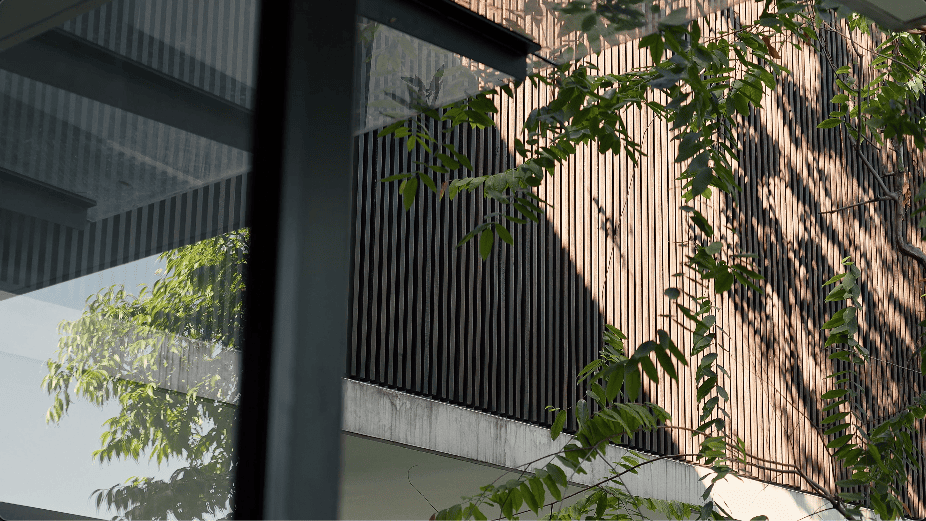
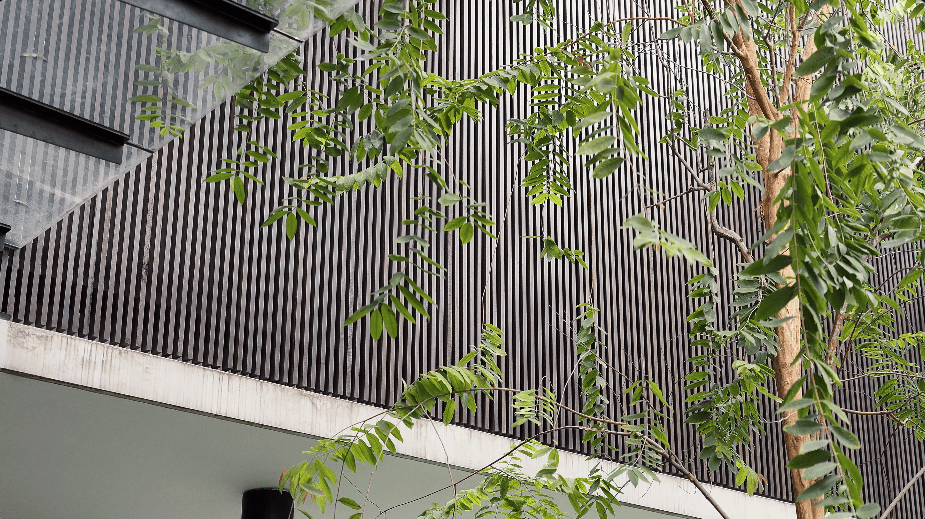
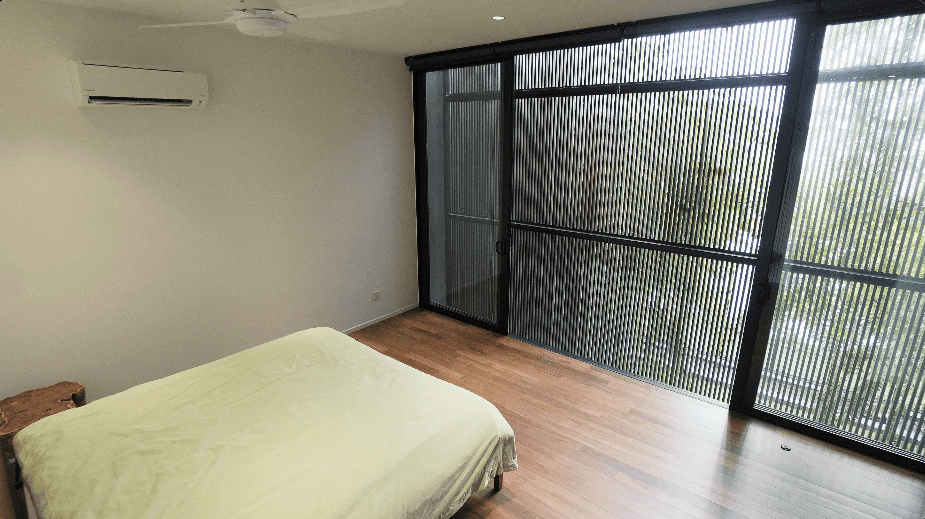
The main feature of the guest room is the louvers. From the courtyard, they form a striking architecture element, adding character to the facade.
“On the north facade, there is this timber screen that we created. It acts as a solar screen to screen off the harsh sunlight into the rooms. At the same time, it actually block off the visual from the master bedroom,” stated Tan.
This is a house that is thoughtfully designed to respond to the tropical climate. A double layer roof and external walls act as thermal buffers, reflecting and reducing heat before it enters the home. This layered approach creates interiors that remain cool, comfortable and naturally ventilated throughout the day.
Tan Chun Hooi says as his final thoughts on the house, “I think the design of the house has reinforced my belief that architecture can be narrative, and the narration here is about how space can interlace between human, nature and pets.”
For this family, every detail of their home was shaped by love — for nature, for each other, and the dogs who have become a part of their lives.
It’s a sanctuary where the family can retreat from the city, where their dogs can roam freely, and where nature becomes part of everyday living.